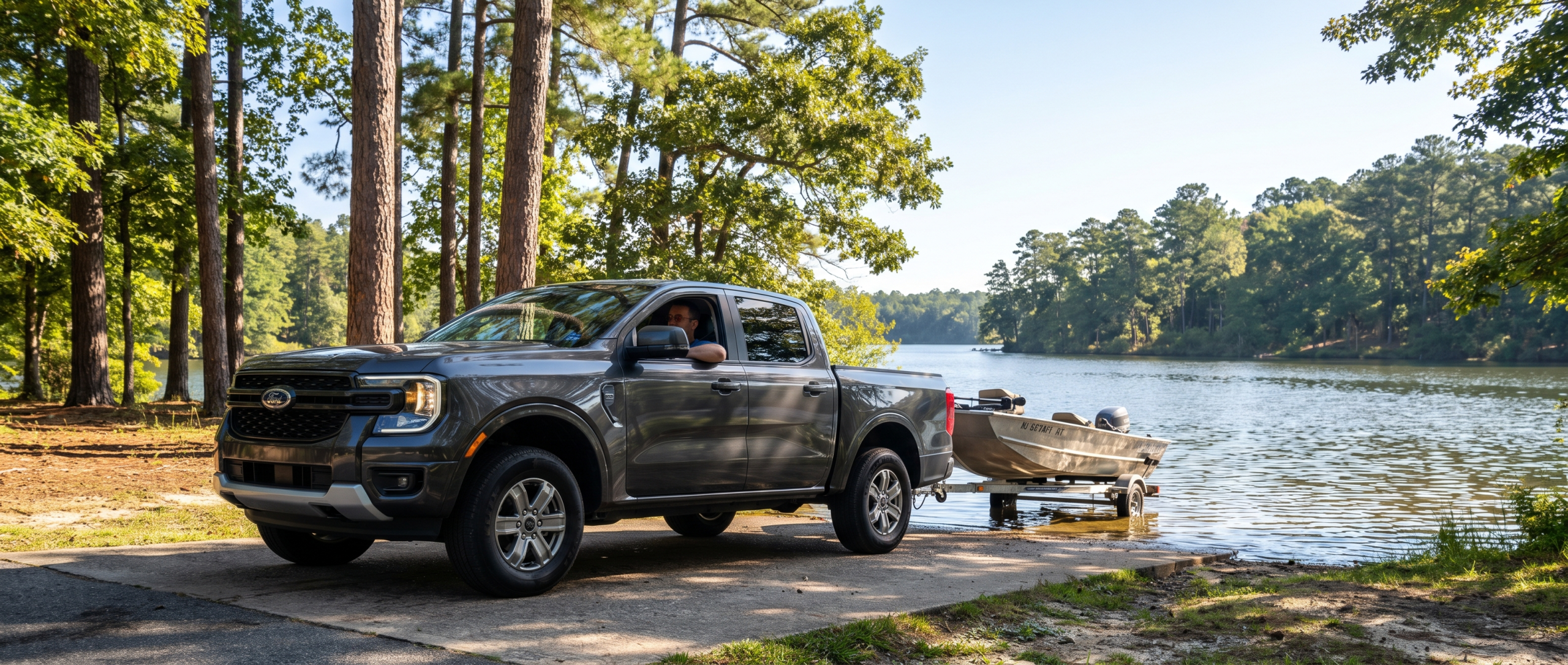
The 2026 Ford Ranger is a capable truck for this trip — load the kayaks or hitch the boat, head northwest out of Greer on SC Highway 101, and you are at Lake Robinson’s boat ramp in under 15 minutes. That short drive and the lake’s 800 acres of calm, wooded water are what make this one of Upstate SC’s most underrated summer days.
What’s the Plan at a Glance?
The lake sits just northwest of Greer, managed by the Greer Commission of Public Works. Every stop below requires a brief planning note: permits for fishing and boating are issued at the Lake Warden’s Office, so build that into your morning sequence.
| Stop | What to Do | Best Time | Parking Notes |
|---|---|---|---|
| Lake Warden’s Office, Mays Bridge Rd | Pick up your boating/fishing permit before launching | First thing, Tue-Sat 8 am – 4:45 pm | Small gravel lot; easy with a trailer |
| Boat Ramp | Launch kayaks, canoes, or a trailer boat | Early morning before lake traffic builds | Single-lane ramp; pull-through staging area |
| Three Fishing Piers | Bank fish for largemouth bass, bluegill, and redear sunfish | Morning and evening bite | Walk-in from the main lot; no trailer needed |
| Picnic Shelter #1 | Shaded lunch with lakeside views | Midday | Reservable; closest to the water |
| Open Water Paddle Zone | Kayaking, canoeing, stand-up paddleboarding | Any time after 8 am | Stow boards or kayaks flat in the Ranger bed |
Lake Robinson: What You Need to Know Before You Launch
Robinson is an 800-acre reservoir fed by the South Tyger River, owned and operated by Greer CPW as both a drinking-water source and a public recreation area. That dual purpose is why the permit system exists and why the water stays unusually clean for a municipal lake. Greer Commission of Public Works renovated the fishing piers, boathouse, and Shelter #1 benches, and the site continues to see yearly improvements.
A few rules that matter on arrival: all boating and fishing require permits secured from the warden before you launch — permits are issued Tuesday through Saturday, 8 am to 4:45 pm (closed noon to 1 pm for lunch). Swimming is not permitted within 200 feet of park areas, and the lake closes at official sunset. Plan your departure before the light fades if you’re towing a trailer out on the ramp.
Browse our used truck inventory if you’re still deciding on the right rig for day trips like this — a mid-size pickup with a solid tow setup covers everything Robinson offers.
The Drive and the Route from Greer
From D&D Ford Motors on East Wade Hampton Boulevard, Lake Robinson is a straightforward shot: take US-29 west, pick up SC-101 north, and the Mays Bridge Road turnoff puts you at the warden’s office in about 12 to 14 minutes. The roads are two-lane state routes — no tight parking garages, no low clearances, nothing a crew-cab truck with a trailer can’t handle. The Ranger’s SuperCrew body and 128-inch wheelbase handle the run comfortably, and you won’t feel like you’re navigating a full-size truck in a spot that doesn’t need one.
The Ford F-150 is the right call if you’re regularly pulling a heavier pontoon or a large bass boat rig. For kayaks, canoes, paddleboards, or a lighter aluminum fishing boat — which is exactly what Robinson’s single-lane ramp is built for — the Ranger’s footprint is a practical fit for the ramp and the roads leading to it.
Why the 2026 Ford Ranger Fits This Lake
Robinson’s boat ramp is a single-lane concrete launch with a staging area — the kind of spot where backing a trailer straight and clean matters more than raw horsepower. Ford’s available Advanced Towing Package adds Pro Trailer Backup Assist, which lets the driver steer the trailer with a knob rather than manually correcting a mirror-to-mirror dance. On a busy summer Saturday morning when other trucks are waiting behind you, that feature earns its place.
The 2026 Ranger’s standard 2.3L EcoBoost four-cylinder produces 270 horsepower and 310 lb-ft of torque, per Ford. The available 2.7L EcoBoost V6 steps that up to 315 horsepower and 400 lb-ft of torque — a noticeable difference when you’re climbing out of the ramp with a loaded trailer and wet gear in the bed. The 5-foot Styleside bed carries kayaks flat (with a simple bed extender or tie-down over the tailgate) and leaves room for a cooler, dry bags, and life vests without requiring a separate cargo trailer.
For Ranger buyers adding the FX4 Off-Road Package — now available on the XL trim for 2026, per Ford — the electronic-locking rear differential and off-road-tuned shocks carry over onto gravel or muddy access roads that sometimes follow summer thunderstorms in Upstate SC. The Cherokee Foothills National Scenic Highway connects the broader region, and a Ranger built for the lake does double duty on a post-trip Blue Ridge run.
The Ford Maverick is worth a look if you primarily paddle rather than tow — its compact bed and lighter weight handle a kayak day at Robinson just as well at a lower price point. But when towing a boat on a trailer is part of the plan, the Ranger’s Class IV hitch receiver (with the Trailer Tow Package) and higher payload rating are well suited for a family that uses its truck year-round.
Lake Robinson rewards the people who plan it right: permit in hand, ramp time early, and a truck that handles the logistics. From the staging area to the fishing pier to the shaded lunch spot at Shelter #1, the day flows when the gear fits and the rig handles. Come see what the 2026 Ford Ranger looks like in person at D&D Ford Motors — Greer’s Ford dealer, serving the Carolinas since 1937.
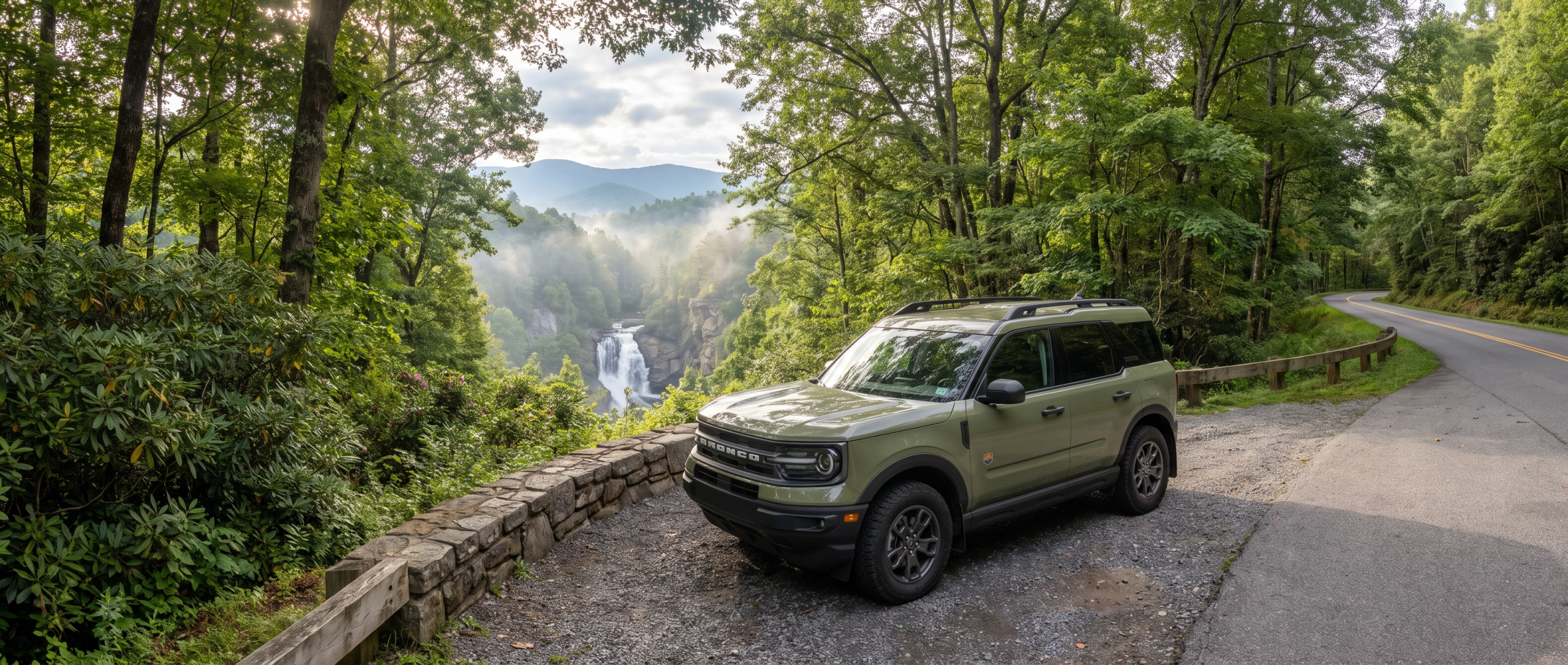
The US-276 corridor from Greenville up to Caesars Head State Park is one of the most rewarding drives in Upstate SC — and one that catches unprepared vehicles off guard. Tight switchbacks, a steep grade climbing toward 3,000 feet, summer afternoon thunderstorms, and a parking situation that rewards early arrivals all demand specific technique. The short answer for the 2026 Ford Bronco Sport: it was built for exactly this kind of day trip. Here is how to drive it well.
The Raven Cliff Falls Corridor: What to Do and What to Skip
The run from Greer up US-276 to Caesars Head State Park covers roughly 35 miles, with the final 10 climbing aggressively through the Blue Ridge Escarpment. The park is home to Raven Cliff Falls — at 420 feet, the tallest waterfall in South Carolina — and the trail to the overlook is a 3.9-mile moderate out-and-back with 738 feet of elevation gain. Before you get there, the road does most of the work of sorting out which drivers came prepared.
| Situation | Do | Skip |
|---|---|---|
| Selecting a drive mode on the ascent | Use Normal or Sport on the paved climb up US-276 | Avoid Eco mode on steep grades — it softens throttle response exactly when you need it |
| Speed on the switchbacks | Slow before the curve, not during it | Never trail-brake through a blind curve; wildlife and oncoming hikers’ cars appear fast |
| Parking at Caesars Head | Arrive before 9 a.m. on weekends — the lot fills by mid-morning | No roadside parking is permitted at Caesars Head State Park; the lot is your only option |
| Trailhead road crossing | Stop at the crosswalk stripes, look both ways — the trailhead is across US-276 from the lot | Do not assume traffic will stop; US-276 carries steady summer traffic |
| Rain or standing water on gravel access | Engage the Slippery G.O.A.T. mode for wet gravel or switch to Off-Road mode on unpaved park access | Never assume summer humidity keeps gravel dry — afternoon showers are common by July |
| Return descent | Use light, steady braking; engine braking in a lower gear saves your brakes on the sustained downhill | Avoid riding the brake pedal continuously; brake fade is real on a 10-mile mountain descent |
| Fuel | Top off in Travelers Rest before the climb; there are no fuel stops near the park | Do not rely on running low — the nearest station is several miles back down the mountain |
Matching G.O.A.T. Modes to the Mountain
The single technique that changes everything on this drive is choosing the right G.O.A.T. mode before conditions change — not after you are already sideways on a wet gravel lot. Ford lists five standard modes on the 2026 Bronco Sport: Normal, Eco, Sport, Slippery, and Off-Road, with Badlands models adding Rock Crawl and Rally. Most of the US-276 run is paved mountain road, so the full-size Ford Bronco crowd sometimes forgets the Sport has its own capable suite. Here is the practical order for a waterfall day trip:
- Greer to Travelers Rest (I-85 to US-276 North): Normal mode. Flat, fast corridor; the Bronco Sport’s standard 4×4 system handles it without intervention.
- US-276 mountain climb (Travelers Rest to Caesars Head): Normal or Sport. Sport sharpens throttle response on the switchbacks, which helps with confident passing-zone power when traffic backs up on the grade.
- Park access roads and gravel lots: Slippery mode. Properly equipped Bronco Sports deliver up to 8.8 inches of ground clearance with available all-terrain tires — more than enough for park access roads — but the Slippery setting optimizes traction on loose or wet stone.
- Rain caught you on descent: Slippery mode the moment you see standing water pooling in the switchback gutters. The Bronco Sport can ford up to 24 inches of water when properly equipped, but a slick road surface is a different hazard than a water crossing.
- Arriving back in Greer: Switch back to Normal. The descent resets driving dynamics; locking into Sport mode for the I-85 leg is unnecessary and firms up the ride on the way home.
One More Reason to Leave Greer Early
The Caesars Head lot is first-come, first-served — no reservations, no roadside overflow. If it is full when you arrive, your options are limited. Leaving the Greer area by 7:30 a.m. on a summer weekend consistently beats the crowds and puts you at the trailhead in the cool of the morning before the humidity builds. The 2026 Bronco Sport’s EPA-estimated 25 city / 30 highway mpg with the 1.5L EcoBoost means the round trip from Greer — roughly 70 miles each way — is easy on a single tank, leaving no reason to rush the drive back.
See Current Ford Bronco Sport Specials
The Blue Ridge Escarpment puts more than 50 waterfalls within reach of Upstate SC — and most of the drives that get you there are exactly the kind of terrain the Bronco Sport was engineered to handle. Drive the mountain the way the vehicle was built, and the day belongs to you, not the road.
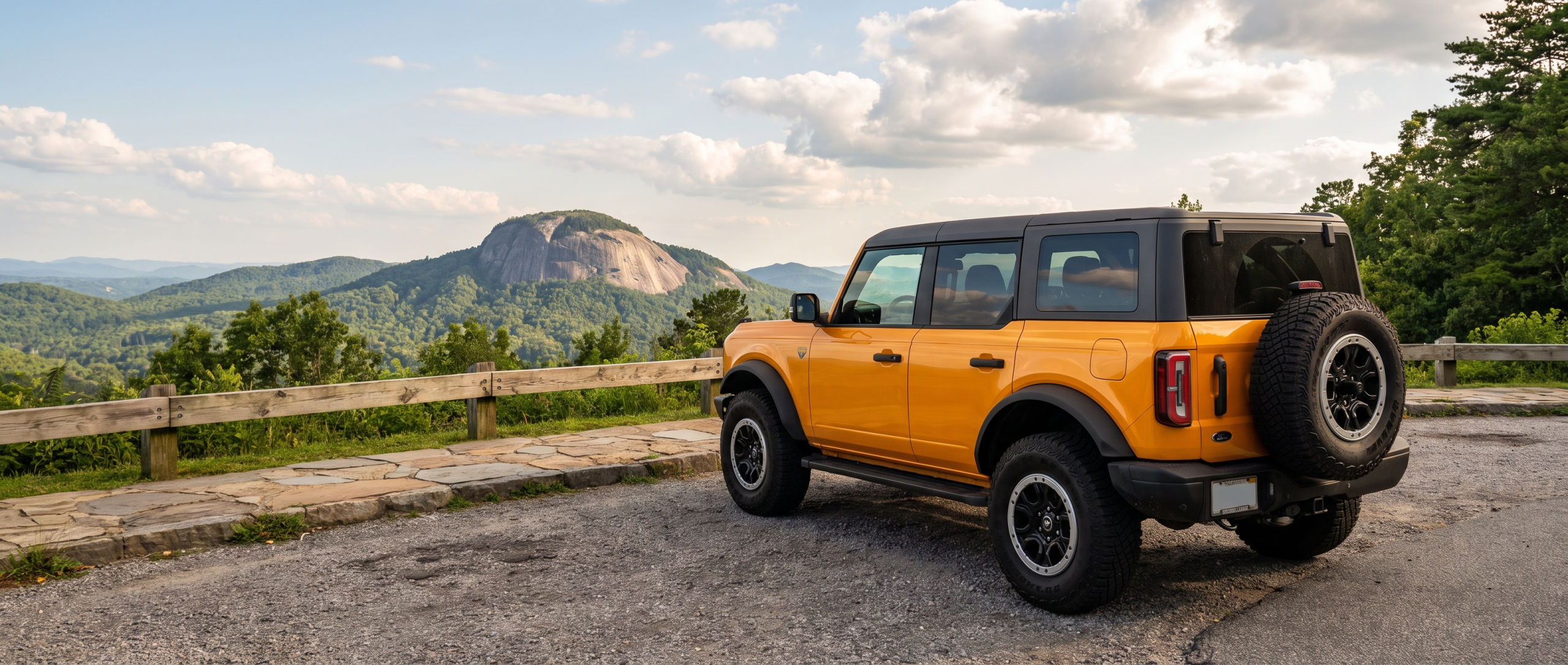
Greer sits right on I-85, which means Table Rock State Park is one of the easiest mountain escapes in the Carolinas — about an hour northwest on the Cherokee Foothills Scenic Highway. The problem is that the drive to Table Rock is just the warm-up. The park road, the trailhead lots, and the access routes off SC-11 throw actual conditions at your vehicle: loose gravel, steep grades on a fully loaded rig, standing water after the afternoon thunderstorms that roll through the Blue Ridge in summer, and tight switchbacks heading into the park’s upper lots. The 2026 Ford Bronco was engineered for exactly this sequence — highway comfort for the SC-11 leg, genuine off-road capability for the terrain that waits on the other end.
Why does the Bronco fit the Table Rock run so well?
The terrain between Greer and Table Rock covers three distinct phases, and most vehicles handle two of them without issue. The Bronco is built to handle all three.
| Local Condition / Use | Bronco Feature That Handles It | Why It Matters on This Route |
|---|---|---|
| SC-11 curves + loaded gear for a full-day hike | 300 hp / 325 lb-ft torque from the 2.3L EcoBoost, 10-speed automatic | Maintains highway speed on the uphill sections without hunting gears under load |
| Gravel park roads and unpaved access routes near the trailhead | Up to 11.6 in. ground clearance (Sasquatch) | Clears the rutted gravel lots and uneven surfaces without undercarriage contact |
| Summer afternoon thunderstorms — standing water and mud | 33.5-inch water fording capability; standard 4×4 with low-range | Crosses the runoff crossings that accumulate on the park road after heavy rain |
| Steep 2,000 ft ascent with full camping or hiking load | Trail Control (available) manages throttle and braking at low speed | Lets the driver focus on steering the narrow trail; no throttle hunting on gradient |
| Tight switchbacks near the upper parking area | Trail Turn Assist (available) locks the inside rear wheel in sharp turns | Tightens the turning radius on the switchback approaches into the park |
| Post-hike cleanup — muddy boots, wet gear, dogs | Bronco’s standard washout-capable interior with built-in floor drains | Hose it out when you get home; no carpet damage to worry about |
The grade from SC-11 into the park is where the engine choice pays off
Greer shoppers comparing trim levels usually focus on the exterior packages and seat materials — and then get surprised when they are two miles up a loaded mountain grade. Ford lists the 2026 Bronco’s base 2.3L EcoBoost four-cylinder at 300 horsepower and 325 pound-feet of torque, which is genuinely capable for most runs. But the available 2.7L EcoBoost V6 bumps output to 330 horsepower and 415 pound-feet of torque, and that extra torque delivers a real benefit when you are carrying four people plus camping gear on the sustained inclines that begin once you leave the valley floor.
Table Rock Mountain sits at 3,124 feet, and the main trail climbs 2,000 feet in 3.6 miles. That elevation does not stop at the trailhead — the road inside the park rises steadily from the SC-11 gate to the nature center and upper lots, often on unpaved or poorly surfaced sections. A vehicle that is already managing its transmission aggressively on the approach road arrives at the trailhead already working hard. The Bronco’s 10-speed automatic holds gears well under load rather than hunting between them, which keeps the drivetrain in a useful power band all the way to the parking area.
Four-door or two-door: the Table Rock gear question
Gear volume is a real decision when you are planning a full-day summit hike with extra water, layers for the summit (temperatures drop at elevation even in July), and possibly overnight camping at the park’s Foothills Trail campsites. Ford rates the four-door 2026 Bronco at up to 83 cubic feet of cargo capacity with the rear seats folded, compared to 52 cubic feet in the two-door configuration. For a crew of two or more adults carrying a full day’s worth of mountain gear, the four-door version gives you room to keep everything organized and accessible — no trunk-Tetris before a strenuous hike.
The two-door Bronco has its own case in Upstate SC: the tighter turning radius and shorter wheelbase (100.4 inches versus 116.1 inches on the four-door) makes it more maneuverable on the narrower park roads and in tight trailhead lots where a long-wheelbase vehicle gets stuck in a three-point turn. If your Table Rock trips are typically solo or two-person with lightweight packs, the two-door is the more nimble choice on the technical sections.
See Current Bronco Offers at D&D Ford
Sasquatch Package or standard setup — what Table Rock actually needs
This is the question that comes up most often from Upstate SC buyers, and the honest answer depends on how far off the main park road you plan to go.
The standard Bronco with the base 4×4 system and stock tires handles SC-11 and the main park road without difficulty. The paved approach and the primary parking lots at Table Rock’s nature center are well maintained, and a non-Sasquatch Bronco gets you there and back without drama.
The Sasquatch Package adds the meaningful upgrade: 35-inch LT315/70R17 rugged-terrain tires on beadlock-capable wheels, electronic-locking front and rear axles, a 4.7 final-drive ratio, and the HOSS 2.0 suspension with Bilstein position-sensitive dampers — lifting ground clearance to 11.6 inches. That matters on two specific Table Rock scenarios: the unpaved access trails near the Foothills Trail entry points, and the summer-storm aftermath when standing water covers the lower park road crossings. The Bronco’s 33.5-inch water fording depth (on properly equipped models) is not a casual spec — that is approximately 2.8 feet of moving water, which represents a real margin above what most summer storm crossings on the park road actually present.
The Badlands trim adds the factory-standard monotube shocks and the front stabilizer bar disconnect — new for 2026 as a standalone Badlands option without requiring the full Sasquatch Package — which improves axle articulation on the uneven surfaces around the park’s secondary lots without committing to 35-inch tires.
The Bronco Sport is a capable companion for SC-11 day trips and the main park roads, but its unibody construction and smaller tire package put it in a different category for the technical terrain east of the main gate. For casual Table Rock visits on paved roads, it is a practical choice. For the gravel and the creek crossings, the full Bronco’s body-on-frame platform and available locking differentials are the better tools.
The piece most trail guides skip: getting home after the storm
Table Rock sits on the Blue Ridge escarpment, which generates some of the most reliable afternoon thunderstorm activity in the Carolinas during summer. The pattern is predictable: clear mornings, building cumulus by early afternoon, heavy rain between 2 and 5 p.m., and partial clearing by evening. That timing means hikers starting before noon often finish their descent in or just after a storm, arriving back at a trailhead lot that has accumulated runoff on the access roads.
Ford’s washout-capable interior floors with built-in drains are a practical detail that is easy to overlook in a spec sheet but noticeable after a wet summit push. Muddy boots, wet dogs, soaked packs — the Bronco’s interior is designed to take that punishment and be rinsed out rather than detailed. For regular Upstate SC mountain users, that single feature eliminates the post-trip anxiety that comes with a carpeted SUV interior.
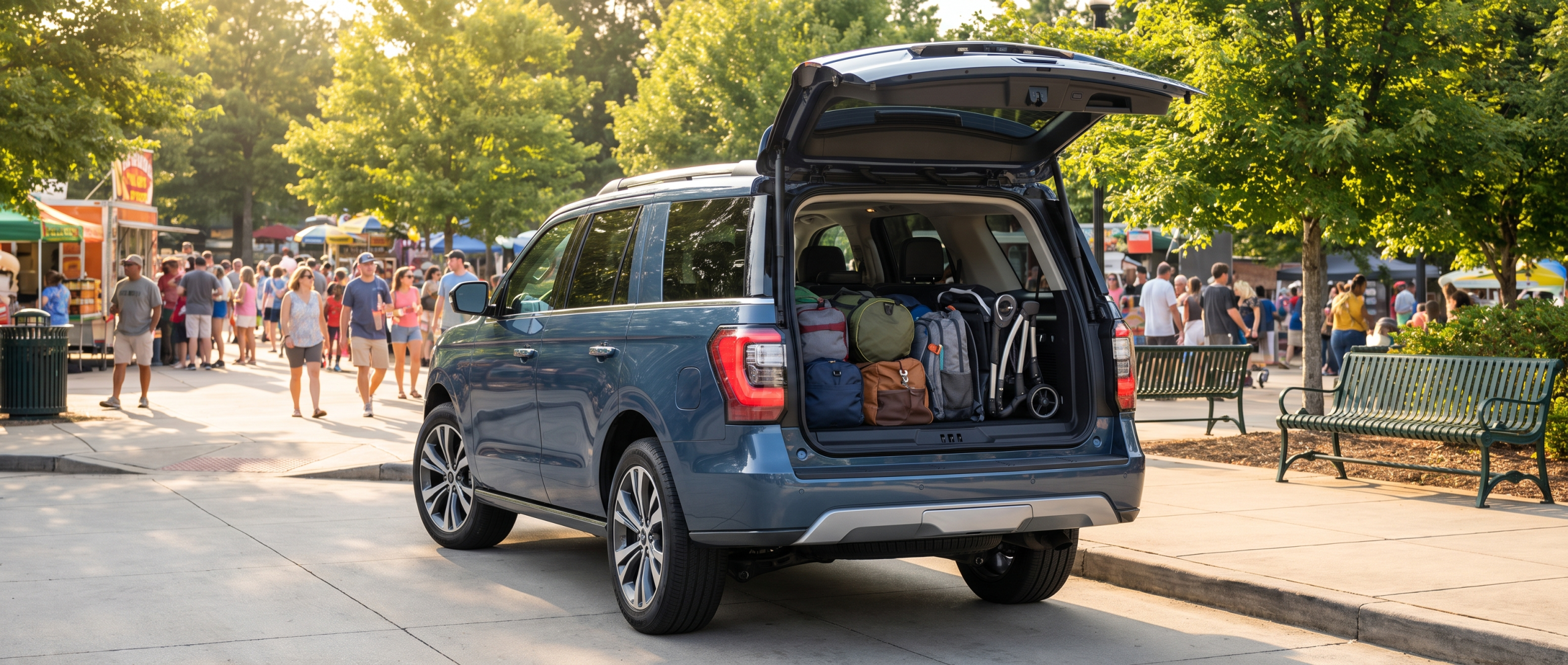
If your crew fills three rows and Greer City Park is a regular destination, the real question is not whether a 2026 Ford Expedition works for your family — it is which Expedition works. The standard model, the extended-length MAX, and the off-road-ready Tremor all share the same twin-turbocharged engine and three-row layout, but each one makes a different tradeoff that shows up clearly when you are loading strollers, wrangling car seats, and hunting for a parking spot on Moonlight Movies night.
- Standard Expedition (up to 8 passengers, 23 cu ft cargo behind row 3): best for families who drive downtown frequently and want the shorter footprint for street parking near Greer City Park.
- Expedition MAX (37.4 cu ft behind row 3, ~12 inches longer): best when all three rows are full AND you are hauling gear — luggage, a double stroller, folding chairs — without folding any seats.
- Expedition Tremor (440-hp high-output V6, standard wheelbase only): best if your family also spends weekends near Caesars Head or on muddy back roads, and you can live with less behind-the-seat cargo room.
- All three run the same 3.5-liter EcoBoost V6 through a 10-speed automatic and seat 7 or 8 passengers.
- If cargo with a full passenger load is the deciding factor, the MAX wins outright. If downtown maneuverability matters most, the standard Expedition has a meaningful edge.
Browse the 2026 Ford Expedition at D&D Ford Motors
How Do the Three Configurations Compare?
The engine, seating count, and core technology are identical across all three. What separates them is length, cargo volume behind the third row, powertrain tuning, and one significant limitation on the Tremor that families should know before they configure.
| Feature | Expedition (Standard) | Expedition MAX | Expedition Tremor |
|---|---|---|---|
| Overall length | 210 inches | 221.9 inches | 210 inches |
| Engine | 3.5L EcoBoost V6, 400 hp / 480 lb-ft | 3.5L EcoBoost V6, 400 hp / 480 lb-ft | 3.5L HO EcoBoost V6, 440 hp |
| Seating | 7 or 8 | 7 or 8 | 7 (standard); 8 optional |
| Cargo behind row 3 | ~21-23 cu ft | 37.4 cu ft | ~21-23 cu ft |
| Max cargo (all seats down) | 104.6 cu ft | 121.5 cu ft | 104.6 cu ft |
| Max towing (when equipped) | Up to 9,600 lbs (4×4) | Up to 9,000 lbs (4×4) | Up to 9,600 lbs (4×4) |
| EPA fuel economy (2WD) | 17 city / 23 hwy | Similar (slightly lower) | Not rated; prefers premium |
| Drivetrain options | RWD or 4WD | RWD or 4WD | 4WD standard |
| Tremor off-road hardware | No | No | Yes — skid plates, all-terrain tires, lifted suspension |
| Best for | Downtown events + daily balance | Full-passenger cargo trips | Trail runs + capable family rig |
Ford lists the Expedition’s 3.5L EcoBoost V6 at 400 horsepower and 480 lb-ft of torque paired with a 10-speed automatic transmission. The Tremor’s high-output version of that same engine bumps output to 440 horsepower. The EPA rates the rear-wheel-drive Expedition at 17 miles per gallon city and 23 miles per gallon highway — a reasonable number for a full-size three-row body-on-frame SUV.
Does Your Family Actually Need the MAX’s Extra Cargo Room?
See the Expedition MAX at D&D Ford Motors This is the question most families get wrong, and the answer comes down to one moment: when every seat is full, what goes behind the third row?
Ford’s own specs show the standard Expedition carries roughly 21 to 23 cubic feet behind the third row — enough for two rolling carry-ons and a soft bag. The Expedition MAX carries 37.4 cubic feet behind that same third row, which is closer to what you would find behind the second row in a midsize SUV. If your Saturday routine involves Greer Farmers Market runs with grandparents, a double stroller, and six people in seats, the 15-plus extra cubic feet the MAX provides is not optional — it is the difference between comfortable and cramped.
The Ford Explorer seats up to 7 with a shorter footprint if you want three rows with easier downtown parking The Explorer is worth mentioning for families who regularly drive alone or with three to four people and only occasionally fill all three rows. Its shorter overall length makes Greer’s tighter parallel spots less of an event.
The parking reality matters here. The Expedition MAX stretches to 221.9 inches — nearly 18.5 feet. The standard Expedition is 210 inches. On a packed Freedom Blast weekend at Greer City Park, a standard Expedition is notably easier to maneuver into a standard parking space. A MAX owner who has not driven the extra length before will feel it immediately in a crowded surface lot.
Check Current Expedition Specials at D&D Ford Motors
Picking the Right Expedition for Your Greer Family
Here is how the decision actually shakes out for three common Upstate SC family profiles.
Explore financing options at D&D Ford Motors
The standard Expedition is the right call when your family of six or seven drives downtown at least twice a month, parks in tight street spots near Greer City Park, and does not regularly travel with cargo behind a full passenger load. The 210-inch length is still a large vehicle, but it handles Greer’s surface lots and the neighborhoods off Trade Street with far less stress than the MAX. Ford’s 13.2-inch touchscreen, standard 5G Wi-Fi hotspot, wireless Apple CarPlay and Android Auto, and the available 24-inch panoramic display instrument cluster come standard or available across Active and Platinum trims without stepping up to a longer wheelbase.
The Expedition MAX earns its price when your family consistently runs with all three rows occupied and still needs to bring gear. Greer’s Arts and Eats Festival, Railfest along the old depot corridor, and school-year carpools that stack multiple families into one SUV are exactly the situations where the MAX’s 37.4 cubic feet of third-row cargo space justifies its longer footprint. Per Ford, the MAX also features a Ford Split Gate with available hands-free Open On Approach — the powered split tailgate that opens from either the top glass or the full gate, which is genuinely useful when your hands are full of folding chairs after Tunes in the Park.
The Expedition Tremor is a specialized case. It is only available in the standard wheelbase — you cannot get a Tremor MAX — and its 440-horsepower high-output engine and standard 4WD, modified suspension, Raptor-derived skid plates, and all-terrain tires are built for drivers who use the Cherokee Foothills National Scenic Highway on SC-11 or run into Caesars Head State Park on weekends. If that describes a consistent part of your family’s life alongside downtown Greer events, the Tremor handles both. If downtown is your primary use and you park in a tight spot weekly, the Tremor’s off-road hardware adds cost and complexity without practical payoff for that use case.
Families who have been serving the Carolinas since 1937 know that the right truck is the one that actually fits your life — not the biggest one on the lot.
Frequently Asked Questions
Does the Ford Expedition MAX seat more passengers than the standard Expedition?
No. Both the standard 2026 Ford Expedition and the Expedition MAX seat 7 or 8 passengers depending on second-row configuration — the bench seats eight and the captain’s chair configuration seats seven. The extra length in the MAX goes to cargo space behind the third row, not to the passenger cabin. Third-row legroom is the same in both.
Is the 2026 Ford Expedition Tremor available in the MAX body?
No. Per Ford’s 2026 Expedition lineup, the Tremor trim is exclusive to the standard-wheelbase Expedition. Families who want both the Tremor’s 440-horsepower high-output engine and the MAX’s extended cargo room cannot get that combination in a single vehicle — those are two distinct choices.
You Don’t Need a Separate Generator to Tailgate the Fireworks — Your F-150 Already Has One
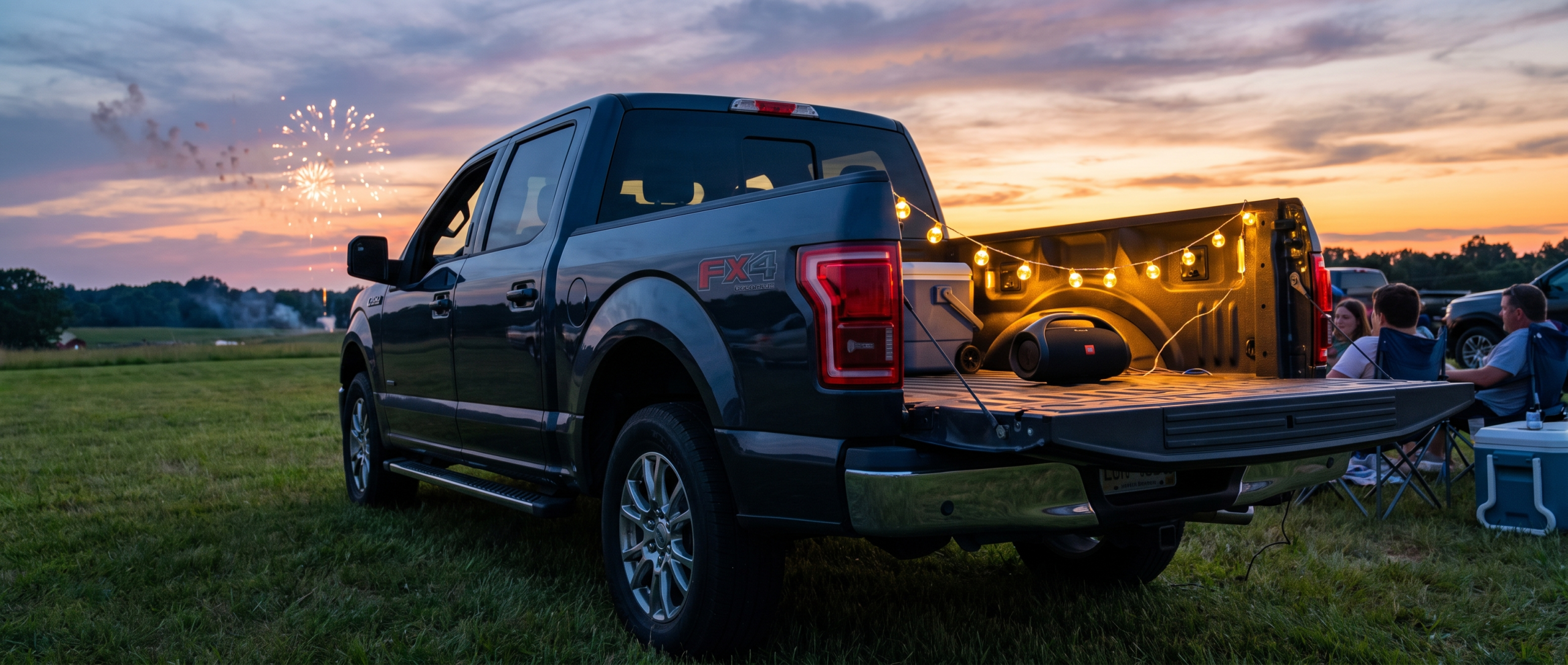
Upstate SC truck owners load the bed with lawn chairs, a cooler, and a gas generator every summer before heading to Greer City Park or Unity Park for fireworks. The generator takes up a third of the bed, rattles the whole drive down East Wade Hampton Boulevard, and then runs on fumes while everybody steps around it. Here is the reality: depending on your trim, the Ford F-150 you already own may have up to 7.2 kilowatts of exportable electric power built directly into the bed — no gas can, no extension cord snarl, no separate machine required.
- The myth: You need a gas-powered generator to run a real outdoor setup at fireworks or a tailgate.
- The reality: The F-150’s available Pro Power Onboard system delivers up to 7.2 kW from outlets in the bed and cab — enough for a TV, sound system, portable fridge, fans, and lights running simultaneously.
- The real issue: Not every trim comes with the highest output; knowing which configuration you have (or need) is the actual decision.
- The local angle: Freedom Blast at Greer City Park (June 27 this year) and the Unity Park fireworks on July 2 both draw big truck-and-tailgate crowds. Parking is first-come, and the best spots go to the rigs that are self-contained.
- The bottom line: If your F-150 has the 3.5L PowerBoost Full Hybrid engine, Ford lists the 7.2 kW Pro Power Onboard as standard — no generator needed, period.
Is It Actually True That You Need a Gas Generator to Run a Tailgate Setup?
The short answer is no — not if your F-150 has the right configuration. Ford lists three available Pro Power Onboard output levels on the F-150: 2.0 kW, 2.4 kW, and 7.2 kW, with outlets built directly into the truck bed and cab. The 7.2 kW level is available with the 3.5L PowerBoost Full Hybrid V6 engine and comes standard on the Platinum Plus trim. At that output, you can run a flat-screen TV, a sound system, a portable fridge, fans, and lights at the same time — the kind of setup that used to require hauling a separate generator.
| The Claim | What Ford’s Specs Actually Show |
|---|---|
| “You need a gas generator for a TV and speakers” | Ford lists up to 7.2 kW from bed outlets — enough for a TV, speakers, portable fridge, and fans simultaneously (Ford.com) |
| “The F-150’s outlets are just for phone chargers” | Three output tiers exist: 2.0 kW, 2.4 kW, and 7.2 kW — the 7.2 kW tier runs full appliances (Ford.com) |
| “You can’t open the tailgate when a trailer is hitched” | The available Pro Access Tailgate swings open a full 100 degrees even when hooked to a trailer, getting you 19 inches closer to the bed (Ford.com) |
| “You have to leave the truck running to use the power” | The PowerBoost hybrid system manages engine cycling to supply power; the FordPass app lets you monitor and track wattage output in real time (Ford.com) |
| “A generator is quieter at a crowded park” | A gas generator produces a constant exhaust note and requires a gas can; the F-150’s built-in system produces no separate engine noise and no fumes at your tailgate site |
See current F-150 inventory at D&D Ford Motors
The key distinction most posts miss: output tier depends on powertrain and trim. The 2.0 kW option covers phone chargers, a small fan, and LED lighting — useful but limited. The 2.4 kW tier, available on most mid-range trims, handles a sound system and lights comfortably.
It is the 7.2 kW tier, tied to the PowerBoost Full Hybrid and the Platinum Plus, that genuinely replaces a standalone generator for a full outdoor setup.
What This Actually Means for a Greer Fireworks Night
For the F-150 scenario most Greer residents face: parking in the grass around Greer City Park on Freedom Blast night (June 27 this year, fireworks at 10 p.m.), or making the short drive down I-85 to catch the Unity Park show in Greenville on July 2. Both venues fill up fast, and both favor trucks that need nothing extra once parked.
Here is what the built-in power actually changes at a Greer City Park tailgate spot:
- No generator footprint. A standard portable generator takes up roughly a quarter of a truck bed. That space becomes your cooler, chairs, and gear when Pro Power Onboard handles the electrical load.
- No fumes, no exhaust. Greer City Park is a grass-and-pavilion venue. Neighbors are close. A gas generator running at a park is a crowd-unfriendly choice; built-in truck power is not.
- LED Zone Lighting handles setup. Available LED Zone Lighting on the F-150 lets you illuminate targeted areas around the truck from a smartphone — useful when you are setting up at dusk on a June evening.
- The tailgate itself is a work surface. The available Tailgate Work Surface includes a ruler strip, a phone holder, and a cup holder — a genuine staging area for food and gear, not an afterthought.
- July in the Upstate is hot. Early July in Greer regularly runs into the low-to-mid 90s. A powered fan running off the truck’s outlets is the kind of detail that matters from 6 p.m. until fireworks at 10.
Which F-150 Setups Actually Replace a Generator — A Quick Breakdown
Not all F-150s are equal on this front. Here is the honest breakdown of what each power tier covers:
- 2.0 kW (base): LED string lights, a phone or tablet charger, a small Bluetooth speaker. Fine for a light setup; not a generator replacement.
- 2.4 kW (mid-tier): A sound system, LED lighting, and a fan running together. Gets most small tailgates covered without needing a standalone generator.
- 7.2 kW (PowerBoost Hybrid / Platinum Plus): A flat-screen TV, full sound system, portable refrigerator, fans, and string lights running at the same time — a true generator replacement for a group setup at Freedom Blast or Unity Park.
The FordPass app lets you monitor real-time wattage draw across all connected devices, so you can see exactly how much headroom you have left.
So What Should You Actually Do Before Heading to Freedom Blast?
Looking at a smaller truck? — the Maverick handles a lighter setup well — but if your goal is a self-contained tailgate rig for Greer City Park, here is the practical sequence:
- Confirm your Pro Power Onboard tier. Check the sticker on the driver-side door jamb or the window sticker — it will list the engine (PowerBoost Full Hybrid = 7.2 kW available; other gas engines = 2.0 or 2.4 kW depending on trim and packages).
- Add up the watt draw on the gear you plan to bring. A portable 32-inch TV draws roughly 50-80 watts. A mid-size Bluetooth speaker runs 15-30 watts. A small portable fridge draws 40-60 watts. A box fan draws 50-100 watts. At 2.4 kW you have plenty of headroom — enough for the above list with margin. At 7.2 kW, you have room to add a slow cooker or a coffee maker.
- Use the FordPass app at the venue to watch wattage in real time. If one device is spiking the draw, you can manage load before anything shuts off.
- Claim your parking spot early. Greer City Park opens Freedom Blast programming at 6 p.m. with fireworks at 10. The best lawn-adjacent truck spots go to the early arrivals. The same is true for Unity Park’s July 2 show, where parking fills quickly and walk-in access from downtown Greenville is the backup plan.
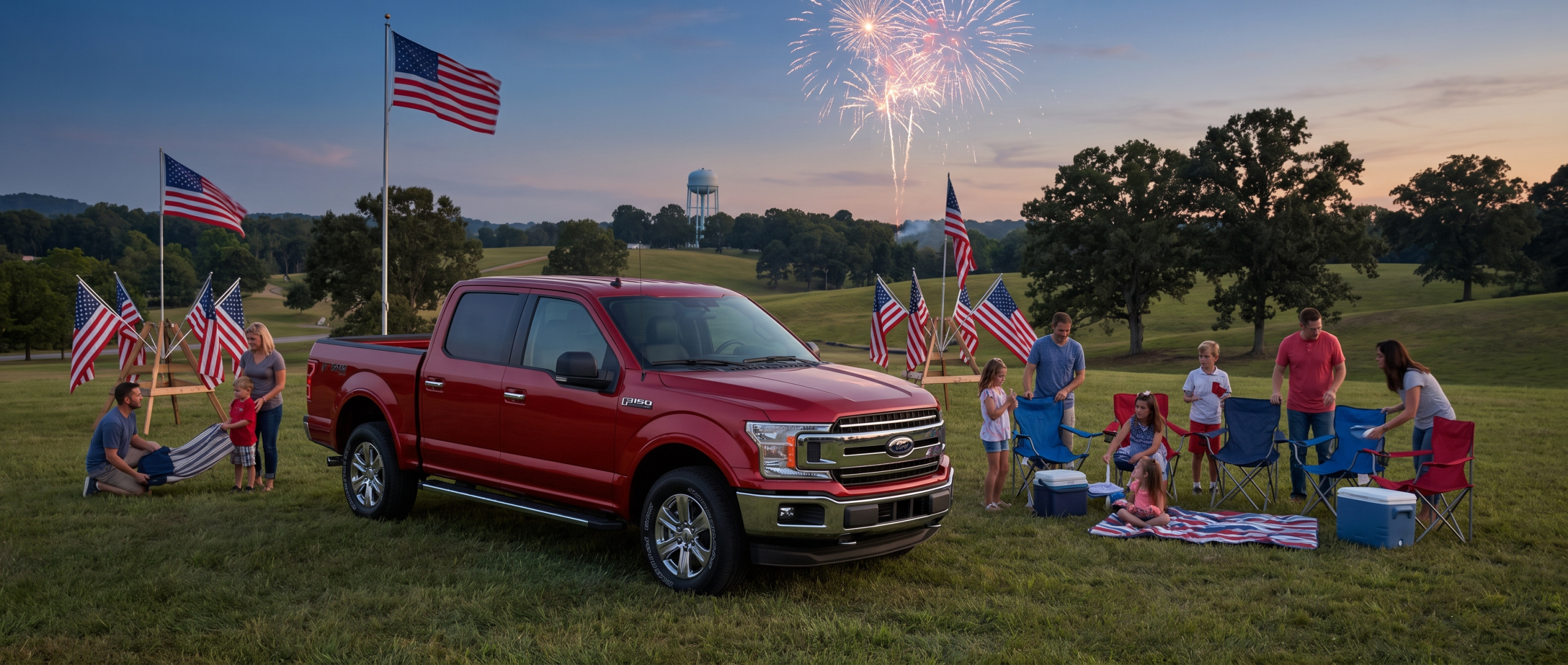
The ranking criterion is simple: which Ford puts your family at Greer City Park — or Unity Park in Greenville or the Simpsonville Amphitheater — with the gear they need, the seats to fill, and enough capability to power the whole night? The answer at the top of this list is the Ford F-150, and it earns that spot because its available 7.2 kW Pro Power Onboard turns a truck bed into a genuine outdoor power station on a hot Upstate July evening. The four picks below build out the full picture for every family size, budget, and plan between here and the Blue Ridge.
The Ranking at a Glance
| Rank | Ford Model | Best For | Standout Spec |
|---|---|---|---|
| 1 | F-150 PowerBoost | Tailgating + crew hauling | 7.2 kW Pro Power Onboard; up to 13,500 lb tow (when properly equipped) |
| 2 | Expedition | Large families, up to 8 passengers | Up to 9,600 lb towing; 108.5 cu ft cargo behind row 1 |
| 3 | Explorer | 3-row family, normal-sized parking space | Seats 7; up to 87.8 cu ft max cargo |
| 4 | Maverick Hybrid | Event hopping across the Upstate all week | EPA-estimated 42 mpg city; 4,000 lb tow with 4K package |
| 5 | Bronco | Finding your own fireworks viewpoint | Removable doors and roof; standard locking front differential |
No. 1 — The Ford F-150 Is Built for a Greer Tailgate
Greer City Park’s Freedom Blast on June 27 was Greer’s largest summer event, and the parking reality around downtown does not change on July 4. Spots fill well before fireworks go up. Families who arrive early and stake a patch of the City Park lawn end up waiting through Upstate South Carolina’s July heat — temperatures that hold in the upper 80s well into the evening — for two to three hours before the show starts.
That is where the Ford F-150 earns its ranking. Ford lists the available 3.5L PowerBoost Full Hybrid V6 at 430 horsepower and 578 lb-ft of torque; spec it with the Platinum Plus configuration and Pro Power Onboard delivers 7.2 kilowatts of onboard electricity to the bed — enough to run a fan, charge phones, and power a portable speaker without leaving the engine running. The 3.5L EcoBoost is the configuration that hits 13,500 lb maximum towing capacity when properly equipped, useful if you are pulling a boat trailer out to Lake Hartwell for a pre-fireworks afternoon and coming back into Greer for the night. Per Ford’s official towing data, payload tops out at 2,440 lb in the right configuration.
A SuperCrew cab carries five adults without anyone negotiating leg room, and the bed swallows folding chairs, a cooler, a wagon for small kids, and blankets without touching the passenger space.
No. 2 — The Expedition Is the Answer for a Full Extended Family
Eight people. Three rows. Freedom Blast on June 27, the O’Neal Church of God event in Greer on July 4 at 7 p.m., and maybe the Unity Park fireworks with the Greenville Symphony on July 2 thrown in between. The Ford Expedition is the only Ford SUV that carries that entire extended family in one vehicle without leaving anyone behind.
Ford lists the 2025 Expedition with up to 108.5 cubic feet of cargo capacity behind the first row and 22.9 cubic feet behind the third row with seats upright. Maximum towing reaches 9,600 lb with the Heavy-Duty Trailer Tow Package and 4WD, built around the standard 3.5L EcoBoost V6 rated at 400 hp and 480 lb-ft of torque. The new Ford Split Gate — an Expedition-exclusive feature combining a traditional liftgate with a pickup-style tailgate — makes unloading gear at the City Park significantly faster when seven or eight people are all reaching in at once.
The Expedition Max stretches wheelbase for even more third-row legroom, though Ford rates its max tow at 9,000 lb — a slight step down from the standard wheelbase’s 9,600 lb ceiling.
No. 3 — The Explorer Handles the Typical Greer Family Without the Full-Size Footprint
Not every household needs an Expedition-scale vehicle for the other 51 weeks of the year. The Ford Explorer seats seven, delivers up to 87.8 cubic feet of cargo with both rear rows folded, and fits in a standard parking space on Trade Street or off East Poinsett Street near the City Park — something that matters when you are circling downtown Greer at 6 p.m. looking for a spot.
For families making the 20-minute run up I-85 to Spartanburg’s Red, White, and Boom at Fifth Third Park on July 4, the Explorer’s turbocharged EcoBoost engine handles highway speeds without effort. It handles the return trip back into Greer without anyone feeling the distance. Most families of five or six will never miss the Expedition’s towing ceiling during a week of fireworks shows and festival runs.
No. 4 — The Maverick Hybrid Is the Smarter Choice for a Week of Events
The Upstate’s 4th of July calendar runs June 27 through July 4, with Freedom Trails in Travelers Rest, Simply Freedom Fest in Simpsonville on July 3, and fireworks in Greenville, Fountain Inn, and Greer filling in the rest. That is a lot of driving, and the Ford Maverick Hybrid earns its spot here on fuel economy alone.
Ford rates the 2025 Maverick Hybrid 2.5L powertrain at an EPA-estimated 42 mpg city and 38 mpg combined — the highest combined efficiency of any pickup on this list. The AWD version comes in at an EPA-estimated 37 mpg combined. Add the optional 4K Tow Package and tow capacity reaches 4,000 lb, more than enough for a small boat trailer to Lake Keowee for a Saturday afternoon before heading back toward Greer.
The Maverick’s bed measures 54.4 inches at the floor — ample for folding chairs, a cooler, and two people’s worth of festival supplies. Its compact footprint also makes it the most parkable truck in the Ford lineup for a busy summer night in downtown Greer.
| Pros | Cons |
|---|---|
| EPA-estimated 42 mpg city (2.5L hybrid) — lowest fuel cost across a week of events | 4,000 lb tow maximum (with 4K package) — no large trailers |
| Compact size fits standard street parking near Greer City Park | 191 hp total system output — not a power hauler |
| Four-passenger cab handles a typical family with cargo in the bed | Smaller bed (54.4 in. at floor) limits bulkier gear loads |
| Quiet hybrid operation in slow post-fireworks traffic | AWD drops to an EPA-estimated 37 mpg combined |
No. 5 — The Bronco Finds Its Own Fireworks Spot
Not everyone watches Freedom Blast from the City Park lawn. If your crew prefers a quieter vantage point — an open field, a high clearing near the Paris Mountain area, or a gravel access road with a genuine sightline — the Ford Bronco is the vehicle that gets you there without drama and gets you back out when the crowd is still stuck in traffic.
The Bronco’s available removable doors and modular hard top make watching fireworks overhead a genuinely different experience from sitting in a folding chair in a crowd. The Wildtrak and Badlands trims include a standard front locking differential and Ford’s Go Over All terrain management system for Upstate South Carolina’s mix of county roads and rougher access points near the Blue Ridge foothills. It seats four adults with real cargo room behind the second row.
Just confirm your chosen viewing spot is on public-access land before you commit the route. The Bronco will handle the terrain; the access decision is yours.
The Ford F-150 tops this list for one reason: it is the only pick that hauls the crew, tows whatever you bring along, and then powers your tailgate independently once you are parked — all on a single Independence Day run through the Upstate. That combination is hard to argue with. D&D Ford Motors has been serving the Carolinas since 1937, and the team on East Wade Hampton Boulevard knows this lineup from the inside.
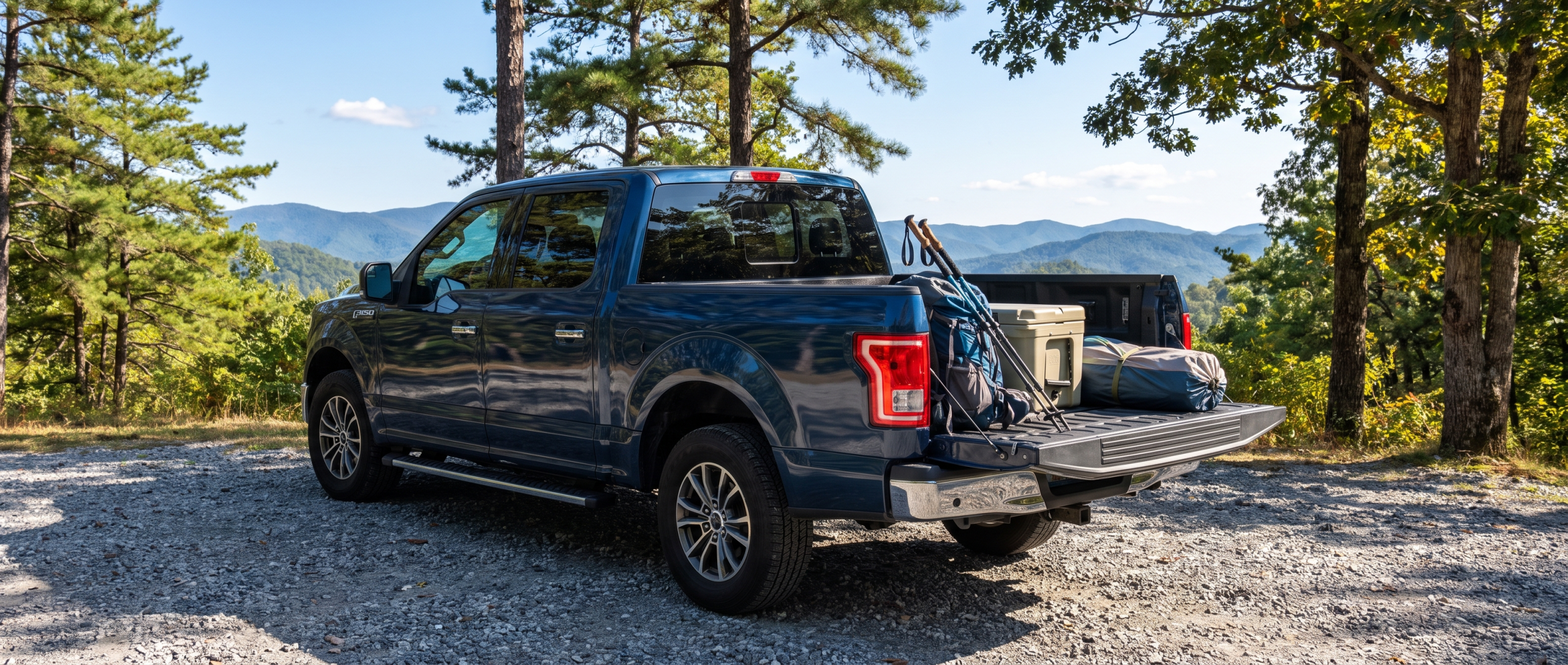
Summer in Greer, SC hits differently – and so does the decision to buy a used vehicle when you actually need it to perform. The best used Ford vehicles for summer buyers in Greer, SC depend on what your life actually looks like: weekend runs to Lake Robinson, hauling gear toward the Blue Ridge foothills, navigating I-85 for the daily commute, or loading up the family for a real road trip. This guide breaks it all down so you walk into your next purchase with confidence, not guesswork.
Why Summer Is One of the Smartest Times to Buy a Used Ford in Upstate SC
Used vehicle shopping in summer puts you in a strong position – inventory tends to be refreshed, trade-ins from spring purchases hit the lot, and you have the chance to road test a vehicle in the exact conditions you’ll drive it most. Greer sits in a climate zone where summers are genuinely hot and humid, which means your next vehicle needs to handle more than just good looks on a clear day.
Upstate South Carolina summers regularly push into the upper 90s with humidity that makes it feel even hotter. That matters for everything from how well your AC performs to whether your cargo area stays comfortable for kids, pets, or weekend gear. Buying in summer lets you experience those realities firsthand before you commit.
Here’s something worth knowing: South Carolina ranks among the top states for used vehicle purchases in the Southeast, driven in large part by strong truck and SUV demand tied to outdoor recreation and working households. That demand reflects the way people here actually live – and Ford®’s lineup matches that lifestyle better than most.
The overlap of summer schedules, family travel, and outdoor recreation near Lake Cunningham and Tryon International Equestrian Center makes this the season where the right vehicle actually matters the most.
Matching the Right Used Ford to Your Greer Summer Lifestyle
Not every buyer needs the same vehicle – and the used Ford lineup is broad enough that the right answer looks different depending on your situation. The key is being honest about what you actually do, not what sounds impressive.
| Buyer Profile | Best Used Ford Fit | Why It Works |
|---|---|---|
| Daily commuter on I-85 | Ford Escape™ | Fuel-efficient, comfortable, easy to park |
| Weekend outdoor enthusiast | Ford Ranger™ | Nimble off-road capability, manageable size |
| Growing family with road trip plans | Ford Explorer™ | Three-row seating, cargo space, stability |
| Heavy hauler or contractor | Ford F-150™ | Towing, payload, durability |
| Adventure-first buyer | Ford Bronco Sport™ | Trail-rated, go-anywhere attitude |
The Escape tends to appeal to buyers who are spending real time on I-85 between Greer and Greenville or running errands around Five Forks and Pelham Road. It delivers solid fuel economy and a comfortable ride that makes high-mileage daily driving feel far less draining.
For the buyer who has their eye on the trails near Croft State Park or wants the flexibility to haul a load without driving a full-size truck, the Ranger is a genuinely smart used buy. It’s smaller than the F-150 but doesn’t give up much in terms of real-world utility.
What the Used F-150 Still Delivers in 2025
The F-150 has been the top-selling vehicle in America for over four decades – and there’s a reason buyers keep coming back to it even in the used market. A well-maintained, pre-owned F-150 remains one of the most capable vehicles you can buy at any price point.
Used F-150s hold their value partly because they’re built to last, and partly because owners tend to maintain them. When you find a clean example, you’re getting a truck that was likely used for real work – and built to handle exactly that.
What a used F-150 typically offers buyers in Greer:
- Towing capacity that handles boats for Lake Robinson or trailers for Tryon
- Payload flexibility for materials, gear, or job site equipment
- Multiple cab and bed configurations to match your specific use
- A comfortable interior that has improved significantly across recent model years
- Strong resale value that protects your investment if you decide to sell later
The F-150 also benefits from one of the most extensive service networks in the country, which means parts availability and qualified technicians are rarely a concern – a real advantage for long-term ownership.
The Used Ford Explorer and Bronco Sport for Upstate SC Summers
Family buyers and adventure-first buyers often land on opposite ends of the spectrum, but this summer two used Ford models keep coming up as standouts for Greer residents.
The Explorer remains one of the most practical three-row SUVs in the used market. It seats up to seven, offers genuine cargo room behind the third row, and drives more like a car than a truck – which matters when you’re making the run from Greer to Spartanburg or doing school pickups through Five Forks. A used Explorer in good condition is a serious vehicle that handles real family demands without making every errand feel like an expedition.
What separates the Explorer from other used three-row options:
- Standard second-row captain’s chairs in most trims provide real passenger comfort
- Available AWD for handling wet summer roads during afternoon thunderstorms
- Respectable towing capacity for family boats or campers
- A driver-assist technology package that has matured considerably across recent model years
The Bronco Sport plays a completely different game. It’s not trying to be a three-row family hauler – it’s a compact SUV built with genuine off-road credentials that go well beyond most crossovers in this class. Standard AWD, a rear cargo floor that converts for gear-friendly loading, and the kind of ground clearance that makes trailhead parking lots feel like actual opportunities rather than obstacles.
Explore our pre-owned inventory if the Bronco Sport or Explorer appeals to your summer plans – both move quickly, especially heading into peak season.
How to Evaluate a Used Ford Before You Buy This Summer
Buying used requires a different kind of attention than buying new, and summer adds a few specific variables worth thinking through before you finalize any decision.
A practical pre-purchase checklist for used Ford buyers in Greer:
- ✓ Check the AC system thoroughly – this is non-negotiable in SC summers
- ✓ Review the vehicle history report for accident records and service intervals
- ✓ Inspect tires for even wear, which signals alignment and suspension health
- ✓ Test all electronic features including infotainment and driver-assist systems
- ✓ Look for signs of coolant system health, especially in higher-mileage trucks
- ✓ Ask about the most recent oil change and fluid service dates
- ✓ Take a test drive that includes highway speeds and some stop-and-go traffic
The summer heat in upstate South Carolina is not forgiving on vehicles that are already borderline on cooling system maintenance. A used Ford in excellent condition will handle the heat without issue – but it’s worth confirming that everything is in proper working order before the first August afternoon puts it to the test.
If you’re trading in a current vehicle to offset the cost of your summer purchase, getting a trade-in estimate early in the process helps you understand your buying position before you’re deep into negotiations.
Common Questions About Used Ford Vehicles in Greer, SC
What are the best used Ford SUVs for families in Greer, SC?
The Ford Explorer and Ford Expedition™ are consistently strong choices for families in Greer, SC. The Explorer fits most family needs with three-row seating and available AWD, while the Expedition offers more passenger room and towing capacity for larger households. Both hold up well in upstate South Carolina’s driving conditions and have a solid service history nationwide.
Is buying a used Ford truck a good decision in Greer, SC?
Used Ford trucks – particularly the F-150 and Ranger – are well-suited to Greer, SC’s mix of urban commuting and outdoor recreation. These trucks are durable, widely serviced, and retain strong resale value. Buyers who use their trucks for towing near Lake Robinson, hauling materials, or weekend outdoor use will find either model delivers reliable capability.
How does upstate South Carolina’s summer heat affect used Ford vehicles?
Heat and humidity in the Greer, SC area put pressure on cooling systems, AC compressors, and rubber components like belts and hoses. When evaluating a used Ford, always confirm the cooling system has been maintained and the AC blows cold. Vehicles that have been properly serviced handle upstate summers without significant issues.
What should I look for when buying a used Ford Bronco Sport near Greer, SC?
When shopping a used Bronco Sport near Greer, SC, prioritize AWD functionality, check the suspension for wear from off-road use, and confirm all terrain management modes work correctly. The Bronco Sport’s off-road capability is one of its main selling points, so it’s worth verifying that previous owners didn’t push the vehicle harder than its maintenance kept up with.
How do I know which used Ford model fits my summer budget and lifestyle?
Start by identifying your two or three most common use cases – daily commuting, family travel, hauling, or off-road recreation. Then match those to the Ford model best designed for that purpose. Budget should be secondary to fit, because the wrong vehicle at a low price is still the wrong vehicle. A knowledgeable sales team can walk through the used inventory based on your actual driving needs.
Are used Ford vehicles available near Spartanburg or Greenville, SC?
Yes – buyers from Spartanburg, SC and Greenville, SC regularly shop for used Ford vehicles in Greer, SC given its central location along the I-85 corridor. Greer offers convenient access from both cities, and the used inventory typically reflects the preferences of upstate South Carolina buyers who need capable, practical vehicles year-round.
Finding the Right Used Ford Before Summer Gets Away From You
A great used Ford purchase doesn’t happen because of urgency – it happens because you did the homework, understood your needs, and found a vehicle that actually fits your life in Greer, SC. Whether you’re loading up the Explorer for a weekend near Croft State Park, putting the Ranger to work on a job site, or putting the family in a clean F-150 for a summer road trip through upstate South Carolina, the right vehicle is out there.
The team at D&D Ford Motors understands how residents of Greer actually use their vehicles – and that knowledge makes a real difference when you’re sorting through options. Take a look at our pre-owned inventory to see what’s currently available, and come in ready to drive the vehicles that match your situation best.
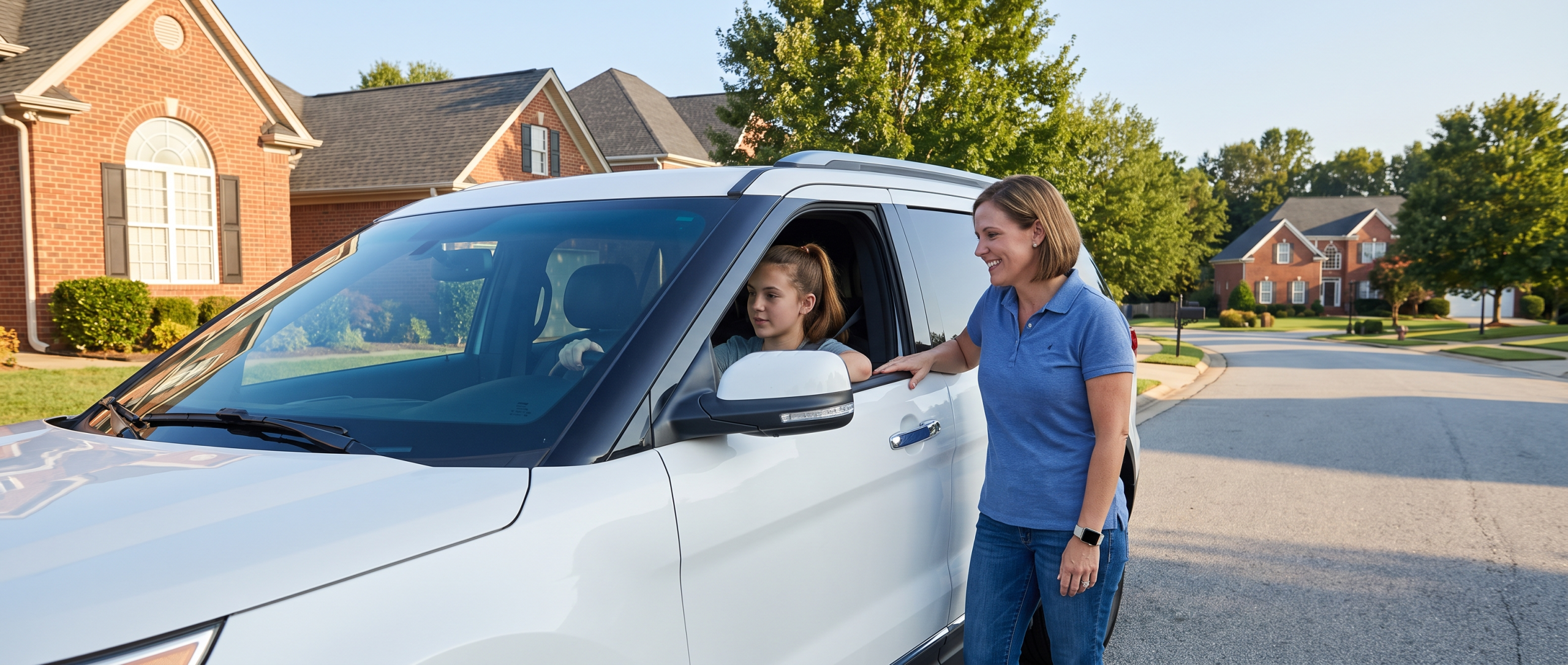
Sixteen is a milestone – and for most Greer, SC families, it arrives faster than expected. The moment your teen gets behind the wheel solo for the first time, every drive they take becomes something you think about until they pull back into the driveway. The Ford Explorer was built with exactly this kind of family reality in mind, and its safety technology goes well beyond a five-star rating on a government website. This guide breaks down the specific features that matter most for teen drivers in Greer and explains how each one works in the real situations your kid will actually encounter.
Why the Ford Explorer Is Worth a Serious Look for Families with New Drivers
The Explorer earned a Top Safety Pick designation from the Insurance Institute for Highway Safety (IIHS), and that recognition is based on real-world crash testing – not marketing language. For parents in Greer, that kind of third-party validation matters when you’re making one of the most consequential vehicle decisions of your family’s life.
The Safety Features That Actually Make a Difference on Greer Roads
Not every safety feature in a vehicle’s spec sheet is equally useful for a teen driver. Some are convenience tools. Others are genuinely protective. Here’s what stands out on the Explorer for families in Greer.
Pre-Collision Assist with Automatic Emergency Braking
This is the feature parents ask about most. Pre-Collision Assist uses a forward-facing camera and radar to monitor traffic ahead. If the system detects that a collision is likely and the driver hasn’t responded, it first alerts them – then applies the brakes automatically if needed.
Ford MyKey: The Feature Designed Specifically for Teen Drivers
Most people know about crash ratings. Far fewer know about Ford MyKey – and for families in Greer, this might be the single most practically useful feature on the Explorer for managing a new driver.
Structural Safety: What’s Protecting Your Teen If Prevention Isn’t Enough
Active safety features are the first line of defense. The Explorer’s physical structure is the last.
Ford designed the Explorer’s body using high-strength steel in key structural zones, which helps the cabin maintain its shape in a serious collision. The frame is built to absorb and redirect crash energy away from occupants.
Matching the Explorer to Greer’s Real Driving Environment
Greer, SC has a varied driving landscape that new drivers encounter quickly. From the congested stretches along Wade Hampton Boulevard to quieter routes near Tryon Distributing or the Greer City Park area, teens here face a mix of highway speeds, suburban intersections, and occasional rural roads.
South Carolina’s weather also plays a role. Summer afternoons bring sudden downpours that reduce visibility instantly. The Explorer’s Rain-Sensing Wipers adjust speed automatically – one less thing a teen has to manage when visibility suddenly drops on a wet afternoon.
What to Look for When Choosing an Explorer for a Teen Driver
Not all Explorer trims include every safety feature at the same level. Here’s what to verify before you commit to a specific vehicle:
Browsing our new inventory before visiting gives you a head start – you can see which trims are on the lot and which safety packages they carry before you set foot in the showroom.
Finding the Right Explorer Starts with the Right Conversation
Choosing a vehicle for a teen driver isn’t just a car purchase – it’s a decision that affects every drive for the next several years. The Ford Explorer’s combination of active safety technology, structural protection, and MyKey parental tools makes it one of the more thoughtfully equipped options for Greer, SC families navigating this transition.
The team at D&D Ford Motors understands what families in this area are looking for, and they’re ready to walk you through the specific trims and safety packages available so you can make a confident, informed choice.
Why the Ford F-150 Is the Right Work Truck for Your Pressure Washing Business in Greer, SC
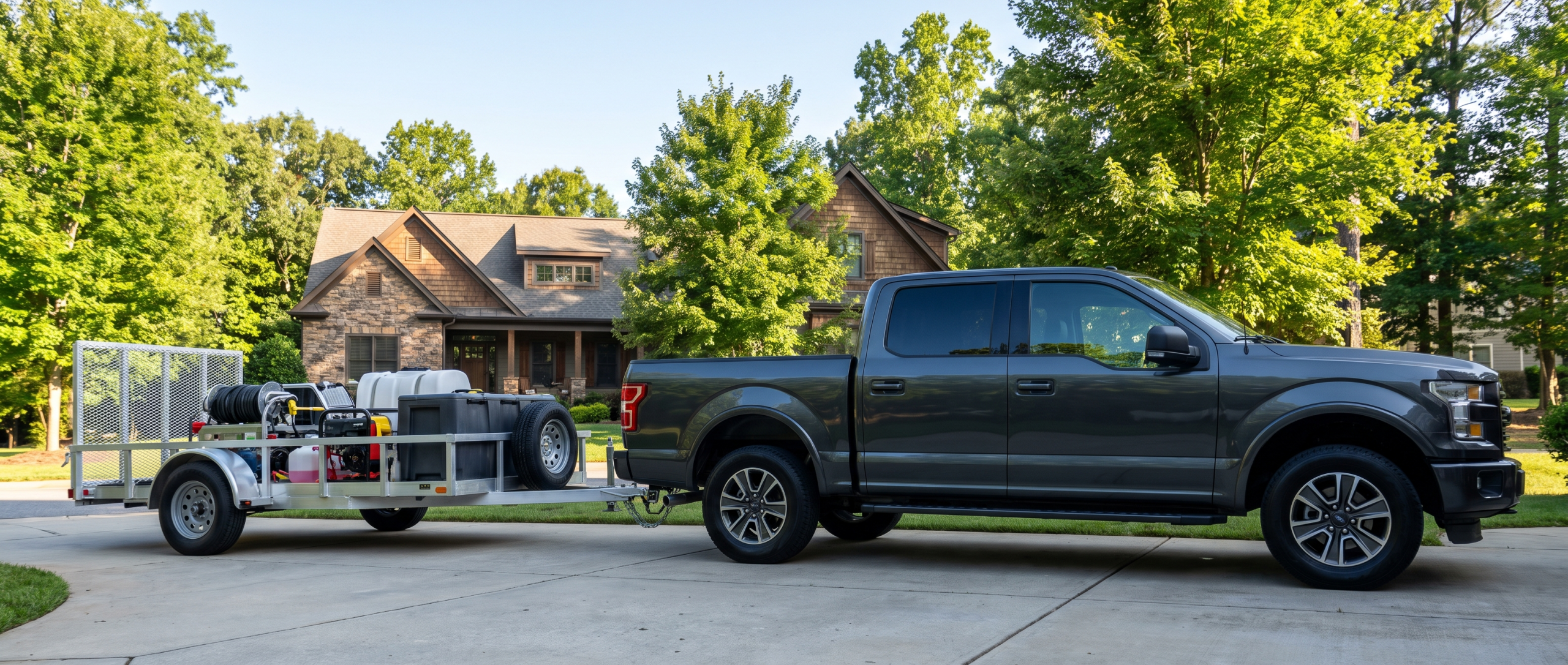
Running a pressure washing business in Greer, SC means putting serious miles on your truck every single week. Between loading up a 200-gallon buffer tank, towing a trailer with dual surface cleaners, and making back-to-back stops across the Upstate, your truck is not just transportation – it is the backbone of your operation. The Ford F-150® has earned its place as one of the most widely used work trucks for service businesses across South Carolina, and if you are building or growing a pressure washing operation, understanding exactly what it brings to your workflow is worth your time.
What Pressure Washing Businesses Actually Need from a Truck
The demands of a pressure washing business are different from most trades, and your truck needs to match them.
A plumber parks and works. A painter loads up once and heads to the job. Pressure washing operators are in and out of the truck 15 to 25 times a day, loading and unloading hose reels, adjusting trailer connections, hauling chemical totes, and driving routes that can span from Greer’s established neighborhoods near Tyger River to residential streets outside Spartanburg, SC and into Greenville, SC. The truck does not stop working until you do.
Here is what actually matters for this business model:
- Payload capacity to carry buffer tanks, chemical drums, and equipment in the bed
- Towing capacity for a dedicated pressure washing trailer rig
- Cab space for a crew of two when the jobs require it
- Fuel range to handle a full day of multi-stop routes without interruption
- Bed dimensions that accommodate standard 48-inch equipment widths
A truck that checks only two or three of these boxes creates friction every day. The F-150 addresses all of them in one package.
How the Ford F-150 Handles Payload and Towing for This Industry
The F-150 is capable of hauling over 2,000 pounds of payload in properly configured trims, which matters directly when you are carrying a 200-gallon water buffer tank.
Water weighs approximately 8.34 pounds per gallon. A full 200-gallon tank comes in at roughly 1,668 pounds before you add the tank itself, hose reels, chemical containers, and any additional gear. That kind of load puts pressure washing operators in a category most pickup truck owners never approach. The F-150’s available 3.5-liter EcoBoost engine, paired with the right payload package, gives you the margin you need to run full loads without stressing the suspension or exceeding the truck’s limits.
On the towing side, properly equipped F-150 configurations can tow up to 13,000 pounds. If you are running a 16-foot trailer with a hot water unit and a surface cleaner setup, you are likely in the 3,500 to 6,500 pound range depending on your rig. The F-150 handles that range with room to spare.
Choosing the Right F-150 Configuration for Pressure Washing Work
Not every F-150 is built for the same job, and choosing the wrong configuration creates problems you will deal with daily.
| Configuration | Best For | Trade-Off |
|---|---|---|
| Regular Cab, 8-ft Bed | Solo operators, maximum bed length, no trailer | Less passenger capacity |
| SuperCab, 6.5-ft Bed | Solo with occasional crew passenger needs | Middle ground on space |
| SuperCrew, 6.5-ft Bed | Two-person crews, equipment in bed + trailer | Slightly shorter bed than 8-ft |
| SuperCrew, 5.5-ft Bed | Crew hauling, primarily trailer-based setups | Bed space limited to smaller loads |
For most pressure washing operators in the Greer area running a trailer rig, the SuperCrew with a 6.5-foot bed tends to hit the most practical balance. You get full rear seating for a helper, enough bed space to carry chemical totes and hose reels, and the towing capacity to pull a properly loaded trailer without issue.
If you are a solo operator who keeps everything in the bed with no trailer, the Regular Cab with an 8-foot bed gives you the most usable flat surface.
Engine Options and Real-World Performance on Upstate SC Routes
Driving Greer’s roads is not the same as flat highway miles, and your engine choice reflects that.
The Upstate region has rolling terrain – not mountains, but enough elevation change on routes between Greer, Taylors, SC, and Duncan, SC that a loaded truck feels every grade. The 3.5-liter EcoBoost V6 is the engine most commercial operators gravitate toward because it delivers V8-level torque output (up to 570 lb-ft in high-output form on certain configurations) while maintaining reasonable fuel economy during the stop-and-go reality of residential service routes.
The 5.0-liter V8 is still a solid option for operators who prefer naturally aspirated power and plan to tow heavier rigs. It runs clean, it is easy to understand, and it delivers consistent pulling power without the complexity of turbocharger maintenance concerns.
The 2.7-liter EcoBoost is worth mentioning for operators with lighter setups – smaller trailers, soft wash systems without heavy tanks, or primarily flatwork with minimal equipment. It returns better fuel economy and still provides enough capability for mid-range loads.
Bed and Storage Setup Considerations for Service Operators
Your F-150’s bed is a workstation, not just a storage area, and setting it up right saves time on every job.
Pressure washing businesses in the Greer area typically configure their F-150 beds in one of two ways. The first is a full equipment carry setup – buffer tank, chemical drum rack, hose reel mount, and tool storage all in the bed. This works well for solo operators on residential contracts in neighborhoods near Paris Mountain State Park or Riverside High School, where driveways are long enough to pull up without a separate trailer rig.
The second is a bed support + trailer primary setup – chemical totes and supply inventory in the bed, with the machine and surface cleaner on a dedicated trailer. This splits the weight better and keeps the trailer hitch connection clean.
Useful add-ons operators often pair with the F-150 for this work:
- Bed liner (spray-in) to protect against chemical spill damage over time
- Toolbox mounted at the cab wall to keep nozzles, fittings, and small parts organized
- Tie-down rail upgrades for securing tank straps properly
- Gooseneck or fifth-wheel prep if you are planning to upsize your trailer in the future
Check out our new inventory if you want to see which F-150 configurations are currently available with factory bed utility packages already included.
Why Greer, SC Operators Rely on Trucks Built for Year-Round Work
South Carolina’s climate is not gentle on equipment or vehicles, and Greer sits in a zone that sees enough humidity, heat, and occasional freezing conditions to test your whole operation.
Summer in the Upstate means hauling equipment in 90-plus-degree heat, running pumps hard, and dealing with water that arrives at higher temperatures from sun-baked tanks. The F-150’s towing and cooling systems are designed to handle sustained load in high ambient temperatures – not just quick highway pulls. Fall and winter bring occasional freezing nights, which matter for operators managing water in tanks and hoses.
The F-150’s available four-wheel drive is a legitimate consideration for Greer pressure washers who take on commercial accounts in industrial areas near the Inland Port or residential jobs on unpaved or steep driveways. When you show up to a property after a rain and the driveway grade is working against you, 4WD turns a frustrating situation into a non-issue.
A full day running jobs from Greer toward Simpsonville, SC and back puts 60 to 80 miles on the truck easily. The F-150’s fuel range on the 3.5L EcoBoost configuration – typically in the 18 to 22 MPG combined range depending on load – is meaningful when you are running those routes five or six days a week.
Making the Case for the F-150 vs. Larger Super Duty Options
Some operators wonder whether they should step up to the Super Duty line – the F-250SD™ or F-350SD – instead of staying with the F-150.
Here is the honest answer: if your trailer exceeds 10,000 pounds gross vehicle weight, or if you are running a hot water industrial rig that tops 7,000 pounds loaded, a Super Duty is the right choice. The F-250SD and F-350SD are built for sustained commercial towing at weights that exceed what the F-150 is designed to handle daily.
But the majority of residential and light commercial pressure washing businesses in Greer are running setups well within the F-150’s range. The F-150 is more maneuverable in tight residential driveways, easier to park in shopping center lots when you have supply pickups to make, and carries a lower operating cost over time in fuel and maintenance.
- Handles 85% of residential and light commercial trailer setups
- More maneuverable on tight residential streets and driveways
- Better fuel economy than Super Duty equivalents under the same load
- Wider service interval options under normal operating conditions
- Strong resale value in the Upstate SC market
- Not the right tool for heavy industrial rigs above 10,000 lbs GVW
- Payload varies significantly by trim and configuration – requires careful selection
- Some bed length configurations limit in-bed tank size options
Common Questions About the Ford F-150 for Pressure Washing Businesses in Greer, SC
What F-150 engine is best for a pressure washing business in Greer, SC?
The 3.5-liter EcoBoost V6 is the most practical choice for pressure washing operators in Greer. It delivers up to 400 horsepower and strong torque output that handles loaded towing on the Upstate’s rolling terrain, while returning better fuel economy than the V8 during the stop-and-go nature of residential service routes. Operators with lighter soft wash setups may find the 2.7-liter EcoBoost sufficient for their daily needs.
How much can a Ford F-150 tow when pulling a pressure washing trailer?
A properly configured Ford F-150 can tow up to 13,000 pounds, which far exceeds the capacity needed for most pressure washing trailer setups. Standard residential pressure washing trailers with a hot water machine, surface cleaner, and 100-gallon tank typically fall between 3,000 and 6,500 pounds fully loaded. Always confirm the specific tow rating on your chosen configuration since cab style, bed length, and engine selection all affect the final number.
Is the Ford F-150 reliable enough for daily commercial use in the Greer, SC area?
The F-150 has consistently earned strong marks from J.D. Power for reliability in the full-size truck segment. For commercial operators running daily routes in Greer and surrounding Upstate communities, the key to long-term reliability is maintaining oil change intervals and keeping up with scheduled service – particularly important when the truck is working at or near its payload capacity regularly.
Can a Ford F-150 carry a 200-gallon buffer tank in the bed?
A 200-gallon water tank weighs approximately 1,668 pounds when full, which sits within payload range for F-150 configurations with a max payload package. However, you must account for the tank’s own weight, any additional equipment, and the driver and passenger weight when calculating your total payload. Choosing an F-150 with a dedicated payload package and verifying the specific payload rating on the window sticker is essential before committing to this setup.
What F-150 cab and bed configuration works best for a two-person pressure washing crew in Greer?
For a two-person crew operating in Greer and surrounding areas like Taylors, SC or Duncan, SC, the SuperCrew cab with a 6.5-foot bed is a practical configuration. You get full rear seating for a helper without sacrificing too much bed length, and the setup accommodates chemical totes and supply storage while still connecting to a trailer for the main equipment rig.
Where can I find a Ford F-150 configured for work use near Greer, SC?
D&D Ford Motors serves the Greer, SC area with a selection of F-150 trims suited for commercial and work use. Visiting the dealership in person lets you confirm exact payload ratings, bed configurations, and towing packages before you make a decision – all of which matter specifically for pressure washing business applications.
Ready to Put Your Pressure Washing Business Behind the Right Truck
The F-150 does not get its reputation by accident. For pressure washing operators in Greer, SC running daily routes, hauling tanks, pulling trailers, and building a business worth being proud of, it covers the practical requirements without asking you to overspend on truck you do not need or undersell yourself with a truck that cannot keep up.
The team at D&D Ford Motors understands what working trucks need to do and can help you match the right F-150 configuration to your actual equipment and route demands. Come in, look at what is on the lot, and have a real conversation about what your business needs from a truck.
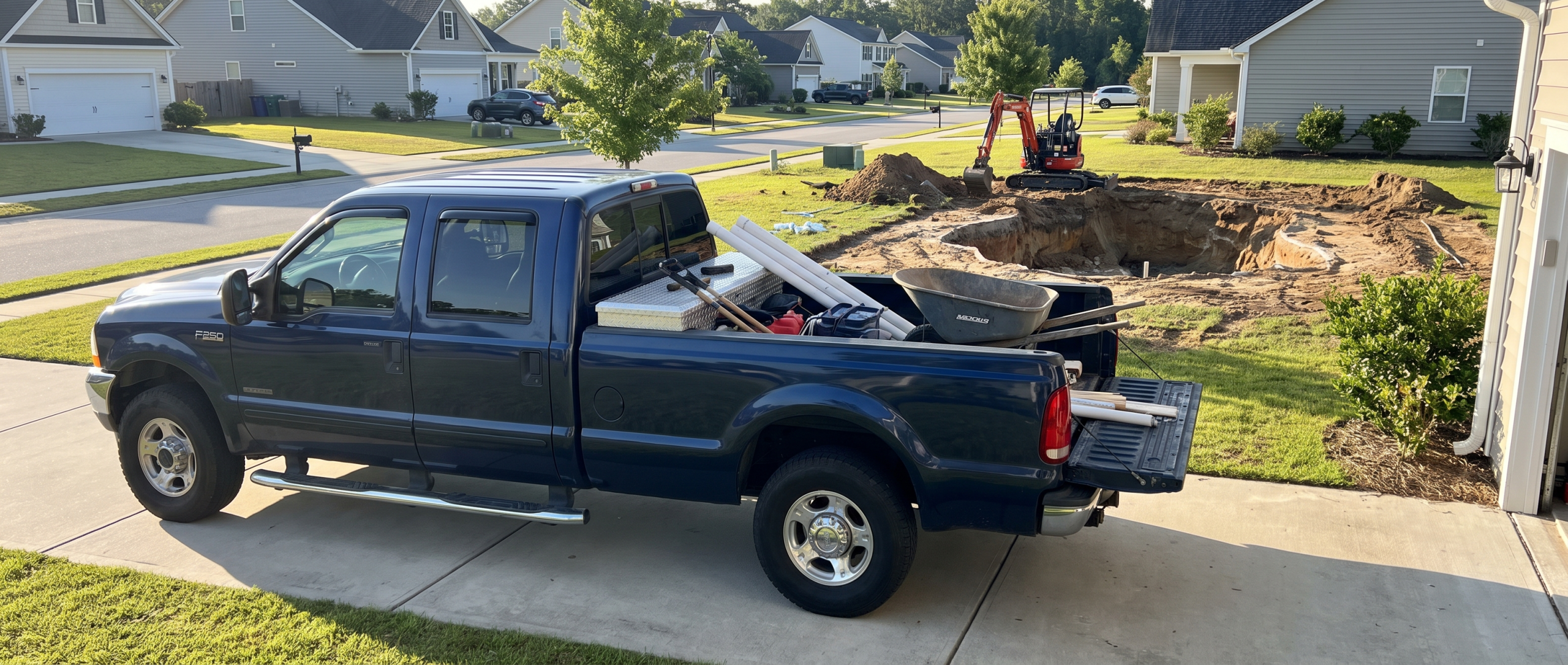
Pool contractors in Spartanburg County log serious miles – and that’s before the workday even starts. Between hauling excavation equipment to a new build near Lake Bowen, delivering chemical supplies to a service route in Greer, SC, and towing a trailer full of pumps and filtration systems across town, the wrong vehicle doesn’t just slow you down. It costs you money. The right Ford® work truck or van pays for itself through dependability, payload capacity, and the ability to handle whatever a South Carolina job site throws at it.
Why Spartanburg County Pool Contractors Have Specific Vehicle Needs
Pool work in this region is more demanding than most people outside the trade realize. Spartanburg County’s mix of established neighborhoods, new residential developments, and rural properties with long gravel driveways means your vehicle needs to handle suburban cul-de-sacs and rough dirt access roads on the same day.
Summer heat in the Upstate pushes well past 90°F for weeks at a stretch, which matters for both your crew and your engine. Work vehicles idling at job sites, running A/C hard while parked, and hauling heavy loads under that heat need cooling systems and tow ratings that won’t fade. Add the fact that pool season here runs roughly from late March through October, and you’re looking at some of the highest annual mileage demands of any residential trade contractor in the Southeast.
Here’s what pool contractors in this area are typically moving on any given day:
- Excavation and skimmer equipment
- Concrete, gunite, or fiberglass shell components
- Pumps, filters, and plumbing fittings
- Chemical supply stock (often in significant volume)
- Service tools and cleaning equipment for maintenance runs
- Trailers carrying small equipment or finished materials
A vehicle that can’t support that list reliably isn’t a work truck – it’s a liability.
The Ford F-250 Super Duty: Built for the Heaviest Pool Jobs
The F-250 Super Duty™ is the vehicle most experienced pool contractors in Spartanburg County gravitate toward, and the reason is straightforward: it handles the jobs that lighter trucks simply can’t.
With a max towing capacity of up to 22,800 pounds when properly equipped and payload capacity up to 4,260 pounds, the F-250 gives excavation-focused pool contractors the room they need. When you’re pulling a trailer with a skid steer to a new build off Highway 29 or hauling a full load of concrete forms, that rated capacity isn’t a number on a spec sheet – it’s the difference between completing a job in one trip or two.
The Super Duty’s available 6.7-liter Power Stroke diesel engine is worth particular attention for contractors doing high daily mileage. Diesel’s torque curve is ideal for towing under load, and for contractors running service routes across multiple neighborhoods near Boiling Springs or Duncan, the fuel efficiency under heavy use is noticeably better than gas alternatives in comparable configurations.
Strengths
- Highest towing and payload capacity in the Ford truck lineup
- Available diesel engine built for sustained towing workloads
- Crew Cab and SuperCab configurations for crew transport
- Available upfitter switches and work-ready electrical capacity
- Proven durability for multi-year commercial use
Considerations
- Higher starting price point than lighter trucks
- Larger footprint may be a factor in tight residential driveways
- Diesel fuel availability and service intervals require planning
Ford F-150: The All-Around Workhorse for Service-Route Contractors
Not every pool contractor needs maximum tow ratings every day. For businesses focused on maintenance routes – the weekly chemical checks, filter cleanings, and equipment inspections across dozens of residential pools – the F-150™ hits a balance that many contractors find hard to argue with.
Did you know? The Ford F-150 has been the top-selling vehicle in the United States for over 47 consecutive years. That kind of volume means parts availability, service support, and resale value that no other truck can match.
The F-150 with a 5.0-liter V8 or the high-output 3.5-liter EcoBoost gives service contractors enough tow capacity for a well-stocked trailer while delivering noticeably better fuel economy than a heavy-duty truck on routes that don’t require max-rated loads. When your crew is covering neighborhoods around Woodfin Ridge or running out toward Inman three days a week, that fuel savings accumulates quickly over a season.
Payload on the properly equipped F-150 reaches up to 2,440 pounds – more than sufficient for chemical stock, service equipment, and a full crew cab. The available Pro Power Onboard system, which generates up to 7.2 kW of exportable power from the bed, is genuinely useful for contractors who run power tools at job sites without a separate generator.
| Work Scenario | Recommended Configuration |
|---|---|
| New pool excavation and build | F-250 Super Duty, diesel, Crew Cab |
| Mixed service and light hauling | F-150 with 5.0L V8 or 3.5L EcoBoost |
| Chemical and equipment delivery | Transit-250 or Transit-350 cargo van |
| Multi-crew transport + trailer | F-350 Super Duty, Crew Cab |
| Solo service technician routes | F-150 Regular or SuperCab |
Ford Transit Cargo Vans: The Option Most Pool Contractors Overlook
There’s a strong case for adding a Transit™ van to a growing pool contractor’s fleet, and it’s one that doesn’t get made often enough in conversations about work vehicles.
Consider what a Transit-250 or Transit-350 cargo van offers that a truck bed cannot:
- Lockable, weatherproof cargo storage for chemical supplies, tools, and equipment that shouldn’t sit exposed in an open bed
- Standing room height options that make loading and unloading faster on long service days
- Full cargo separation from the cab, which matters when transporting chemicals
- Route efficiency – organized interior shelving systems mean less time searching for the right fitting on a job site
For a pool service business running maintenance contracts across Spartanburg County neighborhoods, a well-organized Transit cuts down wasted time significantly. Pool chemicals are heavy, temperature-sensitive, and require secure transport – an enclosed van handles that better than any open truck bed.
Pro tip: The Transit-350 is available with a high-roof configuration that provides 81.5 inches of interior standing height. For contractors building out interior shelving systems for tools, chemicals, and parts, that additional height can make a meaningful difference in how much you can organize and carry per trip.
The Transit lineup is also available with Ford’s commercial upfit prep packages, which simplify adding shelving, partition systems, and other work-specific configurations either through Ford directly or through an authorized upfitter.
F-350 and F-450 for Pool Contractors Running Heavy Equipment
Some pool contractors in Spartanburg County operate at a scale where even the F-250 starts to feel like a compromise. Contractors who regularly move heavy trailers – think a dedicated equipment trailer carrying a full excavator or multiple pieces of powered equipment – should be evaluating the F-350 Super Duty™ or F-450 Super Duty™.
The F-350 bumps available payload to over 7,850 pounds in certain configurations, while the F-450 pushes conventional towing to 37,000 pounds when properly equipped. For a contractor operating near Lake Blalock or covering larger rural property builds where a single excavation job might require multiple heavy equipment hauls, these are the numbers that matter.
Both trucks are available in dually configurations (dual rear wheels), which improves stability when hauling wide, heavy trailers. If your business has grown to the point where you’re regularly moving equipment that would challenge a consumer pickup, the F-350 and F-450 are where Ford’s commercial capability really becomes apparent.
The F-600 Super Duty™ is worth mentioning for larger pool construction operations that have crossed into medium-duty hauling territory, offering chassis cab configurations that support specialized flatbed or service body builds for equipment-heavy fleets.
Matching Your Business Stage to the Right Ford Work Vehicle
One of the most common mistakes pool contractors make is buying a vehicle for the business they have today rather than the business they expect to operate in two years. Here’s a practical framework for matching your operation to the right platform:
Starting out or solo operation: The F-150 with a work-oriented trim and appropriate tow package handles most service-focused pool work efficiently. Lower overhead, strong resale value, and manageable running costs make it a solid foundation.
Growing service business with a small crew: A Crew Cab F-150 or an F-250 Super Duty gives you crew transport capability without committing to a heavy-duty truck on every route day. Consider a used F-250 if you want Super Duty capacity while managing cash flow during growth.
Established contractor with build and service operations: An F-250 or F-350 for excavation and build jobs paired with a Transit cargo van for service routes is a combination that many mid-size pool companies find hits the right operational balance. Browse our new inventory to see current work truck and van configurations available at the dealership.
Large construction operation: F-450 or F-550 Super Duty with a purpose-built service body or flatbed configuration, alongside multiple crew vehicles. At this scale, fleet purchasing through Ford Pro makes sense to explore with the finance team.
Common Questions About Ford Vehicles for Pool Contractors in Greer, SC
What Ford truck is best for towing a pool equipment trailer in Spartanburg County?
The F-250 Super Duty with the 6.7-liter Power Stroke diesel is the strongest choice for regular trailer towing in Spartanburg County. It handles trailer loads up to 22,800 pounds when properly equipped, manages South Carolina’s summer heat under sustained towing conditions, and delivers better fuel efficiency under load than comparable gas configurations. For lighter trailers under 10,000 pounds, a well-equipped F-150 with a tow package is sufficient.
Is a Ford Transit van practical for a pool chemical supply route in Greer, SC?
Yes – a Ford Transit-250 or Transit-350 is well-suited for pool chemical routes in Greer, SC. The enclosed cargo area keeps chemicals secure, organized, and separated from the cab. Transit vans in mid-roof or high-roof configurations support aftermarket shelving systems that improve route efficiency. For businesses running 10 or more weekly maintenance stops, the organized interior space of a Transit pays off in time savings.
How much payload does a Ford F-150 have for pool service equipment?
A properly configured Ford F-150 offers up to 2,440 pounds of payload capacity. For most pool service routes carrying chemical stock, tools, and moderate equipment, this is more than adequate. Contractors hauling heavier loads consistently – pumps, filtration units, or larger service equipment – should evaluate the F-250 Super Duty, which offers significantly higher payload ratings.
Can a Ford F-150 tow a pool trailer in Spartanburg County?
Yes, a properly equipped Ford F-150 can tow up to 13,500 pounds, which is sufficient for most service and light construction trailers used in pool work. For heavier excavation equipment trailers common on new pool builds across Spartanburg County, the F-250 or F-350 Super Duty provides the higher-rated towing capacity and structural strength those loads require.
Where can I find Ford work trucks for my pool business near Greer, SC?
D&D Ford Motors in Greer, SC serves pool contractors and other trades businesses throughout Spartanburg County, including contractors working in Boiling Springs, Duncan, and surrounding areas. The team can help match your specific payload, towing, and crew transport needs to the right truck or van configuration.
Does Ford offer commercial fleet options for pool contractors with multiple vehicles?
Ford’s commercial vehicle program through Ford Pro offers fleet purchasing options, upfit support, and telematics for businesses operating multiple work vehicles. Pool contractors in Spartanburg County looking to equip more than one truck or add a van to an existing truck fleet can ask about current commercial vehicle availability and fleet account options.
The Right Work Truck Changes How You Operate
Pool contractors who run the right vehicle for their operation don’t just get through the day – they run tighter schedules, carry more in fewer trips, and spend less time dealing with equipment that wasn’t built for the job. Whether you’re a solo service technician covering neighborhoods near Lake Bowen or running a full construction crew on new builds across Spartanburg County, Ford’s lineup has configurations that match the real demands of pool work in the Upstate. The team at D&D Ford Motors understands what trades contractors need from a work vehicle and can help you sort through the options without wasting your time.


