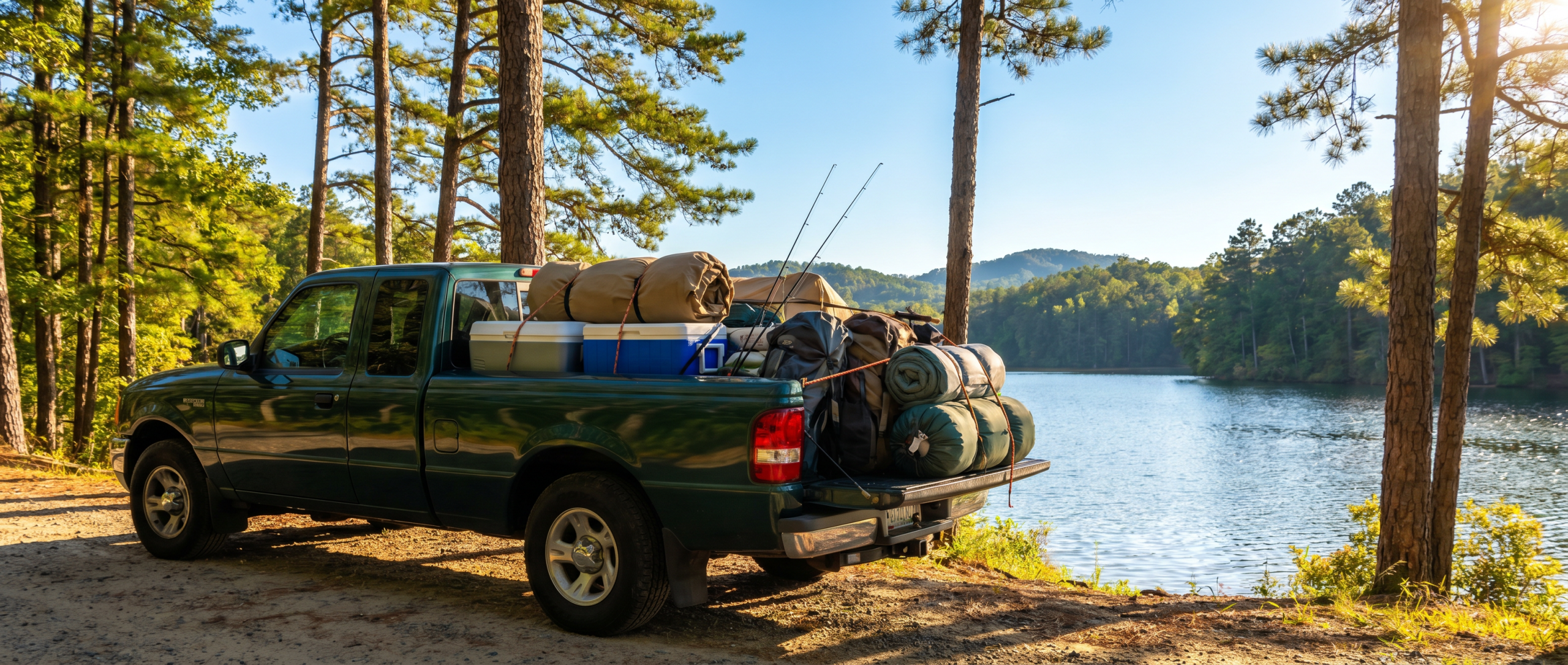
Most truck owners are surprised to learn that overloading a pickup bed does more damage than a fender bender – and summer is the season when it happens most. If you’re hauling kayaks to Lake Cunningham, loading up the bed for a weekend at Paris Mountain State Park, or stacking camping gear before a run down I-85, your Ford Ranger® has a specific payload limit that deserves your attention before you start loading. This guide breaks down exactly how to maximize your Ranger’s capability without crossing the line between capable and overloaded.
What “Payload” Actually Means for Your Ranger
Payload is the total weight your truck can carry in the bed and cab combined – including passengers, cargo, and any accessories you’ve added. The 2024 Ford Ranger is rated for up to 1,625 pounds of payload, depending on configuration. That number includes the weight of everyone sitting in the cab, which surprises a lot of first-time truck owners who assume payload only refers to what’s in the bed.
Your Ranger’s specific payload limit is printed on a sticker inside the driver’s door jamb. That number is calculated for your exact build, not a general estimate. Check it before every heavy haul – it takes about ten seconds and can save you from a blown suspension component or, worse, a handling situation on the highway.
Calculating Your Summer Load Before You Throw It In
Eyeballing a truck bed full of gear is not a reliable strategy. A pair of kayaks can weigh 50 to 80 pounds each. A full cooler with ice hits 60 to 80 pounds easily. Add a generator, two mountain bikes, tent gear, and three passengers in the cab, and you can approach your limit faster than expected.
Here’s a simple pre-loading approach that works well:
- Check your door jamb sticker for your Ranger’s specific payload rating
- Subtract passenger weight from that number (a cab with three adults at 175 pounds each removes 525 pounds from your available cargo capacity)
- Weigh your gear before loading – a bathroom scale handles most individual items
- Total your cargo weight and compare it against your remaining capacity
- Leave a buffer of 100-150 pounds to account for anything you may have forgotten or underestimated
This takes about five minutes at home and protects your truck, your passengers, and your summer plans.
The Best Way to Distribute Weight in the Ranger’s Bed
Staying under your payload limit is only half the equation. Where you place that weight inside the bed changes how the truck handles on everything from I-85 to the winding roads near Caesars Head State Park.
| Load Placement | Effect on Handling | Best For |
|---|---|---|
| Low and centered | Best stability, balanced steering | Heavy coolers, generators |
| Forward, near cab | Reduces bed bounce, improves control | Long items, lumber, kayaks |
| Rear of bed only | Raises front end, reduces steering feel | Avoid when possible |
| Uneven side-to-side | Creates pull and instability | Never recommended |
The general rule is straightforward: keep heavy items low and as close to the cab as possible. Flat, heavy objects like toolboxes and coolers should sit on the bed floor. Lighter gear like sleeping bags and dry bags can stack on top. Avoid letting weight shift to the tailgate end of the bed.
Securing Your Gear Properly on South Carolina Roads
Unsecured cargo is a legal issue in South Carolina and a road safety concern for every driver behind you. SC Code Section 56-5-4030 requires that cargo be secured to prevent it from falling or shifting while in motion. A loose kayak or sliding gear bin is not just inconvenient – it can create liability for you as the driver.
Here’s what a properly secured Ranger bed looks like for a summer haul:
- Tie-down straps rated for the load – not bungee cords for anything heavier than a suitcase
- Anchor points used correctly – the Ranger has four built-in tie-down hooks in the bed corners; use all of them when possible
- Cam buckle or ratchet straps for heavy items like generators, large coolers, and bikes
- Load nets for smaller items that might shift under acceleration or hard braking
- Tailgate fully closed or secured if load extends beyond it
If your gear arrangement requires the tailgate down, make sure the tailgate is secured in the horizontal position with the factory support cables – don’t rely on cargo weight to hold it level.
How Greer’s Summer Heat Affects Your Ranger’s Performance Under Load
Hauling a full payload in upstate South Carolina summer heat is genuinely harder on your truck than doing the same job in March. Ambient temperatures regularly push into the mid-to-upper 90s in Greer, SC between June and August, and that affects a few things worth knowing about.
Tire pressure rises in heat. Tires gain roughly 1 PSI for every 10 degrees Fahrenheit of temperature increase. If you inflate to spec in the morning and load the truck at noon after it’s been sitting in the sun, your tires will be at higher pressure than intended. Check tire pressure before loading, ideally when tires are cool.
Engine cooling works harder under payload. The Ranger’s 2.3-liter EcoBoost engine handles heat well, but towing or hauling at or near maximum payload on a 95-degree day while climbing grades will stress the cooling system more than typical driving. Make sure your coolant level is topped off and your radiator is clean before a heavy summer haul.
Brake performance requires more attention. A loaded Ranger weighs significantly more than an empty one, which means stopping distances increase. Add summer heat and repeated braking on the descents around Paris Mountain and you have a scenario where brake fade becomes a real consideration. Check your brake fluid condition and pad thickness before summer hauling season.
Browse our new inventory if you’re still shopping for the right Ranger configuration for your outdoor lifestyle – cab size, bed length, and trim level all affect payload and capability.
Accessories That Help (and Some That Hurt)
Not all truck accessories are equal when it comes to managing a summer payload. Some genuinely improve your hauling experience. Others eat into your payload capacity without adding much value.
Accessories that add real utility:
- Bed liner (spray-on or drop-in) – protects the bed and keeps cargo from sliding
- Tonneau cover – improves aerodynamics and protects gear from afternoon storms
- Bed extender – useful for kayaks and bikes without adding much weight
- Quality cargo tie-down anchors – adds more anchor points for varied loads
Accessories that quietly eat your payload:
- Heavy aftermarket steel bumpers (can add 50-100+ pounds)
- Large toolboxes bolted to the bed (quality steel units often weigh 80-120 pounds when empty)
- Lift kits and oversized wheels – add unsprung weight that affects ride and handling under load
The Ranger’s payload sticker accounts for the truck as it left the factory. Every pound of accessories you add comes directly out of your available cargo capacity. If you’ve added a heavy toolbox and a steel front bumper, recalculate your available payload before loading the bed for summer trips.
Common Questions About Ford Ranger Payload Tips in Greer, SC
What is the payload capacity of the 2024 Ford Ranger?
The 2024 Ford Ranger offers a maximum payload rating of up to 1,625 pounds, though the exact number varies by cab configuration, bed length, and drivetrain. Your specific truck’s payload limit is listed on the certification label inside the driver’s door jamb. That number already accounts for fuel weight and a standard driver, so subtract passenger weight to find your actual cargo capacity.
Can I haul kayaks and camping gear in my Ranger without exceeding the limit?
Yes, with proper planning. Two average kayaks weigh roughly 100-160 pounds combined. A loaded camping setup with cooler, tent, and gear typically runs 100-200 pounds depending on what you’re bringing. Add two passengers at average weight and you’re using perhaps 600-700 pounds of capacity – well within the Ranger’s rating for most configurations. The key is to calculate before loading, not guess.
Does hauling a full payload in Greer’s summer heat damage my Ranger?
Operating near maximum payload in high heat isn’t inherently damaging if the truck is well-maintained and you’re monitoring key systems. Check tire pressure, coolant level, and brake condition before heavy summer hauls. Avoid sustained maximum-payload driving on steep grades during the hottest part of the day if possible, and give your engine time to cool between demanding trips.
Where can Greer, SC drivers go to check whether their Ranger needs service before summer hauling?
D&D Ford Motors serves Greer, SC and the surrounding Upstate South Carolina area including drivers coming in from Spartanburg and Greenville. If your Ranger is due for an oil change, brake inspection, or tire rotation before summer hauling season, you can schedule service through the dealership’s service department to get everything checked before you load up.
How do I know if I’m overloading my Ranger?
Common signs of overloading include the rear of the truck sagging noticeably, the front end feeling light or steering feeling less responsive, and a rougher-than-normal ride even on smooth roads. If you notice any of these, stop and redistribute or remove weight. Chronically overloading a truck causes premature wear to leaf springs, shock absorbers, and wheel bearings – repairs that are far more costly than renting a trailer.
Does adding a tonneau cover affect my Ranger’s payload rating?
A tonneau cover itself reduces payload by however much the cover weighs – typically 50-100 pounds for a hard cover, less for a soft roll-up. So yes, it counts against your payload rating. However, a tonneau cover also provides real value by protecting gear from South Carolina afternoon thunderstorms and reducing aerodynamic drag on highway runs to destinations like Table Rock State Park. Most Ranger owners find the trade-off worthwhile.
Load Smart, Haul Confidently All Summer
Knowing your Ranger’s payload rating and working within it isn’t about limiting what you can do – it’s about making sure every summer trip actually goes the way you planned it. A well-loaded truck handles predictably, protects your gear, and comes home in the same condition it left. Whether you’re heading to the Swamp Rabbit Trail area or loading up for a long weekend in the mountains, taking ten minutes to plan your load makes every mile better. The team at D&D Ford Motors is here to help you get your Ranger ready for whatever Greer, SC summers throw at it – from pre-season service to finding the right truck configuration that fits your hauling needs from the start.


