South Carolina summers push vehicle cooling systems harder than almost anywhere else in the country, with Greer, SC experiencing 90+ degree days from May through September combined with humidity that makes engines work overtime. Your Ford®‘s cooling system is the unsung hero that prevents catastrophic engine damage, yet most drivers don’t think about it until steam pours from under the hood on I-85. Understanding how to maintain your cooling system before problems arise will save you from roadside breakdowns and expensive repairs, especially if you regularly haul heavy loads to Lake Robinson or climb the grades near Glassy Mountain. This guide provides Ford-specific cooling system insights that help Greer residents protect their investment and avoid the frustration of overheating during our brutal summer months.
Understanding Your Ford’s Cooling System Components
Your Ford F-150 or Explorer uses a sophisticated liquid cooling system with multiple components working together – when one fails, the entire system struggles to keep your engine at the optimal 195-220°F operating temperature.
The heart of the system is your water pump, which circulates 7,350 gallons of coolant per hour at highway speeds. This mechanical pump drives coolant through passages inside your engine block, absorbing heat from combustion. The heated coolant then flows to your radiator, where air passing through the fins removes heat before the cooled liquid returns to the engine.
Your thermostat acts as the system’s traffic controller, remaining closed when the engine is cold to speed warm-up, then opening at precisely 195°F to allow coolant flow. The radiator cap maintains 16 PSI of pressure, raising the coolant’s boiling point to 250°F – critical for preventing boil-over in South Carolina heat.
The cooling fan provides additional airflow when you’re stuck in traffic on Wade Hampton Boulevard or climbing steep grades. Modern Ford vehicles use electric fans controlled by the PCM (Powertrain Control Module), which monitors coolant temperature and activates the fan as needed.
Common Cooling Problems in Hot, Humid Climates
The combination of high temperatures and extreme humidity in the Greenville-Spartanburg area creates unique challenges that accelerate cooling system wear beyond what Ford engineers originally anticipated for national averages.
Radiator corrosion occurs faster here due to our humidity levels averaging 70% year-round. Moisture in the air combines with road salt from winter treatments on US-29, creating an electrochemical reaction that eats through aluminum radiator fins. You’ll notice reduced cooling efficiency long before visible damage appears.
Signs of humidity-related cooling system damage:
- White or green crusty deposits on radiator connections
- Pinhole leaks that appear as dried coolant trails
- Reduced heat output from your cabin heater
- Gradual coolant loss without visible puddles
- Temperature gauge creeping higher in stop-and-go traffic
Coolant degradation happens 30% faster in our climate compared to dry regions. The constant heat cycling and humidity exposure breaks down coolant additives that prevent corrosion and maintain proper pH levels. When these additives deplete, acidic coolant begins attacking gaskets, hoses, and metal components from the inside.
Water pump bearing failure is another regional concern. The humidity creates condensation inside the cooling system during temperature swings, washing away bearing lubricants. F-150 and Super Duty® owners who frequently tow boats to Lake Keowee experience accelerated wear from the additional heat load.
Essential Maintenance Schedule for South Carolina Conditions
Ford’s standard maintenance intervals don’t account for the extreme conditions we face from Anderson to Simpsonville, requiring adjusted service schedules to prevent failures during peak summer heat.
| Service Item | Ford Recommendation | SC Adjusted Interval | Critical Months |
|---|---|---|---|
| Coolant Level Check | Monthly | Weekly (May-Sept) | June-August |
| Radiator Inspection | Annually | Every 6 months | April & October |
| Coolant Flush | 100k miles | 60k miles | Spring preferred |
| Hose Replacement | As needed | Every 4 years | Before summer |
| Thermostat Service | 150k miles | 100k miles | Spring/Fall |
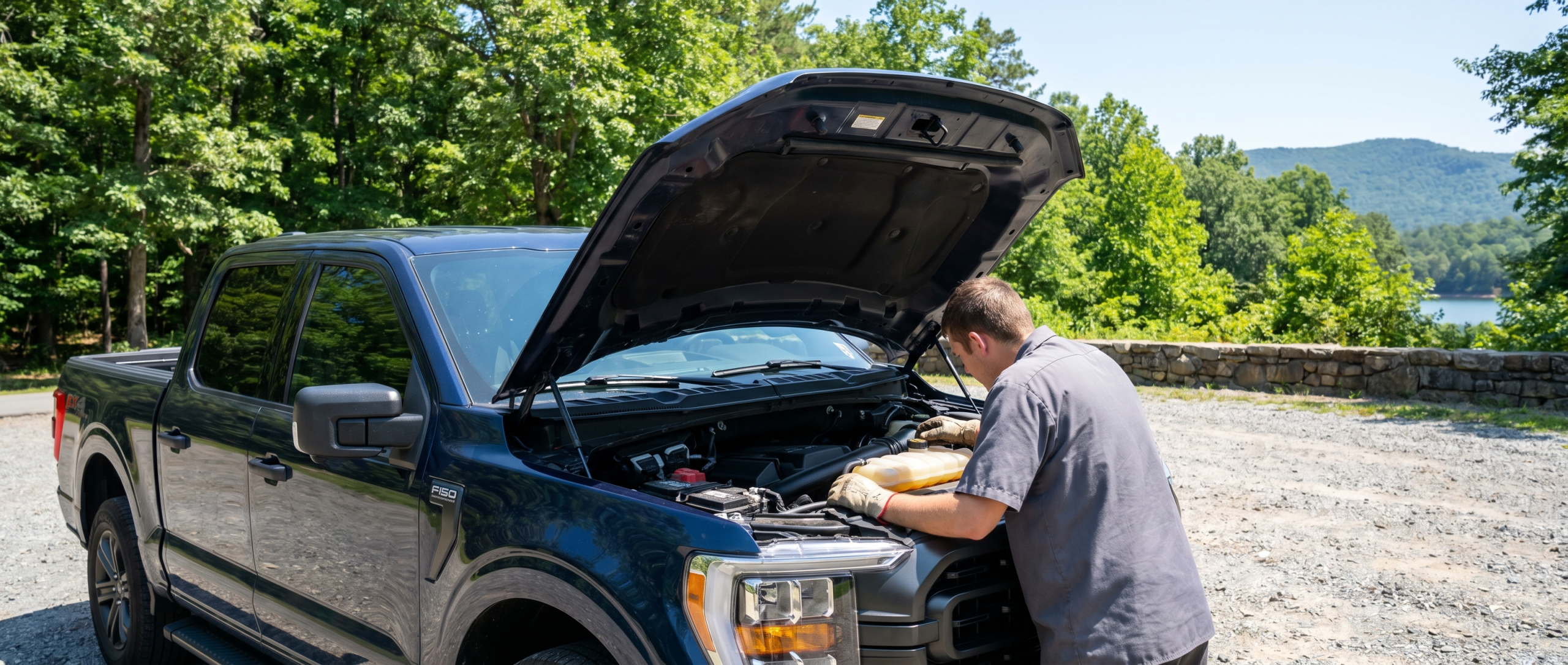
Weekly coolant checks during summer months catch problems before they strand you. Park on level ground and check the translucent overflow tank when the engine is cold – the level should sit between MIN and MAX marks. Low coolant often indicates a slow leak that needs attention.
Radiator cleaning twice yearly removes debris that blocks airflow. Bugs, pollen, and road grime accumulate faster here than in other regions. Use a garden hose to gently flush from the engine side outward, being careful not to bend the delicate fins.
DIY Checks vs. Professional Service
Some cooling system maintenance tasks are perfect for handy Mustang or Maverick owners, while others require professional equipment and expertise to perform safely.
Safe DIY maintenance tasks:
- Visual coolant level checks
- Inspecting hoses for cracks or soft spots
- Cleaning debris from radiator fins
- Testing radiator cap pressure with a rental tool
- Checking belt tension on older models
Leave these to professionals:
- Coolant system pressure testing
- Water pump replacement
- Radiator core repair or replacement
- Head gasket diagnosis
- Cooling fan motor testing
The most overlooked DIY check is hose condition. Squeeze the upper and lower radiator hoses when cool – they should feel firm but flexible. Soft, spongy hoses indicate internal deterioration that isn’t visible externally. Replace any hose showing cracks, swelling, or excessive softness.
Professional service becomes essential when dealing with pressurized systems or internal engine components. Modern Ford engines like the 3.5L EcoBoost in the F-150 have complex cooling systems with multiple thermostats and intricate coolant routing that require specialized knowledge.
Summer Driving Strategies to Prevent Overheating
How you drive during South Carolina summers directly impacts cooling system stress, especially when navigating the steep grades around Caesar’s Head State Park or sitting in Columbia traffic.
When climbing long hills with a loaded Expedition Max, downshift to maintain steady RPMs rather than flooring the accelerator. Higher RPMs increase water pump flow and cooling fan speed, providing better heat dissipation than lugging the engine in a high gear. Watch your temperature gauge closely – if it rises above the normal midpoint, pull over before it reaches the red zone.
Traffic jam cooling strategies:
- Shift to neutral when stopped to reduce engine load
- Turn off AC if temperature rises (AC adds heat load)
- Crack windows and use fresh air ventilation
- Avoid riding the brakes – heat transfers to the engine bay
- Leave extra following distance to minimize stop-and-go
Towing requires special attention during summer months. Your Super Duty’s cooling system works 40% harder when pulling heavy loads. Engage tow/haul mode to activate enhanced cooling programs, and consider installing an auxiliary transmission cooler if you regularly pull boats or RVs. Monitor both engine and transmission temperatures, as either can cause the other to overheat.
Pre-trip preparation prevents most summer breakdowns. Check your coolant level before any trip longer than 50 miles, and carry an extra gallon of properly mixed coolant. If your Ranger sits for extended periods, run it for 10 minutes weekly to circulate fluids and prevent seal deterioration.
Warning Signs Your Ford Needs Immediate Attention
Recognizing early warning signs prevents minor cooling issues from becoming major repairs that sideline your vehicle during peak summer travel season.
Temperature gauge fluctuations indicate air pockets or low coolant before complete failure occurs. If your gauge swings between normal and hot, or drops to cold while driving, stop immediately and check coolant levels. Air in the system prevents proper heat transfer and can cause localized hot spots that damage head gaskets.
Sweet antifreeze smell inside your cabin means heater core leakage – a $600-1,200 repair if caught early, or potential dashboard removal if ignored. This smell is distinctly different from moldy AC odors and usually accompanies foggy windshield conditions that won’t clear.
Critical warning signs requiring immediate shutdown:
- ✓ Steam from under the hood
- ✓ Temperature gauge in the red zone
- ✓ Knocking or pinging sounds from engine
- ✓ Loss of power with high temperature
- ✓ Coolant puddles under the vehicle
White exhaust smoke that smells sweet indicates coolant entering combustion chambers through a blown head gasket or cracked head. This requires immediate attention as continued driving will destroy the engine. A slight puff of white smoke on cold starts is normal condensation, but continuous white clouds spell trouble.
Hood surface temperature provides a quick diagnostic. If you can’t hold your hand on the hood after driving, internal temperatures are excessive. This often indicates fan failure or severely restricted radiator flow that needs professional diagnosis.
Common Questions About Ford Cooling Systems in Greer, SC
How often should I flush my Ford’s coolant in South Carolina’s climate?
Flush your Ford’s coolant every 60,000 miles in South Carolina, compared to the standard 100,000-mile interval recommended nationally. The intense heat cycles and humidity in Greer accelerate coolant breakdown, making more frequent service essential for preventing corrosion and maintaining proper heat transfer through the system.
Why does my F-150 run hotter when towing in summer around Greer?
Your F-150 runs hotter when towing because the additional weight increases engine load by 30-50%, generating more heat than the stock cooling system was designed to dissipate continuously. The hills around Greer and highways like I-385 compound this effect, making auxiliary cooling upgrades recommended for frequent towers.
What’s the normal operating temperature for Ford vehicles in SC heat?
Normal operating temperature for Ford vehicles ranges from 195-220°F, even in South Carolina summer heat. Your temperature gauge should stay near the center position; if it regularly reads above the midpoint during normal driving around Spartanburg, have your cooling system inspected for restrictions or degraded coolant.
Can I use any coolant brand in my Ford truck?
Use only Motorcraft Orange coolant or exact equivalent in 2011+ Ford trucks, as mixing coolant types causes chemical reactions that form sludge and destroy water pump seals. Earlier models use Motorcraft Gold, and using the wrong type voids warranty coverage while potentially causing thousands in damage to your cooling system.
Where can I get my Ford’s cooling system checked in Greer, SC?
Schedule service at a certified Ford dealership in Greer for cooling system inspection, as factory-trained technicians understand model-specific requirements and use proper Motorcraft parts. Professional pressure testing and diagnostic equipment identify problems before they cause breakdowns on hot days traveling I-85 or Highway 101.
Does running the AC affect my Ford’s cooling system performance?
Running your AC adds 10-15% more heat load to your Ford’s cooling system because the condenser sits directly in front of the radiator, preheating incoming air. In extreme heat above 95°F common in Greer summers, temporarily switching off AC when climbing steep grades helps prevent overheating in older vehicles.
Protecting Your Ford Through Every Season
Your Ford’s cooling system works hardest during South Carolina summers, but year-round attention prevents those frustrating breakdowns that always seem to happen at the worst possible moment. Regular maintenance costs far less than emergency repairs, and staying ahead of problems means never worrying about steam clouds while merging onto I-26.
Taking care of your cooling system protects your entire engine investment. Whether you drive a hardworking F-250SD around construction sites or commute in an Escape through downtown Greenville, these maintenance practices ensure reliable performance when temperatures soar. The team at D&D Ford Motors understands how our local climate challenges cooling systems and can help keep your Ford running strong through the hottest days ahead.
Remember that prevention beats repair every time – especially when you depend on your vehicle for work or family obligations throughout the Upstate.


