
2026 Ford F-150 Engines Compared: EcoBoost vs PowerBoost Hybrid vs V8 for Greer & Greenville Drivers
2026 Ford F-150 Engines Compared:
EcoBoost vs PowerBoost Hybrid vs V8 for Greer & Greenville Drivers[cite: 7]
By the D&D Motors Team | Updated May 2026[cite: 7]
Picking the right 2026 F-150 trim is actually the easy part.[cite: 7] The decision that determines how you feel about this truck three years from now, the one most buyers either rush past or agonize over for weeks, is the engine.[cite: 7] Ford offers the 2026 F-150 in more distinct powertrain configurations than most buyers realize when they start shopping: a compact twin-turbo V6 optimized for efficiency, two versions of the larger turbocharged V6 aimed at pulling power and performance, a naturally aspirated V8 that never left, and a full hybrid that combines instant electric torque with twin-turbo output in ways no conventional truck can match.[cite: 7]
Each of these engines is genuinely excellent at what it was designed for.[cite: 7] The problem is that buyers try to pick the best engine in the abstract, when the only question that matters is which one fits their actual driving life in Upstate South Carolina.[cite: 7] At D&D Motors in Greer, our team works through this exact decision with F-150 buyers regularly.[cite: 7] This guide reflects those real conversations.[cite: 7]
The 2026 F-150 Powertrain Lineup: What Ford Puts Under the Hood[cite: 7]
Five engines, each engineered for a fundamentally different use case. Here is what separates them at the spec level before we get to how they actually feel.[cite: 7]
Every mainstream 2026 F-150 powertrain pairs with a 10-speed automatic transmission.[cite: 7] Maximum towing figures reflect properly equipped configurations and vary based on cab style, bed length, drivetrain, and installed packages.[cite: 7]
| Engine[cite: 7] | HP[cite: 7] | Torque[cite: 7] | Max Towing[cite: 7] | Primary Purpose[cite: 7] |
|---|---|---|---|---|
| 2.7L EcoBoost V6[cite: 7] | 325 hp[cite: 7] | 400 lb-ft[cite: 7] | Up to 8,400 lbs[cite: 7] | Daily commuting and moderate towing[cite: 7] |
| 3.5L EcoBoost V6[cite: 7] | 382 hp[cite: 7] | 500 lb-ft[cite: 7] | Up to 13,500 lbs[cite: 7] | Maximum towing and commercial work[cite: 7] |
| 5.0L Coyote V8[cite: 7] | 400 hp[cite: 7] | 410 lb-ft[cite: 7] | Up to 12,800 lbs[cite: 7] | Traditional V8 character, strong payload[cite: 7] |
| 3.5L PowerBoost Hybrid V6[cite: 7] | 430 hp[cite: 7] | ~570 lb-ft[cite: 7] | Up to 11,600 lbs[cite: 7] | High torque, city efficiency, onboard generator[cite: 7] |
| 3.5L HO EcoBoost V6[cite: 7] | 450 hp[cite: 7] | 510 lb-ft[cite: 7] | Up to 8,200 lbs[cite: 7] | Raptor-exclusive performance tuning[cite: 7] |
2026 Update Worth Knowing: Ford reduced the 3.5L EcoBoost V6 from 400 hp to 382 hp for the 2026 model year to comply with new emissions standards requiring a Gasoline Particulate Filter.[cite: 7] Torque remains at 500 lb-ft and the maximum tow rating of 13,500 lbs is unchanged.[cite: 7] This is the most commonly misquoted spec when comparing 2025 and 2026 F-150 listings online.[cite: 7]
The High Output 3.5L is exclusive to the Raptor with dedicated performance tuning that does not apply to the standard lineup.[cite: 7] The four mainstream options above cover every realistic Upstate SC driving scenario.[cite: 7]

How Each Engine Actually Feels Behind the Wheel[cite: 7]
Spec sheets tell you what a truck can pull. They cannot tell you what it feels like pushing up a grade near Paris Mountain or merging onto I-85 with a loaded trailer.[cite: 7] This section does.[cite: 7]
These four engines feel nothing alike in daily use, which is why experiencing them in person matters as much as reading about them.[cite: 7]
- The 2.7L EcoBoost V6 is the engine that consistently surprises people who expected a compromise.[cite: 7] It is the lightest powertrain in the lineup, which means the front end of the F-150 feels more nimble than it has any right to. Turn-in is crisp, the truck changes direction quickly, and the twin turbos respond without noticeable lag in everyday throttle inputs.[cite: 7] On Woodruff Road stop-and-go or the Greer bypass at steady cruise, it never feels overworked or strained.[cite: 7] Where you notice its limits is under sustained heavy towing. The engine works visibly harder than the 3.5L, and long highway grades with a loaded trailer are where that gap opens.[cite: 7]
- The 3.5L EcoBoost V6 does not feel refined. It feels strong.[cite: 7] This engine is optimized for one thing: low-end torque, and it delivers it so early in the rev range that the transmission almost never needs to downshift under normal towing loads.[cite: 7] Put a loaded boat trailer on the hitch, merge onto I-85 from the Greer ramp, and the 3.5L accelerates without drama.[cite: 7] There is a quiet confidence behind the wheel of this engine when it is working that the 2.7L simply does not match.[cite: 7] The tradeoff is personality: this engine does not have any.[cite: 7] It is a tool, and it is an exceptionally capable one.[cite: 7]
- The 5.0L Coyote V8 is the only engine in this lineup that makes drivers smile for reasons that have nothing to do with numbers.[cite: 7] It breathes naturally. No turbos, no lag, no electric motor assist, just a large-displacement V8 pulling air and making sound.[cite: 7] Power builds linearly as engine speed climbs, accompanied by a mechanical exhaust note that the turbocharged options physically cannot produce.[cite: 7] There is a reason buyers who grew up in F-150 V8s are still choosing this engine.[cite: 7] It is not the strongest puller and it is not the most efficient, but it connects driver to truck in a way that is increasingly rare in a segment moving toward forced induction.[cite: 7]
- The 3.5L PowerBoost Hybrid is the most technically involved powertrain in the 2026 F-150 lineup.[cite: 7] The startup is completely silent. No combustion engine cycling, no sound, just the display confirming the vehicle is on.[cite: 7] From a dead stop, the integrated electric motor delivers torque before the twin turbos have a chance to spool, launching the truck forward with an effortless immediacy that no conventional engine produces.[cite: 7] The gas engine integrates seamlessly as speed builds, invisible in normal operation unless you watch the power flow display on the screen.[cite: 7] For a driver accustomed to conventional powertrains, the first time behind the wheel of a PowerBoost feels like a different category of vehicle.[cite: 7] You can schedule a test drive at our Greer location and experience that startup sequence and low-speed torque firsthand on your own commute route. Reading about it does not fully capture it.[cite: 7]
Real-World Fuel Economy on Upstate SC Roads[cite: 7]
The I-85 commute corridor through Greer is a more honest test lab than any EPA chamber. Here is how these engines actually behave on the roads you drive every week.[cite: 7]
EPA efficiency ratings are measured under controlled conditions that rarely match the texture of a daily commute between Greer, Greenville, and Spartanburg.[cite: 7] The real story depends on which type of driving dominates your week.[cite: 7]
The PowerBoost Hybrid holds the largest real-world advantage in stop-and-go conditions.[cite: 7] Every slowdown on the I-85/I-385 interchange, every light cycle on Pelham Road, every crowded merge near downtown Greenville converts braking energy back into charge that the combustion engine does not need to burn later.[cite: 7] Buyers already evaluating Ford's hybrid and EV lineup will find the PowerBoost delivers the most compelling city efficiency available in a full-size truck by a meaningful margin over any non-hybrid option in this lineup.[cite: 7]
The 5.0L V8 tells the opposite story in city conditions.[cite: 7] Cylinder deactivation helps it manage sustained highway stretches efficiently, but in the stop-and-go traffic that defines most Upstate commutes, that large displacement works against it.[cite: 7] Every red light on Woodruff Road and every congestion slowdown near the I-85/I-385 interchange costs more fuel per mile than it costs any other engine in this lineup.[cite: 7] The V8 earns its place for buyers who value its character and proven simplicity. Efficiency is not its argument.[cite: 7]
The 2.7L EcoBoost is the balanced performer across all conditions.[cite: 7] Its compact displacement and efficient twin-turbo architecture are well-matched to the variable demand of a mixed commute.[cite: 7] Responsive enough to feel capable and predictable enough to keep real-world fuel costs manageable.[cite: 7] For the Upstate driver whose week is dominated by commuting with occasional hauling, this engine typically delivers the most consistent overall satisfaction.[cite: 7]
The 3.5L EcoBoost makes the most sense when viewed through its primary lens: towing.[cite: 7] Under the sustained demand of pulling, the task it was built for, it is more efficient at any given towing load than competing configurations at the same capability level.[cite: 7] If you tow regularly, this engine earns its fuel consumption with capability you will actually use.[cite: 7] If you rarely tow, the 2.7L or PowerBoost serves the same daily life for less at the pump.[cite: 7]
Longevity, Track Record, and What History Actually Shows[cite: 7]
When you plan to keep a truck for a decade, understanding each engine's engineering history is part of making a confident decision, and most comparison guides skip this section entirely.[cite: 7]
Most F-150 engine comparisons cover performance numbers and efficiency estimates, then move to recommendations.[cite: 7] What they avoid is the honest answer to the question every serious long-term buyer eventually asks: which one holds up?[cite: 7]
The 5.0L Coyote V8 is the simplest powertrain in the F-150 lineup, and that simplicity is its durability story.[cite: 7] No turbochargers, no intercoolers, no high-voltage hybrid components, just a naturally aspirated V8 refined in the F-150 platform since 2011.[cite: 7] Its track record with fleet operators and high-mileage drivers is well-established and consistent across multiple production generations.[cite: 7] For buyers who prioritize mechanical straightforwardness and a known long-term quantity, this engine carries the clearest reliability history in the lineup.[cite: 7]
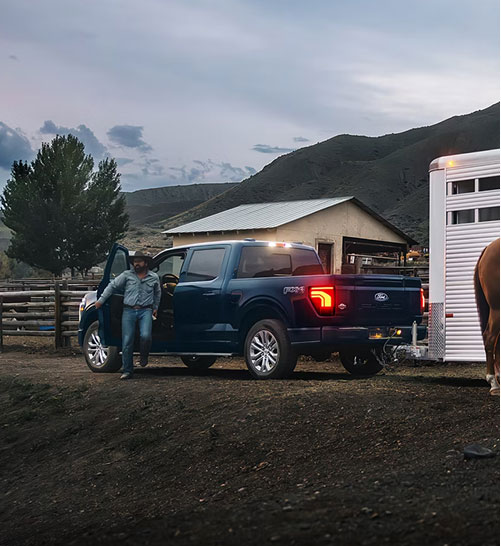
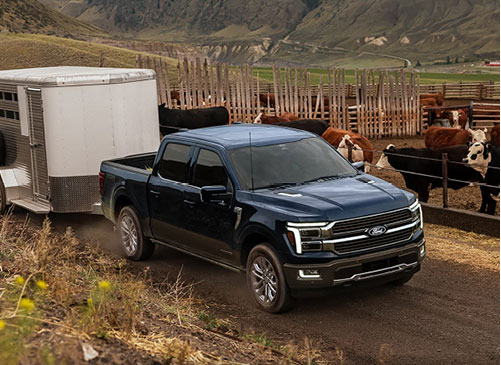
The 3.5L EcoBoost V6 carries a more complicated story and we think buyers deserve to know it.[cite: 7] Early production years saw documented issues with timing chain wear and intercooler condensation buildup, the latter particularly relevant in humid southern climates like Upstate South Carolina, where summer heat combined with turbo cooling cycles could introduce moisture into the intake system.[cite: 7] These were real issues that affected real owners, and they are part of why some high-mileage F-150 buyers still reach for the V8.[cite: 7] Ford addressed these through substantive engineering updates over subsequent model years, and current production 3.5L EcoBoost engines reflect those changes.[cite: 7] Buyers evaluating pre-owned F-150s should pay attention to production year when considering any 3.5L. Our team can help clarify which production windows apply to any specific unit.[cite: 7]
For all 3.5L owners, a disciplined maintenance schedule is the most reliable path to high-mileage performance.[cite: 7] Ford Mobile Service can bring that maintenance to your driveway or job site so your schedule does not have to stop for it.[cite: 7]
- The 2.7L EcoBoost V6 arrived later and benefited from the engineering lessons of the 3.5L's development.[cite: 7] Its compacted graphite iron block is a notably robust foundation, and the real-world reliability record since its 2015 introduction has been consistently positive with fewer documented field issues per production year than the early 3.5L.[cite: 7]
- The 3.5L PowerBoost Hybrid is the newest configuration in the lineup and its long-term track record is still building.[cite: 7] The turbocharged V6 component is the same family as the well-tested 3.5L.[cite: 7] The hybrid battery and motor system extends Ford's battery technology developed first in the Escape and refined further in the Maverick, both with positive field reliability data across hundreds of thousands of units.[cite: 7] The PowerBoost is not an experimental platform, but buyers who prefer a longer established reliability record will factor its relative youth into their decision.[cite: 7]
Which 2026 F-150 Engine Fits Your Upstate Driving Life?[cite: 7]
Picture your average Tuesday. Then picture your busiest Saturday. The right engine has to work for both without making either feel like a compromise.[cite: 7]
The clearest path to the right choice is to anchor on the single hardest task you will ask this truck to perform on a regular basis, not occasionally.[cite: 7]
| If Your Primary Use Is...[cite: 7] | Consider This Engine[cite: 7] | Why It Fits[cite: 7] |
|---|---|---|
| Daily commuting, light hauling[cite: 7] | 2.7L EcoBoost V6[cite: 7] | Efficient, refined, never strained in daily traffic[cite: 7] |
| Heavy towing, commercial work[cite: 7] | 3.5L EcoBoost V6[cite: 7] | Highest tow rating, dominant low-end torque[cite: 7] |
| City commuting, efficiency priority[cite: 7] | 3.5L PowerBoost Hybrid[cite: 7] | Best city efficiency, instant electric torque, Pro Power Onboard generator[cite: 7] |
| Traditional feel, mechanical simplicity[cite: 7] | 5.0L Coyote V8[cite: 7] | Linear power, natural sound, established long-term track record[cite: 7] |
| Off-road performance[cite: 7] | 3.5L HO EcoBoost (Raptor)[cite: 7] | High-output tuning, exclusive to Raptor[cite: 7] |
The toughest call for most Upstate buyers falls between the 3.5L EcoBoost and the PowerBoost.[cite: 7] Both deliver strong torque. The difference comes down to how heavily regular towing weighs against city efficiency and onboard generator capability, and those priorities are personal.[cite: 7] For buyers who tow large loads consistently, the 3.5L EcoBoost's higher tow ceiling is decisive.[cite: 7] For buyers whose towing is occasional and whose daily driving is stop-and-go Greer-to-Greenville commuting, the PowerBoost's real-world efficiency advantage compounds meaningfully over time.[cite: 7]
Our team can pull up current 2026 F-150 inventory filtered by engine configuration so you can see exactly what is on the lot before making the drive out to Greer.[cite: 7]
Find Your 2026 F-150 Powertrain at D&D Motors in Greer[cite: 7]
The right engine is not the most powerful one or the most efficient one.[cite: 7] It is the one that costs you the least in daily frustration while covering the hardest task you ask it to do.[cite: 7] That calculation looks different for a contractor running materials toward the BMW plant in Spartanburg than it does for a commuter logging daily miles between Greer and Greenville, and getting it right before you sign changes the ownership experience for years.[cite: 7]
Reading about the difference between an electric torque launch and a naturally aspirated V8 is useful preparation.[cite: 7] Feeling both on the same Upstate road is the only way to be fully certain.[cite: 7] Our Greer team is here to give you the time and space to form your own conclusion behind the wheel, without the clock running.[cite: 7]
If you are trading in a vehicle, you can estimate your trade value online before your visit to arrive with a clear starting point.[cite: 7]
Call (864) 877-0711 to speak with our team about 2026 F-150 powertrain availability in Greer.[cite: 7]