How Often Does a Ford F-150 Really Need an Oil Change?
EcoBoost vs V8 Owner's Guide for Upstate SC Drivers
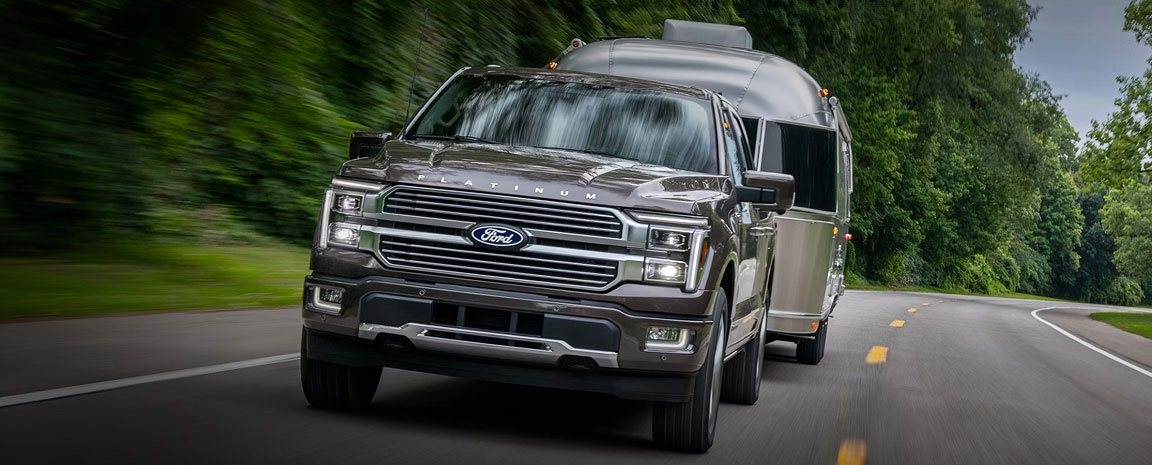
The honest answer to this question is not "every 3,000 miles," and it is not "wait until the light hits zero and everything is fine." For 2026 F-150 owners in Upstate SC, the right interval depends on which engine you have, what kind of driving you do, and whether your summer driving pushes your truck into Ford's severe duty category -- which many towing and work-truck owners around Greenville do without realizing it.
For drivers running construction jobs in Simpsonville or towing to Lake Hartwell in July heat, that distinction matters more than most oil change conversations acknowledge. This guide breaks down exactly what Ford recommends by engine, what severe duty means for your real life, and what extended intervals do to EcoBoost engines over time. D&D Motors in Greer handles F-150 service across the Upstate and can help you dial in the right schedule for how you actually drive.
Quick Summary:
- Ford no longer recommends 3,000-mile intervals for any modern F-150
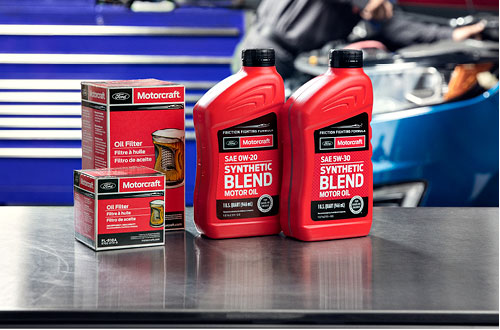
- Both the EcoBoost and the 5.0L V8 now require full synthetic 5W-30 -- not conventional, not a blend
- Normal interval: follow the Intelligent Oil-Life Monitor up to 10,000 miles or 1 year
- Severe duty interval: 5,000-7,500 miles -- and if you tow regularly in Upstate SC summer heat, you likely qualify
- EcoBoost engines face an additional risk from turbocharger heat that the naturally aspirated V8 does not share
The 3,000-Mile Rule Is Not What Modern F-150 Engines Need
The IOLM replaced the fixed-mileage standard -- and what it actually tracks surprises most F-150 owners.
The 3,000-mile standard made sense for conventional oil in older, looser-tolerance engines. It does not apply to a 2026 F-150 running full synthetic. Ford has not recommended 3,000-mile intervals for modern F-150 engines for years, and continuing on that schedule with today's synthetic oil is unnecessary.
What replaced it is Ford's Intelligent Oil-Life Monitor -- the percentage displayed under vehicle information on your dashboard. Here is the part most owners do not know:
What the IOLM does track:
- Engine revolutions and load cycles
- Operating temperatures over time
- Elapsed time since last service
- Driving patterns such as short trips, highway miles, and towing loads
What the IOLM does NOT do:
- Measure actual oil contamination in the pan
- Sample or test the oil directly
- Detect whether the correct oil specification was used at the last service
It is an algorithm, not a sensor. Two F-150s with identical mileage can show very different IOLM readings depending on how hard each engine worked. That distinction matters -- especially for Upstate SC drivers whose trucks do more than commute.
EcoBoost vs V8: Same Oil, Different Risk Profile
Both engines require full synthetic 5W-30, but turbos add a heat variable the naturally aspirated V8 does not experience.
Ford currently specifies full synthetic 5W-30 for the 2.7L EcoBoost, the 3.5L EcoBoost, and the 2021-and-newer 5.0L Coyote V8 in the F-150. The V8 specification changed from 5W-20 to 5W-30 with the 2021 model year when Ford added the cylinder deactivation system, which requires additional viscosity for the solenoids that manage that system. Always verify the exact specification on your oil cap or owner's manual, as your specific build year can vary.
Identical oil specification does not mean identical risk. Here is where the EcoBoost differs from the V8:
- Turbocharger heat: EcoBoost turbos generate significant exhaust-adjacent heat. The oil lubricating the turbo bearings is exposed to temperatures the naturally aspirated V8's components never see.
- Oil coking risk: When degraded oil circulates through a hot turbocharger and the engine shuts off, residual heat can bake oil deposits into the turbo's oil feed passages -- the beginning of premature bearing wear.
- Timing chain sensitivity: Ford's oil specification for EcoBoost engines includes chain wear test requirements specifically designed for the timing chain stress unique to turbocharged direct-injection engines.
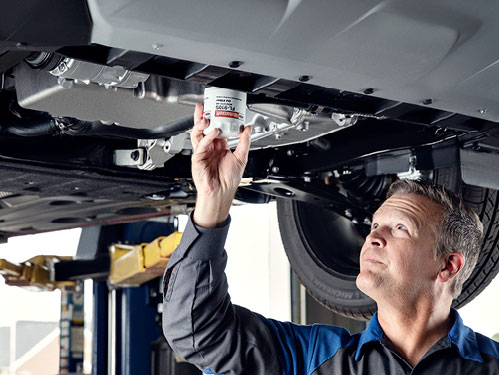
The 5.0L V8, being naturally aspirated, does not face the turbo heat factor. Its oil degrades more evenly and the engine handles mild interval variation better than the EcoBoost. That said, under severe duty conditions -- which Upstate SC summer heat can trigger -- the same 5,000-7,500 mile guidance from Ford service professionals applies to both engines.
The Upstate SC Factor: When Your F-150 Qualifies as Severe Duty
Greenville-Spartanburg summer temperatures regularly hit 95-100 degrees Fahrenheit -- and any F-150 towing to the lakes in that heat operates under Ford's severe duty definition.
Ford's severe operating conditions definition matters because it directly determines which interval applies to your truck. Severe duty includes any combination of:
- Frequent short trips under 5 miles
- Extended idling or low-speed driving
- Regular towing or hauling heavy loads
- Operating in extreme hot or cold temperatures
- Dusty conditions
For Upstate SC F-150 owners from May through September, towing a boat trailer to Lake Hartwell or running supplies to a job site in 97-degree Greenville heat checks multiple boxes at once. The ambient heat raises the engine's baseline thermal load before any additional demand is applied. Adding a trailer on the back -- down toward the Anderson County ramps or up US-276 toward the foothills -- compounds that stress directly.
Winter in the Upstate is relatively mild. Temperatures below 20 degrees Fahrenheit are rare in Greer and Greenville, so the cold-weather concerns that northern drivers manage are minimal here. Short cold-weather trips still technically qualify as severe duty, but the dominant seasonal risk in Upstate SC is clearly summer heat.
The practical takeaway: if your F-150 tows regularly from June through August in the Upstate heat, Ford service professionals recommend managing intervals at 5,000-7,500 miles during those months rather than waiting for the IOLM to hit 0%. Before booking, check service and parts specials at D&D Ford to see what is currently available.
What Extended Intervals Actually Do to an EcoBoost Engine
Direct injection engines like the EcoBoost 2.7L and 3.5L do not get the fuel wash that older port-injected engines did -- and that changes the carbon and sludge equation over time.
In older port-injected engines, the fuel-air mixture passed across intake valves on every combustion cycle. That mist kept the valve backs relatively clean. In a GDI (Gasoline Direct Injection) engine like the EcoBoost, fuel is injected directly into the combustion chamber. The intake valves never see fuel -- only recirculated crankcase vapor. Over time, that vapor leaves carbon deposits on the back of the intake valves.
This is a known characteristic of all modern GDI engines, not a defect unique to Ford. Regular oil changes with the correct full synthetic oil reduce the volume of blowby vapor that circulates through the intake, slowing the deposit process.
The turbo sludge problem is separate but connected:
- When an EcoBoost shuts down, heat soaks from the exhaust into the turbocharger
- Degraded oil circulating at shutdown can oxidize in the hot turbo housing
- That oxidized oil forms deposits in the turbo's oil feed and drain passages, restricting flow to the bearings over time
Neither of these issues appears overnight. They are cumulative -- and most F-150 owners who stay on a consistent full synthetic schedule never encounter them. The owners who do are typically those who ran extended intervals under severe conditions, used off-specification oil, or both.
If your F-150 has a mixed service history and you are evaluating whether continued maintenance or a newer truck makes more sense for your situation, browsing current 2026 F-150 inventory at D&D Ford provides a practical comparison point.
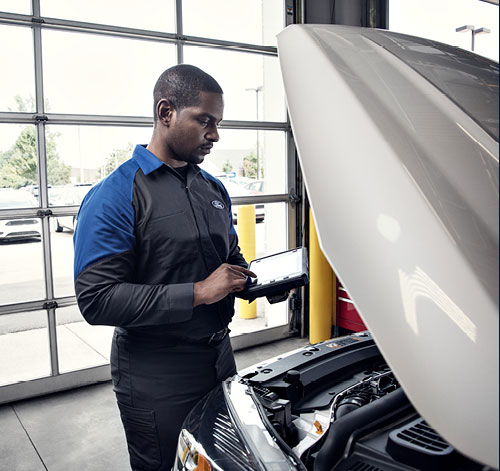
F-150 Oil Specs and Intervals: EcoBoost vs V8 at a Glance
Ford-recommended oil types and intervals by engine, plus the Upstate SC severe duty picture in one place.
Always verify the exact viscosity specification on your truck's oil cap or in the owner's manual, as specifications can vary by specific build year and equipment.
What qualifies as severe duty for Upstate SC F-150 drivers:
How to Schedule Your F-150 Oil Change at D&D Ford in Greer
Five steps from checking your current oil life reading to driving out with the right oil in the engine -- including Ford Mobile Service for drivers who need service to come to them.
Check your IOLM reading. On your dashboard, go to Settings -- Vehicle -- Oil Life Monitor. If you are at or below 30-40% and you operate your truck in severe duty conditions, schedule now rather than waiting for 0%.
Identify your driving pattern. If your F-150 tows regularly, runs job sites in summer heat, or makes frequent short trips, you are in the severe duty category. Plan for 5,000-7,500 mile intervals during peak summer months.
Choose your service method. In-center service at D&D Ford in Greer covers oil, filter, multi-point inspection, and full service record documentation. Ford Mobile Service is also available -- a technician comes to your home or job site for qualifying routine services in Greer, Greenville, Spartanburg, Simpsonville, Easley, and Mauldin.
Book your appointment. Schedule online at the link below or call the service team directly. Online scheduling shows real-time availability at the Greer service center.
Bring your service history if you have it. A complete service record helps the technician identify any patterns worth discussing and keeps your documentation clean for resale value.
Call (864) 877-0711 to reach the D&D Ford service team in Greer.
If you are also considering trading in your current F-150 toward a newer model, you can estimate your trade value online before visiting to arrive with a clear starting point.