

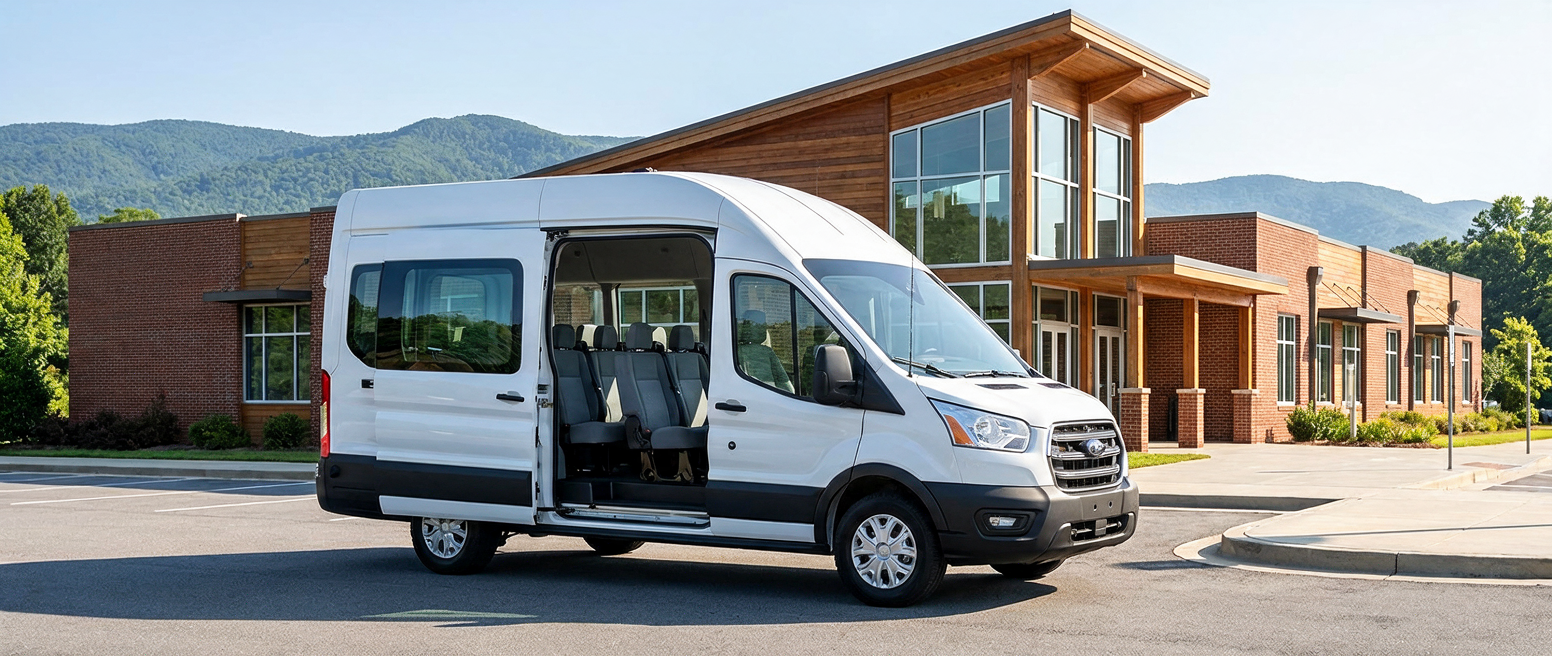
Schools, churches, and shuttle operators around Greenville rarely pick the wrong van on purpose. They pick the wrong *configuration* of the right van, and they don't notice until about three months into ownership, when the rear seats feel punishing on a 40-minute run or a coordinator realizes the group plus gear is bumping the payload limit. The fix is almost always the 2026 Ford Transit-350, but the version you order matters more than the badge on it suggests.
For organizations moving 12 to 15 people in the Greenville area, the Transit-350 Passenger Van is the platform that makes sense. The roof height and wheelbase you order decide whether those passengers ride comfortable or just technically get there, and it's the part that trips people up. Spec that part with care.
See Current Ford Transit Deals
What's Actually Going On? A Configuration Breakdown by Use Case
The 2026 Ford Transit-350 Passenger Van offers up to 15-passenger seating, two trims, XL and XLT, three roof heights, and two body lengths, which sounds like flexibility but can feel like paralysis when you're on the hook for a budget. The table below maps the organizational needs we see at the counter to the configuration that fits them.
| Organization Type | Recommended Config | Why It Fits | What to Watch |
|---|---|---|---|
| School field-trip shuttle (short runs) | Transit-350 XL, Medium Roof, Long Wheelbase | Max 15 seats, 52-inch headroom, lower acquisition cost | Rear seats are functional, not plush; fine for 30-45 min trips |
| Church van (mixed age, weekly runs) | Transit-350 XLT, Medium or High Roof, Long Wheelbase | XLT adds comfort trim; 52-56.6 in. headroom for older adults | Budget step-up vs XL; plan for it |
| Airport/hotel shuttle (GSP corridor) | Transit-350 XLT, High Roof, Extended Wheelbase | 56.6-inch stand-up headroom; cargo space for luggage behind row 5 | Extended length needs a wider parking plan |
| Nonprofit or multi-purpose fleet | Transit-350 XL, Long Wheelbase, your roof choice | Lowest operating cost, easiest to maintain at scale | Cloth seats; upgrade to vinyl if spill risk is high |
Ford lists the passenger van's max payload at 3,401 pounds across its 2026 Passenger Van lineup. Run that against a full load of 15 adults plus gear, and you can see why leaving headroom in the configuration spec isn't optional.
The Transit-150 and Transit-250 are genuine options for smaller groups, think 8 to 10 passengers in a converted cargo configuration, but for a true 12-to-15-seat passenger van, the Transit-350 is the one Ford actually rates for that job. The smaller two won't earn it.
The Engine Question Most Buyers Get Wrong
The 2026 Transit-350 Passenger Van's standard powertrain is a naturally aspirated 3.5-liter V6 producing 275 horsepower, paired with a 10-speed SelectShift automatic. You get that engine in a Long Wheelbase configuration, and it handles I-85 highway speeds and the rolling grades between Greer and Greenville without drama. For most organizations, it's plenty.
The 3.5-liter EcoBoost V6, rated at 300 horsepower, becomes standard when you step up to the Extended Wheelbase body. So if your route stays relatively flat and you're not hauling luggage regularly, the base V6 with a Long Wheelbase config is a capable, sensible choice. If your shuttle covers more ground (say, airport runs that occasionally head toward the Blue Ridge foothills on I-26), the EcoBoost on an Extended body gives you the reserve you'll appreciate.
A note worth flagging comes from our commercial team. The Transit Passenger Van exceeds the 8,500-pound GVWR threshold, which means it isn't subject to EPA fuel economy testing. Real-world estimates run roughly 15 to 20 mpg depending on load and route, per published industry data. Skip the car-like number. Budget on the higher-load end of that range and call it a realistic plan.
XL vs. XLT: The Honest Tradeoff
The Transit-350's XL trim is built for durability and lower total acquisition cost, with cloth seats and commercial-grade interior surfaces focused on function. For a school district running a defined route on a defined replacement schedule, XL is usually the call.
You're putting high miles on it over several years. The service simplicity earns its keep.
XLT adds better interior materials, more comfort features, and the standard Ford Co-Pilot360 2.0 with Advanced Driver Assist features including the Remote Acceleration Limiter. For a church van that carries older adults, or a shuttle that doubles as a guest-experience vehicle, you'll feel where the XLT trim's added cabin refinement earns its step up.
Both trims share one downside worth saying out loud. The rear seats in the 2026 Transit Passenger Van are functional, not luxurious. Multiple real-world owners note that 30 to 45 minutes is the sweet spot for rear passengers, and longer trips call for deliberate seat upgrades or aftermarket cushioning. For a Greenville school running 20-minute route legs or a church running weekly Sunday routes, it's a non-issue. For an organization doing 90-minute charter runs, factor seat comfort into the plan.
DIY Decision vs. Talking to Our Commercial Team
You can make a version of this call on your own, and you'll want a quick conversation before ordering on another version entirely. The split comes down to how standard your use case is.
Handle it yourself if:
- Your use case is straightforward: fixed 15-passenger route, known group weight, regular short hops around Greenville County
- You know you want XL for budget and long-wheelbase for the seat count
- You're replacing an existing Transit and the current config has worked well
Bring it to us if:
- You're spec'ing for the first time and aren't sure whether your full passenger load plus equipment stays inside the 3,401-pound payload limit
- You need upfitter guidance (privacy glass, fleet graphics, step rails, or interior surface changes)
- You're deciding between the Transit Passenger Van and the E-350SD cutaway for a custom shuttle body
- Your organization qualifies for fleet or commercial purchasing support through Ford Pro
Our team on East Wade Hampton Boulevard works with commercial and fleet buyers regularly. We can run a payload calc with you before you order, not after the van shows up in your lot. That's where we catch the configuration mismatches that would otherwise surface at month three.
Frequently Asked Questions
Does driving a 15-passenger Ford Transit require a special driver's license in South Carolina?
No CDL, or Commercial Driver's License, is required in South Carolina to operate a Ford Transit Passenger Van carrying up to 15 passengers when it's used for non-commercial purposes such as church or school trips. However, organizations should verify their specific use case with their insurance carrier and legal counsel, as requirements can vary depending on whether compensation is involved and who the passengers are. Ford's fleet team and our commercial staff can point you toward the right questions to ask before your first driver gets behind the wheel.
What's the difference between the Transit-350 Passenger Van and the E-350SD for a shuttle operation?
The Transit-350 Passenger Van is a factory-configured passenger hauler seating up to 15, with the structure, airbags, and safety systems already in place. The E-350SD is a cutaway chassis that typically gets a custom shuttle body installed by an upfitter, which lets you run higher seating counts or specialized interior layouts. For most church and school applications in the Greenville area where 12 to 15 seats is the target and budget matters, the Transit-350 Passenger Van is simpler to acquire and it's easier to maintain. The E-350SD cutaway makes more sense when you need a purpose-built body, a wheelchair lift, or seating beyond what the Transit Passenger Van supports.


