Blog

The Ford Transit Passenger Van: Reliable Group Transportation for Church Communities in Greer, SC

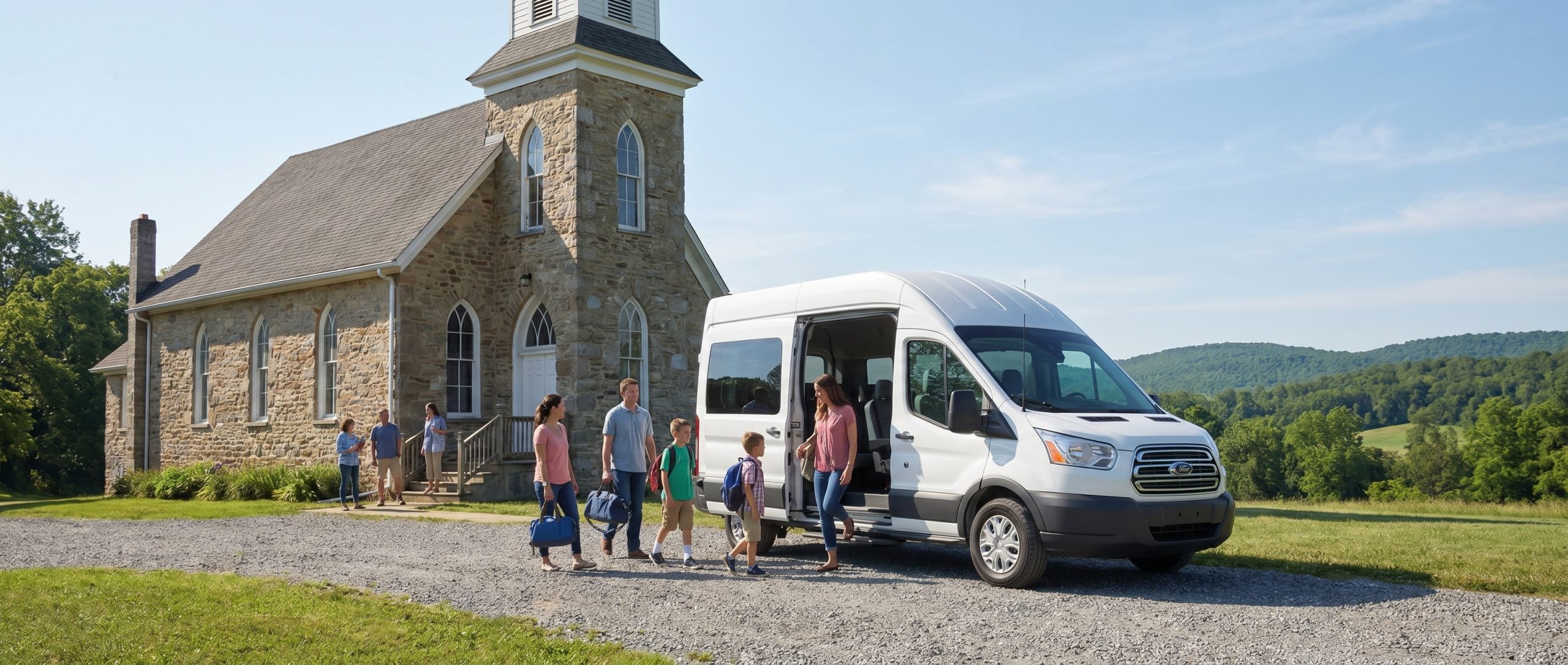
Ford Transit Passenger Van for church group transportation in Greer, SC

Coordinating transportation for a church group is no small task - and the wrong vehicle can turn a meaningful trip into a logistical headache before you even leave the parking lot. The Ford Transit Passenger Van for church groups in Greer, SC has become the go-to choice for congregations that need dependable, high-capacity transportation without the complexity of a full-size charter bus. Whether your ministry is heading to a retreat at Paris Mountain State Park, shuttling seniors to a midweek service, or organizing a youth mission trip, the Transit is built around exactly that kind of recurring, purpose-driven use.

Why High-Capacity Passenger Vans Matter More Than Most Churches Realize

Most congregations outgrow their transportation options faster than they plan for. A 12-passenger van works fine until your youth group grows, your senior shuttle list expands, or your church partners with a neighboring ministry for a joint event. The Ford Transit Passenger Van addresses this directly - it's available in configurations that seat up to 15 passengers, which means one vehicle can replace the coordination burden of two smaller options.

That matters a lot in Greer, SC, where your routes might include everything from a quick run down Wade Hampton Boulevard to a longer drive toward the Blue Ridge Mountains for a weekend retreat. With a single, well-chosen vehicle, one driver handles the whole group, fuel costs stay manageable, and the logistics stay simple.

Here's something worth knowing: the Transit has been the top-selling full-size van in America for more than 40 consecutive years. That kind of sustained presence in the market reflects reliability that church transportation directors can count on - not just in the short term, but across years of ministry service.

Understanding Transit Configurations: Matching the Van to Your Ministry's Needs

Not every Transit is built the same, and choosing the right configuration is where most church buyers benefit from thinking carefully. Ford offers the Transit in multiple roof heights and body lengths, and the passenger van versions come in distinct weight classes that affect seating capacity, towing capability, and overall payload.

Here's a clear breakdown of how the Transit lineup relates to common ministry scenarios:

Transit ModelMax Passenger SeatsBest For
Transit-150 PassengerUp to 8Small group shuttles, senior transport
Transit-350 PassengerUp to 15Youth groups, mission trips, large shuttles
Transit-350 HD (High Roof)Up to 15 + cargo roomMixed passenger and gear transport

For most church groups in the Greer, SC area that need serious capacity, the Transit-350 is where the conversation usually starts. It offers the most flexibility - especially if your ministry hauls equipment like sound gear for outdoor events, folding tables for community service days, or luggage for extended retreats.

If your congregation primarily serves smaller groups or operates multiple targeted shuttles (seniors on Tuesday mornings, youth on Sunday evenings), the Transit-150 keeps things manageable without unnecessary vehicle size.

Pro tip: Before committing to a specific configuration, map out your three most common trips - the number of passengers, the distance, and whether you regularly carry cargo alongside people. That exercise alone will clarify which Transit variant fits your ministry best.

What Makes the Transit a Strong Fit for Regular Ministry Use in Greer

Church transportation is not recreational use. These vehicles run consistent, scheduled routes - often with drivers who aren't professional operators and passengers who range from young children to elderly members. That reality shapes what the Transit needs to deliver, and it delivers in the right areas.

Comfort for all ages is one of the Transit's genuine strengths. The high-roof versions offer stand-up interior height, which makes boarding dramatically easier for seniors and passengers with limited mobility. Steps are manageable, headroom is genuine, and the seating layout doesn't feel cramped the way some commercial vans do.

Key comfort and usability features that matter for ministry transport:

  • Multiple sliding door configurations for easy entry and exit
  • Forward-facing seating with seatbelts for all passengers
  • Available rear air conditioning for Greer's humid summer months
  • Large windows for natural light and visibility
  • Flat floor design that accommodates mobility aids and wheelchairs more easily

Driver confidence is the other side of this. Many church drivers are volunteers. The Transit is designed to feel approachable - the driving position is familiar, visibility is strong, and modern driver assistance features like a rear-view camera, lane-keeping alert, and automatic emergency braking (standard on newer models) reduce the pressure on less experienced drivers.

Take a look at our new inventory if your congregation is actively planning this purchase - having the specific configuration in front of you makes the decision much clearer than comparing spec sheets alone.

Fuel Efficiency and Operating Costs Over the Long Haul

Church transportation budgets are real constraints. A van that's inexpensive to acquire but costly to operate can strain a ministry's resources quickly - especially if it's running multiple trips each week across Greenville County.

The Transit Passenger Van is available with a 3.5L EcoBoost® V6 engine, which balances power and fuel efficiency more effectively than older, larger engines in previous van generations. For church groups doing primarily highway driving - heading up I-85 toward Charlotte for a conference or taking Highway 14 toward Travelers Rest for an outdoor retreat - the EcoBoost delivers solid efficiency at highway speeds where you'll spend most of your miles.

Ford also offers the Transit with a 3.5L naturally aspirated V6, which some fleet buyers prefer for its lower maintenance complexity. The tradeoff is slightly less power for hilly terrain - something worth considering given that the Upstate South Carolina landscape between Greer and the Blue Ridge foothills involves more grade changes than flat coastal routes.

A few practical cost considerations for ministry fleet planning:

  • Scheduled maintenance intervals on the Transit are straightforward and well-documented, which matters when volunteers manage the upkeep
  • Ford's fleet support programs are designed for exactly this kind of organizational buyer - your church may qualify for fleet pricing or purchasing programs worth asking about
  • Fuel costs can be budgeted more predictably because the Transit's EPA estimates are consistent across normal operating conditions
Did you know? Ford has offered the Transit in North America since 2015, replacing the E-Series as the primary full-size van platform. The platform was specifically engineered to reduce operating costs for fleet buyers - including the lower step-in height that reduces driver fatigue on routes with frequent stops.

Planning Specific Ministry Trips from Greer, SC

Context matters. The Transit performs differently on different trip types, and understanding how it handles your actual routes helps set realistic expectations.

Sunday shuttle routes around Greer: Short-distance, high-frequency trips within the city - picking up members from neighborhoods near the Greer City Park area or running between satellite parking and the church campus. For this use case, the Transit's tight turning radius relative to its size is genuinely useful. It's not a city bus, but it navigates parking lots and surface roads with more maneuverability than you'd expect.

Youth retreats toward Paris Mountain State Park or Lake Robinson: Longer routes with a full passenger load and gear in the rear. This is where the Transit-350 with the EcoBoost earns its keep. The engine pulls confidently on grades, and 15-passenger capacity means most youth groups can travel together rather than splitting across two vehicles.

Senior outings and medical transport: The high-roof Transit's step height and interior clearance make it genuinely more accessible than low-roof alternatives. If your senior ministry frequently assists members with walkers or limited mobility, this configuration is worth prioritizing over base models.

Mission trip departures for longer drives: Whether your group is heading toward Charlotte, NC, Asheville, NC, or across state lines, the Transit handles extended highway miles well. The available cruise control and driver assistance features reduce fatigue on longer corridors, which matters when you're relying on volunteer drivers.

The Case for Buying vs. Renting for Your Church

Some congregations manage group transportation through rental agreements or partnerships with charter services. That approach works situationally, but it carries consistent drawbacks for ministries with predictable, recurring transportation needs.

Ownership advantages for active church programs:

  • Scheduling freedom - your van is available when your ministry needs it, not when a rental company has inventory
  • Branding and consistency - a dedicated church vehicle builds familiarity with members and community
  • Long-term cost efficiency - for groups running multiple trips per month, ownership typically becomes more cost-effective within the first few years
  • Driver familiarity - volunteer drivers who know a specific vehicle become more confident and capable operators over time

When renting still makes sense:

  • Occasional, once-or-twice-a-year events where full-time ownership isn't justified
  • Very small congregations without the administrative capacity to manage fleet maintenance
  • Churches that already own a smaller van and only need supplemental capacity a few times annually

For most growing churches in Greer, SC - especially those with active youth, senior, or outreach ministries - the math and the logistics tend to favor ownership once transportation frequency passes a threshold of about 4-6 organized trips per month.

Common Questions About Ford Transit Passenger Vans for Church Groups in Greer, SC

How many passengers does the Ford Transit Passenger Van hold for church groups in Greer, SC?

The Ford Transit Passenger Van seats up to 15 passengers depending on the configuration. The Transit-350 is the model most commonly used by church groups needing full capacity, while the Transit-150 accommodates up to 8 passengers for smaller ministry programs. For most congregations in Greer, SC, the 15-passenger Transit-350 offers the most flexibility across different trip types.

Is the Ford Transit Passenger Van easy for volunteer drivers to operate?

Yes, the Transit is designed with driver accessibility in mind. Modern versions include a familiar driving position, strong outward visibility, a standard rear-view camera, and available driver assistance features like lane-keeping alert and pre-collision assist. These features reduce the pressure on volunteer drivers who may not have commercial vehicle experience, making the Transit a practical choice for church fleets.

What Ford Transit configuration works best for a church with seniors in Greer, SC?

For senior ministry transportation in Greer, SC, the Transit-350 with the high-roof option is typically the strongest choice. The additional interior height allows passengers to board without ducking, and the flat floor design makes it easier to accommodate mobility aids. The lower step-in height compared to larger commercial vehicles is also a meaningful comfort factor for older passengers.

How does the Ford Transit handle longer ministry trips from Greer toward the mountains or Charlotte?

The Transit handles extended highway routes well, particularly with the 3.5L EcoBoost V6 engine. For drives from Greer toward Asheville or Charlotte, the engine manages grades confidently, and available cruise control reduces driver fatigue. The ride is composed at highway speeds, and the Transit's size allows it to park in standard spaces at rest areas and destination venues where a full charter bus would not fit.

Does D&D Ford Motors in Greer work with churches or organizations on Transit purchases?

Yes, organizational buyers including churches are a natural fit for Transit purchases at D&D Ford Motors. Fleet and organizational buyers may qualify for specific purchasing programs, and the sales team can walk church leadership through configuration choices, seating options, and practical considerations specific to ministry transportation needs.

What's the difference between the Ford Transit-150, Transit-250, and Transit-350 for passenger use?

The Transit-150, Transit-250, and Transit-350 differ primarily in payload capacity and available configurations. For passenger van use specifically, the Transit-350 is the most relevant because it supports the 15-passenger seating configuration. The Transit-150 is capped at lower passenger counts but works well for smaller group programs. The Transit-250 is more commonly chosen in cargo configurations. For church groups prioritizing maximum passenger capacity, the Transit-350 is the standard starting point.

Making the Right Transportation Decision for Your Ministry

Church transportation decisions carry real weight - because the people riding in that van are your congregation, your community, and in many cases, people your ministry has made a commitment to serve. The Ford Transit Passenger Van gives Greer, SC churches a vehicle that's practical to own, comfortable to ride in, and honest about what it does well.

It's not a luxury vehicle. It doesn't need to be. What it is, is dependable, well-supported, and built to handle the kind of consistent, purposeful use that ministry transportation demands year after year. The team at D&D Ford Motors understands the specific needs of organizational buyers and can help your church leadership navigate configuration choices and purchasing options without unnecessary complexity.

D&D Ford Motors

13655 E Wade Hampton Blvd, Greer, SC 29651

(864) 877-0711

Recommended Posts

Ford Truck Cab and Bed Size

Ford Truck Cab and Bed Size Guide

For most Upstate households, the F-150 SuperCrew is the easiest Ford truck to live with every day, with a bed short enough for tight parking and long enough for weekend gear. Pick a Regular Cab with an 8-foot bed when cargo length matters most, and step up to a Super Duty when your work calls for heavier equipment. Two choices shape every truck: the cab, which sets passenger room, and the bed, which sets cargo space. Start with your daily routine, because that's what decides it. If people ride along most days, the cab comes first. If gear rides along most days, the bed comes first. Cab Styles at a Glance Ford builds its F-Series trucks in three cab styles. The Regular Cab is a single row built around cargo, the SuperCab adds an extended rear area, and the SuperCrew gives rear passengers the most room. On the Super Duty, you'll see the same three styles, with Crew Cab as the counterpart to the SuperCrew. F-150 Combinations Each 2026 F-150 cab pairs with specific bed lengths, and the wheelbase changes with the combination: Cab Bed Inside Bed Length Wheelbase Regular Cab 6.5-foot 78.9 in 122.8 in Regular Cab 8-foot 97.6 in 141.5 in SuperCab 6.5-foot 78.9 in 145.4 in SuperCrew 5.5-foot 67.1 in 145.4 in SuperCrew 6.5-foot 78.9 in 157.2 in The 5.5-foot SuperCrew is the compact pick for tight parking and daily errands. A 6.5-foot SuperCrew adds bed length for a weekend of gear and keeps the full rear seat. If you haul sheet goods and long loads, the 8-foot Regular Cab is the one for you. Meet the 2026 F-150 to see how these combinations look in person. Ranger, Maverick and Super Duty The 2026 Ranger comes as a SuperCrew with a bed floor about 59.6 inches long and a 128.7-inch wheelbase, a manageable size for city streets and trailheads. See it on our 2026 Ranger page. The Maverick keeps things compact with a 4-foot-5-inch bed that suits errands and bikes. It carries up to 1,500 pounds. Compare it on the 2026 Maverick page. On the Super Duty side, the beds are 6.75 feet or 8 feet. Work-minded buyers can start with the 2026 Super Duty, where the Regular Cab comes with the 8-foot bed. Choosing a Size for Life in Greer Think about where the truck spends its week. Parking near Trade Street and the Greer Station area in downtown Greer rewards a shorter wheelbase, and a school pickup line or a Saturday at Greer City Park does too. A 6.5-foot SuperCrew has room for bikes and camping gear on a weekend at Lake Robinson, and the Maverick fits the commute to Greenville. Contractors and landscapers who work between Greer and Spartanburg often lean toward the 8-foot bed or a Super Duty, since long loads and heavy gear ride along most days. Wherever you land, the choice comes down to the routes and routines you already have. Payload, Towing and Parking Capability depends on more than size. Maximum towing and payload are separate numbers, and each depends on the engine and on the equipment on the truck. The door jamb label on the exact truck shows its payload. Our F-150 towing guide goes deeper on the numbers. A longer wheelbase also means a longer truck to park and turn, so match the size to your driveway and to the places you drive most. Cab and Bed Questions What is the difference between a SuperCab and a SuperCrew? A SuperCab has an extended rear area for occasional passengers and gear, and a SuperCrew gives rear passengers the most room. On the 2026 F-150, the SuperCab pairs with the 6.5-foot bed, while the SuperCrew offers that bed or a shorter one. What bed lengths does the F-150 come in? The 2026 F-150 comes with three bed lengths, and the cab you choose decides which are open to you. Lengths run from 5.5 feet to 8 feet. The Regular Cab takes either of the longer two, and the SuperCrew takes either of the shorter two. Which Ford truck has the shortest bed? The Maverick has the shortest bed at 4 feet 5 inches, and it handles daily driving and errands well. Among the larger trucks, the 5.5-foot bed on the F-150 SuperCrew is the shortest. Both suit drivers who park in tight spots, like downtown Greer. Which cab does the 2026 Ranger come with? The 2026 Ranger comes as a SuperCrew with a Styleside bed and a 128.7-inch wheelbase. That gives every Ranger buyer a four-door cab and one wheelbase to learn. Trims differ in equipment and capability, and we'll gladly walk you through what you'll get. Does a longer bed mean more towing capacity? Bed length is one factor among many. Towing capacity depends on the engine and axle plus any equipped packages, and each maximum figure belongs to its own configuration. Tell us what you tow, and we'll pull the numbers for the exact truck. Which Ford trucks offer an 8-foot bed? The F-150 Regular Cab offers an 8-foot bed, and the Super Duty offers one too. That long bed is the choice for sheet goods and long loads. If you carry that kind of cargo often, ask us to line up both for a side-by-side look. See the Sizes in Person Numbers help, and sitting in the truck helps more. Stop by whenever it suits you, or schedule a test drive to feel how each cab and bed fits your life. You'll find us in Greer, between Greenville and Spartanburg.

How Ford BlueCruise Works for Upstate SC Drivers

How Ford BlueCruise Works for Upstate SC Drivers

Picture a long, steady stretch of interstate like I-85 on the drive home to Greer while traffic flows and your hands rest in your lap. It's the moment many shoppers wonder how much help a Ford can give them behind the wheel. Ford BlueCruise is an optional driver-assist system that allows hands-free driving on prequalified divided highways called Blue Zones. You keep your eyes on the road and stay ready to take control at any moment. It needs BlueCruise hardware chosen at purchase and an active plan after the included trial. What BlueCruise Does on the Highway BlueCruise builds on adaptive cruise control and lane centering. On a Blue Zone highway it steers and holds your lane while managing your following distance, and the instrument panel turns blue with a hands-free icon so you know it's active. A driver-facing camera watches your eyes the whole time, which keeps you in the driver's seat in every sense, and that's by design. Think of BlueCruise as a very good highway helper while you remain the driver. Which Fords Offer BlueCruise BlueCruise is available on the Mustang Mach-E, F-150, F-150 Lightning, Expedition and Explorer. Availability varies with the model year and configuration, and the hardware is chosen when the vehicle is built. That's why each vehicle is worth checking on its own. Start with the models most Upstate shoppers ask about: the 2026 F-150 and the 2026 Explorer, along with the 2026 Expedition. Mach-E and Lightning shoppers can ask us about the electric lineup. BlueCruise on Upstate Roads Blue Zones are prequalified divided highways, and your Ford's connected maps show when the road qualifies. Greer drivers spend a lot of time on I-85, which passes just south of town on its way between Charlotte and Atlanta, so it's worth asking how the system fits your own commute. Whether you head toward Greenville, Spartanburg or the airport, the in-car display confirms each stretch as you go. Local weather plays a part too. Upstate winters stay mild, with January highs near 53, and summer afternoons run close to 90. Heavy rain, fog or glare can limit the system, and we'll cover those conditions below. Blue Zones and Road Conditions Hands-free driving works on controlled-access divided highways that Ford has prequalified, and the system needs its sensors to see clear lane markings. Some conditions limit it. Snow, heavy rain and fog can keep BlueCruise from working, and so can glare from direct sun or wet pavement. Faded or missing lane markings and merging lanes can keep it from engaging, and construction zones or sharp curves can make it disengage. Plans, Trials and Staying Active A BlueCruise-equipped Ford can come with a trial that begins at the warranty start date. After it ends, you'll need an active plan to keep using the feature, and plans stay with the person who bought them. You can see your plan status and start date in the Connected Services tile of your Ford Account, and the Ford app handles activation. Your Job Behind the Wheel On a Blue Zone, hands-free means your hands can leave the wheel while everything else stays with you. Keep your eyes on the road, keep your face visible to the camera and be ready to steer at a moment's notice. If the system warns you, take off sunglasses and anything else covering your eyes. Planning a lift or other suspension upgrade? Aftermarket suspension kits are incompatible with BlueCruise, so you'll want to talk with the DDCustoms team before you build. BlueCruise Questions Which Fords offer BlueCruise? Several Ford models offer BlueCruise, including the F-150 and the Explorer, and the hardware is chosen at purchase. Availability varies with the model year and configuration. Tell us which model interests you, and we'll help you compare specific vehicles. Do I still have to pay attention with BlueCruise? Yes. BlueCruise is a driver-assist feature, so you keep your eyes on the road and stay ready to take control of the wheel. A driver-facing camera monitors your attention, and the system expects a clear view of your eyes at all times. Does BlueCruise need a subscription? BlueCruise needs an active plan once any included trial ends. That trial begins at your warranty start date, and plans stay with the buyer. Your Ford Account shows your plan status, and our team can walk you through the current plan options when you shop. How can I tell if a Ford has BlueCruise? Ask our sales team about the vehicle you're considering, since the hardware is chosen when the Ford is built and we'll check it for you. Owners can also check the Connected Services tile in their Ford Account, which shows BlueCruise status and the start date of the plan or trial. Can weather affect BlueCruise? Yes. Snow, fog and heavy rain can limit BlueCruise, and so can glare from direct sunlight or wet roads. Faded lane lines and patchy shade can affect the sensors too. When conditions change, the system asks you to drive, so stay ready. Do suspension upgrades affect BlueCruise? Aftermarket suspension kits are incompatible with BlueCruise, so a lift can take the feature out of the picture. If you plan to customize a BlueCruise Ford, talk with our team in Greer first and decide which matters more to you. See BlueCruise in Person Whenever you'd like to see which Fords on our lot carry BlueCruise, browse new Ford inventory and mention it to us, and we'll check each vehicle for you in Greer. You can also schedule a test drive to get comfortable with the display at your own pace.

Ford Warranty and Protection Guide for Greer, SC Drivers

Ford Warranty and Protection Guide for Greer, SC Drivers

Three programs often get mixed up. Ford's New Vehicle Limited Warranty comes from Ford and covers factory defects. The True Blue Warranty comes from D&D Motors on eligible new Fords. Ford Protect is a Ford service plan you can add through a dealer. Each program has its own terms, and the provider holds the controlling documents. Three Programs, Three Providers Start by knowing who stands behind what, because that one answer clears up most of the confusion. Ford backs the factory warranty and Ford Protect, while D&D Motors backs the True Blue Warranty. When a question comes up about a repair, the answer starts with which program applies, and we're happy to help you sort that out. Ford's New Vehicle Limited Warranty Every new Ford comes with factory coverage, and here's how the 2026 terms look: Coverage Term Bumper to bumper 3 years or 36,000 miles Powertrain 5 years or 60,000 miles Safety restraint system 5 years or 60,000 miles Corrosion (perforation) 5 years, any mileage Hybrid and electric unique components 8 years or 100,000 miles Roadside assistance 5 years or 60,000 miles Whichever limit arrives first ends the coverage. Maintenance, such as oil changes and tire rotations, sits outside the factory warranty, and so does replacement of parts that wear out normally. Our new Ford inventory is the place to start for a Ford that carries these terms. Coverage for Miles on Upstate Roads Upstate miles add up quickly. Between commutes on US 29 and I-85, errands around Greer and weekend trips to Lake Robinson, a Ford in this area can pile up miles, so it helps to watch both the years and the miles in each term. D&D Motors has been serving Greer since 1937, and our Service Department in town handles the scheduled maintenance that keeps your coverage in good standing. True Blue Warranty From D&D Motors The True Blue Warranty is our 10-year, 200,000-mile program on eligible new Ford purchases. It begins after Ford's new vehicle warranty and any other applicable warranties expire, and it covers oil-lubricated engine parts and the internal parts of the transmission, including its seals, gaskets and torque converter. The warranty belongs to the owner named on the certificate, and it stays with that owner. Scheduled True Blue service follows the maintenance schedule at D&D Motors, which is how the coverage stays active. Vehicles that have been modified or used for competition or commercial events aren't eligible. Our True Blue Warranty page is the detailed source for the program. Ford Protect Service Plans Ford Protect offers extended service plans backed by Ford Motor Company, sold through Ford dealers. Plans include PremiumCARE for repairs and Premium Maintenance for scheduled service, with versions for electric vehicles. Plans provide up to 8 years and 150,000 miles of coverage, depending on the plan you choose. See the options on our Ford Protect page. Side-by-Side at a Glance Program Who provides it When it applies Where the terms live New Vehicle Limited Warranty Ford From the warranty start date, for the stated years or miles Ford warranty guide for your year and model True Blue Warranty D&D Motors After Ford's new vehicle warranty expires Your True Blue certificate Ford Protect Ford Based on the plan you buy Your Ford Protect contract Where to Find Your Controlling Terms The written terms decide every question, so keep them close. You can look up your Ford's warranty guide by VIN, or by year and model, on Ford's warranty guide page. Keep your True Blue certificate with your vehicle records, and hold on to your Ford Protect contract if you buy a plan. Our team can help you find any of them, and we'll gladly walk you through what you're reading. Warranty Questions What does Ford's factory warranty cover? Ford's 2026 factory warranty covers defects in materials and workmanship, with bumper to bumper at 3 years or 36,000 miles and powertrain at 5 years or 60,000 miles. Safety restraints, corrosion and roadside assistance have their own terms in the warranty guide for your Ford. When does True Blue Warranty coverage begin? Coverage begins after Ford's new vehicle warranty and any other applicable warranties expire. The program runs 10 years or 200,000 miles on eligible new Ford purchases, and the certificate shows the owner's expiration date. Scheduled True Blue service keeps the coverage in good standing. Can I transfer True Blue Warranty to a new owner? The True Blue Warranty stays with the original owner named on the certificate. If you sell your Ford, the coverage ends with your ownership, so keep that in mind when you plan for resale or a trade. Does the factory warranty cover oil changes and tires? Routine maintenance, such as oil changes and tire rotations, sits outside the factory warranty, and so does normal tire wear. Our Service Department handles your scheduled maintenance at our Greer location, and True Blue service visits keep that program active. Where can I find the exact terms for my coverage? Ford's warranty guide for your year and model holds the factory terms, and you can look it up by VIN. Your True Blue certificate and any Ford Protect contract carry their own terms. Bring them to our team in Greer and we'll help you read them. Questions About Your Coverage If you'd like help reading your terms or choosing the protection that fits your next Ford, contact our team. You can also learn more about us on our Why Buy page.