

Blog

Running Pest Control Routes in Greer: How to Work Your 2026 Ford Ranger Safely and Effectively

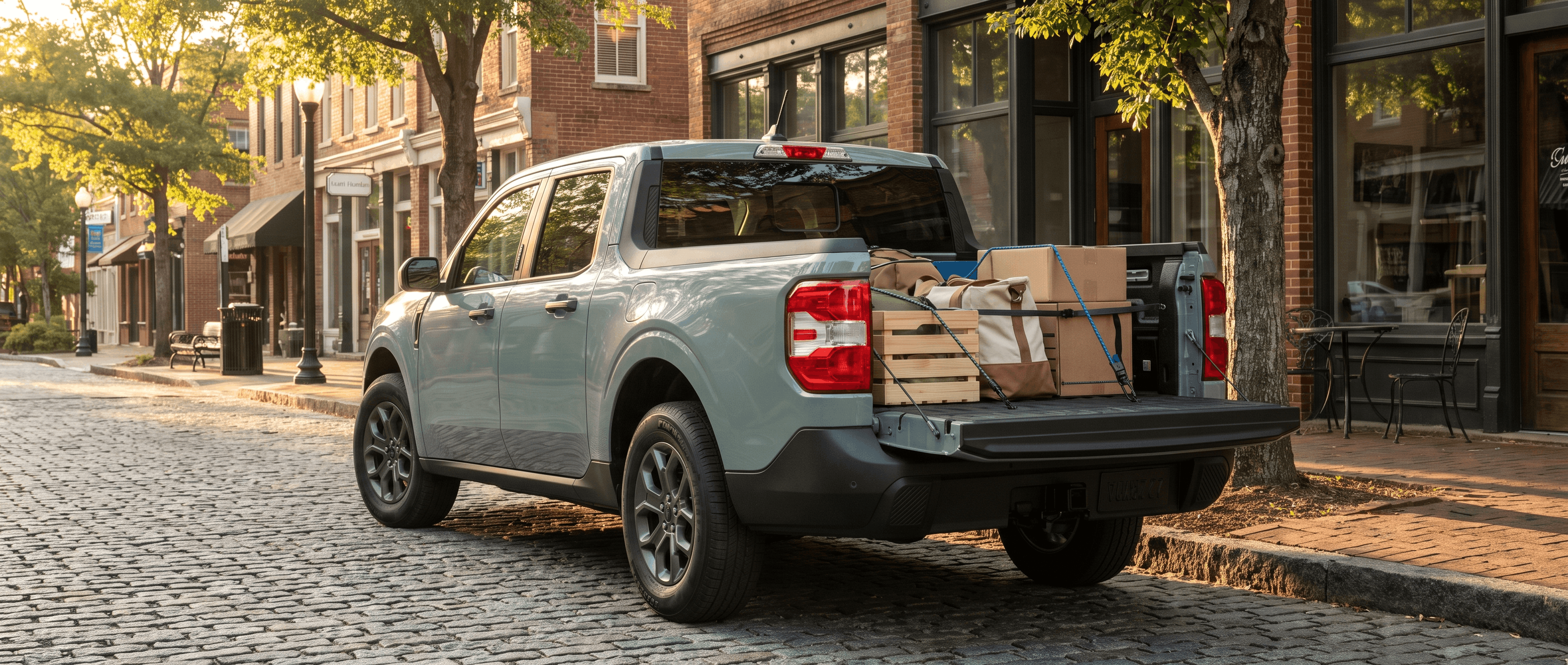
2026 Ford Maverick with FLEXBED open for small business deliveries on a downtown Greenville SC street

If you're running termite inspections, mosquito treatments, and rodent calls across Greer's fast-growing residential corridors, your truck is basically a rolling supply depot. The 2026 Ford Ranger handles that job well, but only if you load and drive it the way the specs actually allow. Get it right and you've got a capable, maneuverable mid-size work truck that slips into the tight cul-de-sacs off I-85 without complaint. Ignore the limits and you're overloaded, braking late, and putting your technician and the neighborhood at risk.

Our team at D&D Ford Motors will give you the straight brief.

What the Ranger Can Do and What It Cannot

The 2026 Ford Ranger carries a maximum payload of up to 1,767 lbs (Ford lists this for the 2.3L EcoBoost 4x2 configuration), and that figure sounds generous until you remember payload means everything the truck hauls, technician included. Generous on paper, tight in practice.

Count everything the truck carries, not just the gear in the bed. The technician, any ride-alongs, the sprayer, chemical concentrate containers, hand tools, and any aftermarket bed storage unit all pull from the same number. A commercial upfit bed rack with a lockbox can run several hundred pounds before you add a single gallon of product. A fully loaded backpack sprayer, concentrate jugs for a full-day route, and a 180-lb technician can push you close to that ceiling on a fitted-out unit, faster than you'd guess.

The tradeoff is worth naming, and the Ranger is not an F-150. You get a smaller footprint (genuinely easier in tight suburban streets and narrow driveways in the neighborhoods around I-85) but a lower payload ceiling than a full-size. For a one-technician route truck hauling typical residential pest control gear, the Ranger fits. If you're outfitting a termite-treatment rig that needs to carry a full liquid termiticide tank, that's an F-250 or Transit conversation.

What the Ranger Does WellWhere to Watch Your Numbers
Fitting residential driveways and cul-de-sacsPayload ceiling (up to 1,767 lbs total)
Carrying a backpack sprayer + hand tools + full chemical kitAftermarket bed upfits add significant weight before payload
Towing a small enclosed trailer (up to 7,500 lbs with Trailer Tow Package)Without the Trailer Tow Package, tow rating drops to 3,500 lbs
Stop-and-go stop efficiency on residential routes (2.3L EcoBoost, 21 city mpg)Fuel economy drops noticeably when loaded and running A/C hard in SC heat
Crew cab fits two techs plus gearThird-row not available; not a multi-crew-van replacement
SYNC 4A with wireless Apple CarPlay for route managementNo built-in fleet telematics; you'll add a third-party unit

Browse our current Ranger inventory at D&D Ford Motors

The One Technique That Changes Everything: Know Your Door-Sticker Number Before You Load

Every 2026 Ranger wears a payload placard inside the driver's door jamb, and that number is vehicle-specific, so it already accounts for the cab configuration, drivetrain, and how Ford built that exact unit. The spec-sheet maximum (up to 1,767 lbs) is the best-case figure, and your truck might be rated lower.

We walk commercial buyers through this procedure before they leave our lot. It takes a few minutes at a scale.

  1. Open the driver's door and find the yellow sticker on the door jamb. Write down the payload number.
  2. Weigh your fully dressed upfit bed unit (rack, lockbox, or camper shell) at a local scale before it goes on the truck. Subtract that from the payload number.
  3. Add up your technician's weight, any passenger weight, and a realistic full-day chemical and equipment load.
  4. If that combined number stays under the remainder from step 2, you're legal and safe.
  5. If you're within 100 lbs of the limit on a regular basis, spec up to the Ford F-150 or ask us about the Ford Maverick for a lighter one-person city route.
  6. Re-check your placard number any time you change the upfit or add a permanent rack.
Real-world note from our service team: Upstate SC summers heat cabins fast, and pest control techs run the A/C from first start to last stop. A/C load does not reduce your payload, but it does pull fuel economy down noticeably on stop-and-go residential routes. The EPA-rated 2026 Ranger 2.3L EcoBoost returns 21 mpg city and 26 mpg highway. Budget toward the city figure for a service route in Greer's neighborhoods, not the highway number.

Keep your Ranger work-ready with a service appointment at D&D Ford Motors

See Current Ranger Offers at D&D Ford Motors

The Short Version: A Right-Sized Work Truck for Greer Routes

The 2026 Ranger is a legitimate pest control route truck for Upstate SC when you match the load to the placard, which comes down to knowing your door-sticker payload, weighing your upfit before it goes on, and running the 2.3L EcoBoost if fuel costs on long Greer-to-Spartanburg county routes matter to your margins. It won't haul a full termiticide rig, but for residential spray and inspection work across the neighborhoods that line I-85, it earns its place in a pest control fleet. We've been putting working families and business owners into Ford trucks since 1937. Come see us on East Wade Hampton Boulevard and we'll spec the right Ranger configuration for the way you actually use it.

D&D Ford Motors

13655 E Wade Hampton Blvd, Greer, SC 29651

(864) 877-0711

Recommended Posts

2026 Ford F-150 with tailgate down loaded with lumber outside a Greer SC supply store on Wade Hampton Boulevard

Hauling Lumber and Supplies on Wade Hampton Blvd in Your 2026 Ford F-150

{ "@context": "https://schema.org", "@type": "AutoDealer", "name": "D&D Ford Motors", "url": "https://www.ddmotors.com", "telephone": "(864) 877-0711", "address": { "@type": "PostalAddress", "streetAddress": "13655 E Wade Hampton Blvd", "addressLocality": "Greer", "addressRegion": "SC", "postalCode": "29651" } } { "@context": "https://schema.org", "@type": "Article", "headline": "Hauling Lumber and Supplies on Wade Hampton Blvd in Your 2026 Ford F-150", "publisher": { "@type": "Organization", "name": "D&D Ford Motors" }, "datePublished": "2026-09-01", "dateModified": "2026-09-01" } #just-private-label * { box-sizing: border-box; } #just-private-label { font-family: inherit; line-height: 1.7; color: #333333; max-width: 800px; margin: 0 auto; padding: 20px; } #just-private-label h2 { font-size: 1.5em; font-weight: 600; margin-top: 1.5em; margin-bottom: 0.75em; color: #000000; } #just-private-label h3 { font-size: 1.2em; font-weight: 600; margin-top: 1.2em; margin-bottom: 0.5em; color: #000000; } #just-private-label p { margin-bottom: 1em; font-size: 1em; } #just-private-label a { color: #000000; text-decoration: underline; } #just-private-label a:hover { text-decoration: none; } #just-private-label strong { font-weight: 600; } #just-private-label ul, #just-private-label ol { margin-bottom: 1em; padding-left: 1.5em; } #just-private-label li { margin-bottom: 0.5em; } #just-private-label .tip-box { background-color: #f9f9f9; border-left: 4px solid #333333; padding: 15px; margin: 1.5em 0; } #just-private-label .cta-section { margin-top: 2em; padding: 20px; text-align: center; } #just-private-label .cta-button { display: inline-block; padding: 12px 24px; margin: 10px; background-color: #1b376a; color: #ffffff !important; text-decoration: none; font-weight: 600; } #just-private-label .cta-button:hover { opacity: 0.9; text-decoration: none; } #just-private-label .dealer-footer { margin-top: 40px; padding-top: 20px; border-top: 1px solid #e0e0e0; text-align: center; font-size: 14px; color: #666666; } #just-private-label .dealer-footer p { margin: 5px 0; } @media (max-width: 600px) { #just-private-label { padding: 15px; } #just-private-label h2 { font-size: 1.3em; } #just-private-label h3 { font-size: 1.1em; } #just-private-label .cta-button { display: block; margin: 10px 0; } } In this article Will It Fit? The Real Numbers for a Wade Hampton Supply Run How to Load It: Getting the Most Out of the Bed on the Run Home Your Pre-Run Checklist: Print and Go Job Done: The F-150 Makes Wade Hampton Simple You've got a Saturday project in front of you, a list of materials, and four supply stores inside a half-mile stretch of Wade Hampton Boulevard. Home Depot at 1385, Lowe's at 1370, Ace Hardware at 1100, Harbor Freight at 1301. Everything you need sits right there. The one question worth answering before you back up to the lumber dock is whether it'll actually fit. The answer is yes, with the right bed configuration. The 2026 Ford F-150 handles a full supply run on Wade Hampton without a second trip, a cargo van rental, or a ratchet strap improvised from something questionable. We'll walk through what the specs say, and what our team has watched customers load and drive away with. Will It Fit? The Real Numbers for a Wade Hampton Supply Run The measurement that decides most supply runs is the 50.6 inches between the wheel wells, a figure Ford lists consistently across every 2026 F-150 bed configuration, and it works as your go/no-go number for anything wide going in the box. A standard 4x8 sheet of plywood runs 48 inches wide, so it clears the wheel wells with about 2.6 inches to spare on each side. It lays flat in any bed longer than 96 inches, which means the 6.5-foot bed (78.9 inches inside) needs the tailgate down to carry a full sheet flat, and the 8-foot bed (97.6 inches) swallows it with the tailgate up. Stack two and they still fit. Width was never the limiter here. Weight is the limiter, and Ford rates the 2026 F-150 at up to 2,445 lbs of payload capacity in a Regular Cab 4x2 configuration. SuperCrew builds run lower (Ford puts the SuperCrew range starting around 1,720 lbs depending on engine and options), which is still more than enough for most project loads. The number on your specific truck's door-jamb sticker is the one that counts, and it accounts for passengers too. Load the truck, not just the bed. Load / Item Key Dimension or Weight Fits in 2026 F-150? How 4x8 plywood sheet (single) 96 in L x 48 in W Yes, flat in 6.5 ft bed (tailgate down) or 8 ft bed (tailgate up); clears wheel wells at 50.6 in wide 4x8 plywood sheets (stack of 10) ~480 lbs (3/4-in OSB) Yes, under typical SuperCrew payload; confirm your door sticker 8-foot 2x4 studs 96 in long Flat in 8 ft bed (tailgate up); tailgate down in 6.5 ft bed 80-lb bags of concrete (10 bags) 800 lbs total Yes, well under any F-150 payload rating 80-lb bags of concrete (25 bags) 2,000 lbs total Fits payload on Regular Cab/SuperCab configs; tight on some SuperCrew builds; check sticker Riding mower or generator ~400-600 lbs, up to 60 in wide Fits in 6.5 ft or 8 ft bed; measure your item vs. 50.6 in wheel-well width 5-gallon buckets of paint/compound (10) ~130 lbs Yes, easy; tie them off with the integrated BoxLink cleats Bagged mulch (20 bags, 40 lb each) 800 lbs Yes, comfortable for any F-150 config *Ford's published 2026 F-150 specifications list the bed depth at 21.4 inches and wheel-well width at 50.6 inches across all bed sizes. Payload figures from Ford's official spec sheet; your truck's door-jamb sticker is the binding number.* How to Load It: Getting the Most Out of the Bed on the Run Home The Wade Hampton corridor sits close to home, but close still means merging onto US-29 with a loaded bed, and a shifting load turns into a problem whether you're going a mile or ten, so how you stack and strap it matters as much as what you buy. Heaviest first: Start with the heaviest material over the rear axle, not pushed against the tailgate. Concrete bags, pavers, and stacked plywood belong in that middle-to-front zone of the bed. The 2026 F-150's available BoxLink cargo management system uses factory-integrated cleats at the top of the bed rails to lock down straps, bungees, or Ford-compatible accessories without improvising. Use them. For sheet goods lying flat with the tailgate down, a single cam strap across the middle keeps things from sliding on a Greer stop-and-go, or on the US-29 merge. The F-150's tailgate work surface comes on XLT and above, with a built-in ruler and clamp pockets. The ruler and clamp pockets earn their keep when you're cutting materials in the parking lot before a second run into the store. The 5.5-foot bed deserves its own note, since it's the SuperCrew's only short-bed option and works great for most day-to-day use. At 66 inches inside, though, an 8-foot 2x4 overhangs by 30 inches with the tailgate up, which puts you in flag-and-secure territory. If you're hauling lumber often, the 6.5-foot bed on a SuperCrew or the 8-foot on a SuperCab gives you far more flexibility on Wade Hampton. Need to look at what's on the lot right now? Our pre-owned inventory includes F-150s across multiple bed lengths and configurations. Tip: The 2026 F-150's Pro Power Onboard system (available on PowerBoost hybrid trims) outputs up to 7.2 kW from the bed (enough to run a circular saw, a compressor, and a phone charger at the same time without hunting for an outlet). For trades and serious DIYers doing on-site work after the haul, that's a capability worth spec-ing when you configure the truck. See Current F-150 Offers Your Pre-Run Checklist: Print and Go Before you pull into the Lowe's or Home Depot lot on Wade Hampton, run through this quick list so the load, the route, and the flag law are all handled before you ever back up to the dock: [ ] Check your truck's door-jamb payload sticker and subtract passenger weight before loading [ ] Measure any oversized item for width: anything wider than 50.6 inches won't clear the wheel wells flat [ ] Determine if your 8-foot materials need the tailgate down (plan your route home with that in mind) [ ] Bring at least two quality cam straps; the BoxLink cleats give you anchor points, but the straps are yours to supply [ ] For concrete or pavers, stack low and center the weight over the rear axle [ ] If hauling sheet goods, add a red flag to any overhang beyond the tailgate per SC law [ ] Confirm which store has your materials in stock before driving (all four on Wade Hampton have online inventory tools) [ ] Allow extra stopping distance; a loaded bed changes your braking distance, especially if you're near payload capacity Job Done: The F-150 Makes Wade Hampton Simple The honest tradeoff comes down to one line, the F-150 isn't a dump truck, and overloading it past the door-sticker rating turns a capable work truck into a liability, so the job is respecting that number and loading the bed the way the truck was built to carry it. Respect the number, load it right, and the 2026 F-150's bed handles every realistic supply run the Wade Hampton corridor throws at it, whether that's a stack of OSB for a backyard project or a pallet-sized pull of materials for a full renovation. We've been at the corner of Wade Hampton and East Wade Hampton Boulevard since 1937, and our team still looks forward to watching a new Ford F-150 roll out of the lot and head straight to a job. Schedule a service appointment when the project wraps to keep that truck ready for the next one, whatever it turns out to be. Value Your Trade-In at D&D Ford D&D Ford Motors 13655 E Wade Hampton Blvd, Greer, SC 29651 (864) 877-0711

2026 Ford F-150 with fall foliage in Upstate South Carolina truck bed loaded with landscaping supplies

4 Best Ford Trucks for Fall Projects in Greer, SC

{ "@context": "https://schema.org", "@type": "AutoDealer", "name": "D&D Ford Motors", "url": "https://www.ddmotors.com", "telephone": "(864) 877-0711", "address": { "@type": "PostalAddress", "streetAddress": "13655 E Wade Hampton Blvd", "addressLocality": "Greer", "addressRegion": "SC", "postalCode": "29651" } } { "@context": "https://schema.org", "@type": "Article", "headline": "4 Best Ford Trucks for Fall Projects in Greer, SC", "publisher": { "@type": "Organization", "name": "D&D Ford Motors" }, "datePublished": "2026-08-31", "dateModified": "2026-08-31" } #just-private-label * { box-sizing: border-box; } #just-private-label { font-family: inherit; line-height: 1.7; color: #333333; max-width: 800px; margin: 0 auto; padding: 20px; } #just-private-label h2 { font-size: 1.5em; font-weight: 600; margin-top: 1.5em; margin-bottom: 0.75em; color: #000000; } #just-private-label h3 { font-size: 1.2em; font-weight: 600; margin-top: 1.2em; margin-bottom: 0.5em; color: #000000; } #just-private-label p { margin-bottom: 1em; font-size: 1em; } #just-private-label a { color: #000000; text-decoration: underline; } #just-private-label a:hover { text-decoration: none; } #just-private-label strong { font-weight: 600; } #just-private-label ul, #just-private-label ol { margin-bottom: 1em; padding-left: 1.5em; } #just-private-label li { margin-bottom: 0.5em; } #just-private-label .tip-box { background-color: #f9f9f9; border-left: 4px solid #333333; padding: 15px; margin: 1.5em 0; } #just-private-label .cta-section { margin-top: 2em; padding: 20px; text-align: center; } #just-private-label .cta-button { display: inline-block; padding: 12px 24px; margin: 10px; background-color: #1b376a; color: #ffffff !important; text-decoration: none; font-weight: 600; } #just-private-label .cta-button:hover { opacity: 0.9; text-decoration: none; } #just-private-label .dealer-footer { margin-top: 40px; padding-top: 20px; border-top: 1px solid #e0e0e0; text-align: center; font-size: 14px; color: #666666; } #just-private-label .dealer-footer p { margin: 5px 0; } @media (max-width: 600px) { #just-private-label { padding: 15px; } #just-private-label h2 { font-size: 1.3em; } #just-private-label h3 { font-size: 1.1em; } #just-private-label .cta-button { display: block; margin: 10px 0; } } In this article At a Glance: Ford Trucks Ranked for Fall Project Work The F-150 Is the Right Call for Most Project Lists The F-250 Super Duty Earns Its Keep for Heavy-Duty Work The Ranger Handles Most Weekend Warrior Loads with Room to Spare The Maverick Hybrid Is the Right Answer for Lighter Hauling and Everyday Sense Fall is Greer's best-kept secret for outdoor work. October brings cooler temperatures, the lowest average rainfall of the year, and enough daylight to knock out the projects that have been waiting since June. Weather-atlas data puts the Upstate at roughly 2 inches for the month. The catch is picking the right truck for the right job. Our pick for most fall project lists is the 2026 Ford F-150. It splits the difference between payload and towing better than anything else in the lineup, and it's flexible enough to haul a load of hardwood mulch in the morning and hook up a utility trailer in the afternoon. But "best" depends entirely on what's on your list, and for some Greer homeowners and contractors, a different truck fits better. So here's how the full lineup stacks up for fall. At a Glance: Ford Trucks Ranked for Fall Project Work Rank Truck Best For Standout Spec 1 F-150 All-around hauling and light-to-medium towing Ford lists up to 2,440 lbs payload / 13,500 lbs tow 2 F-250 Super Duty Heavy trailer loads, contractor-grade hauling Ford lists up to 4,246 lbs payload / 23,000 lbs tow (gooseneck) 3 Ranger Mid-size loads, tighter job sites, weekend runs Ford lists up to 1,767 lbs payload / 7,500 lbs tow 4 Maverick Light hauling, daily driving, fuel efficiency Ford lists up to 1,500 lbs payload / 4,000 lbs tow (with 4K package) Check the door-jamb sticker on any truck you're considering. All specs here are properly-equipped figures from Ford, and your specific configuration will vary. The F-150 Is the Right Call for Most Project Lists The F-150 tops our fall list, and it balances payload with towing better than anything else Ford builds, so it handles almost every fall job even though it isn't the heaviest hauler in the family, reaching 13,500 lbs of towing with the 3.5L EcoBoost V6 and Max Trailer Tow Package, per Ford's published specs. Payload maxes at 2,440 lbs in a properly configured regular-cab 4x2 setup, and that covers nearly every fall scenario a Greer homeowner or weekend contractor runs into, whether it's a load of pea gravel from the hardware store on Wade Hampton Boulevard or a full utility trailer headed out toward Lake Hartwell for a dock project before winter. There's a tradeoff worth naming. If you're regularly pulling over 10,000 lbs or need more than two tons of payload for repeated contractor loads, the F-150 will technically do it, but you'd be living near its ceiling. For those situations, the Super Duty is the smarter buy, and for the other 90% of fall project reality, the F-150 is exactly the right size. See Current Fall Truck Specials The F-250 Super Duty Earns Its Keep for Heavy-Duty Work The F-250 Super Duty earns its keep when your fall project means moving equipment, a loaded landscape trailer, or a gooseneck hitch, and it's more truck than a typical homeowner project calls for, but that extra capability is exactly the point after the loads get serious. For that list, skip straight to the 2026 Ford F-250 Super Duty. Ford's 6.7L High-Output Power Stroke diesel gets this truck to 23,000 lbs of gooseneck towing. The 7.3L gas V8 swings the other direction, hitting a 4,246-lb payload ceiling. Payload is where this truck separates from a half-ton. Contractors and serious DIYers loading a bed with concrete bags, wet topsoil, or multiple pallets of pavers will blow past an F-150's capacity in a hurry. The Super Duty doesn't flinch. The downside is simple enough. You'll notice the size on every trip, and parking on a tight neighborhood street or navigating a gravel drive through the trees near Paris Mountain State Park takes more attention than it does in a half-ton. None of that should scare you off. Just buy the capability you'll use. The Ranger Handles Most Weekend Warrior Loads with Room to Spare The Ranger handles most weekend project loads with room to spare, and it's easy to overlook next to the bigger trucks, but the 2026 Ford Ranger tows up to 7,500 lbs and carries up to 1,767 lbs of payload when properly equipped, per Ford's published figures. Those numbers handle a full-size riding mower on a single-axle trailer, several cubic yards of mulch, or a loaded cargo trailer without drama. What the Ranger does well in this market is fit the job sites the F-150 and Super Duty can't. We're talking the backyard landscaping project where a shorter bed turns the corner easier, or the homeowner who doesn't need a SuperCrew (an extra couple of feet you feel on a narrow drive) eating up the driveway. And you can drive it daily through I-85 traffic without feeling like you're piloting something built for a construction site. There's a limit worth respecting. If your project legitimately needs more than 1,767 lbs in the bed or you're towing anything much heavier than a loaded single-axle trailer, the Ranger will feel stretched. And that's when the F-150 conversation begins in earnest. See the 2026 Ranger lineup at D&D Ford The Maverick Hybrid Is the Right Answer for Lighter Hauling and Everyday Sense The Maverick Hybrid is the right answer for lighter fall hauling and everyday driving, and while it won't touch contractor loads, plenty of fall work is really bagging leaves, running to the nursery for flat after flat of plants, or grabbing a few sheets of plywood or a patio set. The 2026 Ford Maverick with the 2.5L hybrid powertrain carries up to 1,500 lbs of payload and, with the optional 4K Tow Package, tows up to 4,000 lbs per Ford's specs. Ford also rates the Maverick hybrid at 38 mpg combined, and that mileage is the strongest argument for this truck when your project list runs to the hardware store and back a dozen times over a busy fall weekend. The ceiling is worth knowing. The Maverick's 4.5-foot bed is compact, and you'll notice it loading lumber or hauling bulky yard debris. If your towing needs ever creep much past a single jet ski or a small utility trailer, you've outgrown it. For the right buyer, though, this truck is truly the most practical tool on the list. Buying caution from our team: Before any fall project purchase, check the actual payload certification sticker inside the driver's door. Ford publishes maximum figures for one specific tested configuration, and your truck's real-world number varies with cab style, bed length, drivetrain, and every option you've added. In our experience, the sticker inside the door is the number that governs your load, not the brochure max. Know your truck's actual figure before you load up. Pros Cons Highest fuel efficiency in the Ford truck lineup Shorter 4.5-ft bed limits bulk hauling Hybrid standard at no extra cost for the powertrain 4,000-lb tow requires the optional 4K package Nimble size is easier to park and maneuver Not suited for repeated heavy contractor loads 1,500-lb payload covers most homeowner haul needs Bed size can feel limiting on lumber or large-item runs By the D&D Ford Motors Team | August 2026 Value Your Trade Before You Buy D&D Ford Motors 13655 E Wade Hampton Blvd, Greer, SC 29651 (864) 877-0711

2026 Ford Expedition with rear liftgate open and cargo loaded at an Upstate South Carolina Blue Ridge foothills overlook

How to Pick the Right Ford SUV for Your Large Upstate SC Family: Expedition vs Explorer

{ "@context": "https://schema.org", "@type": "AutoDealer", "name": "D&D Ford Motors", "url": "https://www.ddmotors.com", "telephone": "(864) 877-0711", "address": { "@type": "PostalAddress", "streetAddress": "13655 E Wade Hampton Blvd", "addressLocality": "Greer", "addressRegion": "SC", "postalCode": "29651" } } { "@context": "https://schema.org", "@type": "Article", "headline": "How to Pick the Right Ford SUV for Your Large Upstate SC Family: Expedition vs Explorer", "publisher": { "@type": "Organization", "name": "D&D Ford Motors" }, "datePublished": "2026-08-28", "dateModified": "2026-08-28" } #just-private-label * { box-sizing: border-box; } #just-private-label { font-family: inherit; line-height: 1.7; color: #333333; max-width: 800px; margin: 0 auto; padding: 20px; } #just-private-label h2 { font-size: 1.5em; font-weight: 600; margin-top: 1.5em; margin-bottom: 0.75em; color: #000000; } #just-private-label h3 { font-size: 1.2em; font-weight: 600; margin-top: 1.2em; margin-bottom: 0.5em; color: #000000; } #just-private-label p { margin-bottom: 1em; font-size: 1em; } #just-private-label a { color: #000000; text-decoration: underline; } #just-private-label a:hover { text-decoration: none; } #just-private-label strong { font-weight: 600; } #just-private-label ul, #just-private-label ol { margin-bottom: 1em; padding-left: 1.5em; } #just-private-label li { margin-bottom: 0.5em; } #just-private-label .tip-box { background-color: #f9f9f9; border-left: 4px solid #333333; padding: 15px; margin: 1.5em 0; } #just-private-label .faq-section { background-color: #f5f5f5; padding: 30px; margin: 2em 0; } #just-private-label .faq-section h2 { margin-top: 0; margin-bottom: 1em; padding-bottom: 15px; border-bottom: 2px solid #333333; } #just-private-label .faq-item { margin-bottom: 1.5em; padding-bottom: 1.5em; border-bottom: 1px solid #e0e0e0; } #just-private-label .faq-item:last-child { margin-bottom: 0; padding-bottom: 0; border-bottom: none; } #just-private-label .faq-item h3 { color: #000000; margin-top: 0; margin-bottom: 0.5em; font-size: 1.1em; } #just-private-label .faq-item p { margin-bottom: 0; color: #333333; } #just-private-label .cta-section { margin-top: 2em; padding: 20px; text-align: center; } #just-private-label .cta-button { display: inline-block; padding: 12px 24px; margin: 10px; background-color: #1b376a; color: #ffffff !important; text-decoration: none; font-weight: 600; } #just-private-label .cta-button:hover { opacity: 0.9; text-decoration: none; } #just-private-label .dealer-footer { margin-top: 40px; padding-top: 20px; border-top: 1px solid #e0e0e0; text-align: center; font-size: 14px; color: #666666; } #just-private-label .dealer-footer p { margin: 5px 0; } @media (max-width: 600px) { #just-private-label { padding: 15px; } #just-private-label h2 { font-size: 1.3em; } #just-private-label h3 { font-size: 1.1em; } #just-private-label .cta-button { display: block; margin: 10px 0; } } The Ford Explorer and the Expedition both seat your whole family. Both pull a trailer. Both carry all the gear. So which one do you actually need? In our experience the choice comes down to three things. How many real seats do you need with cargo still reachable? Do you tow anything heavier than a ski boat? And does a vehicle that's nearly 18 and a half feet long fit your daily life? Those three questions are more useful than any comparison chart, so let's work through them one at a time. The short version Big towing (above 5,000 lbs): The 2026 Ford Expedition is the only choice. Ford rates it up to 9,600 lbs properly equipped, while the Explorer tops out at 5,000 lbs. Seven or fewer passengers, mostly day trips: The 2026 Ford Explorer seats up to seven, handles a boat trailer for Lake Hartwell just fine, and earns up to 24 mpg combined (a meaningful difference on long I-85 runs). Eight passengers or a genuinely full cargo area with everyone on board: The Expedition's standard model fits 8 and keeps 22.9 cubic feet behind the third row. The Explorer leaves only 16.3 cubic feet back there. Maximum cargo AND maximum passengers: Look at the Expedition MAX. It stretches that behind-third-row space to 37.4 cubic feet without giving up a single seat. Garage and daily parking matter: The Expedition MAX is 221.7 inches long. Measure your garage before you commit. What Actually Matters When Choosing Between the Explorer and Expedition? Size is the obvious factor, but it's rarely the one that decides this, because the specs that catch large families off guard don't show up until the third row is full and the liftgate is open, so the comparison below sticks to real Upstate family use instead of headline dimensions. Decision Factor 2026 Ford Explorer 2026 Ford Expedition 2026 Ford Expedition MAX Best for Families of 5-6, school runs, day trips Families of 7-8, heavy towing, weekend trips Families of 7-8 who need maximum cargo too Max passengers 7 (bench) / 6 (captain's chairs) 8 (bench) / 7 (captain's chairs) 8 (bench) / 7 (captain's chairs) Cargo behind 3rd row 16.3 cu ft 22.9 cu ft 37.4 cu ft Max cargo (seats down) 85.8 cu ft 104.6 cu ft 104.6 cu ft+ Max towing (properly equipped) 5,000 lbs 9,600 lbs (4x4) 9,000 lbs (4x4) EPA mpg (base engine, RWD) 20 city / 29 hwy 16 city / 24 hwy 16 city / 24 hwy Overall length 198.8 in 209.9 in 221.7 in Key tradeoff Less cargo room when all seats are occupied Larger footprint, lower fuel economy Very long (nearly 18.5 ft); measure your garage first One number lands hardest with large families. The Explorer's 16.3 cubic feet behind the third row holds a couple of backpacks, and that's about it. The Expedition's 22.9 cubic feet swallows a full weekend of luggage. Everyone gets their own bag. Towing and Third-Row Space: The Two Specs That Actually Drive This Decision For everyday recreational towing the Explorer is usually plenty, but the moment you hitch up something genuinely heavy the Expedition becomes the clear answer, and that split is where Upstate families sort themselves out once they weigh what they're really pulling. Ford lists its towing capacity at 5,000 lbs across all 2026 Explorer trims with the standard Class III Tow Package. That covers a pontoon or center-console boat headed to Lake Hartwell, a small camper, or a utility trailer loaded with gear for Caesars Head. For a lot of families, that's enough. Full stop. The Expedition earns its keep when you're pulling something heavier. Ford rates the 2026 Expedition at up to 9,600 lbs when properly equipped with 4x4 and the Heavy-Duty Trailer Tow Package, without 24-inch wheels. Now you're in a different category, a large travel trailer, a horse trailer, a loaded boat with a heavy dual-axle trailer. If that's you, the Explorer isn't even in the conversation. Third-row legroom deserves equal weight. The Explorer's third row measures 31.8 inches, fine for kids and workable for shorter adults on a short hop. Put two full-grown adults back there on a four-hour run up I-85 toward the mountains (the kind of drive Upstate families make all summer), and they're going to feel it. Because the Expedition's cab shares its platform with the Ford F-150, it carries meaningfully more interior volume and a third row adults can tolerate for a whole day. The Expedition MAX adds 11.8 inches of cargo length behind the third row compared to the standard Expedition, bringing that space to 37.4 cubic feet. The passenger cabin doesn't change at all. So if your family is eight people and you also need to bring the gear, the MAX is the configuration that makes it work without strapping anything to the roof. Team observation: The Explorer makes sense when you're running five or six people day to day with a seventh seat for the occasional extra. The jump to the Expedition makes sense when there are three-plus kids with activities, or a trailer the Explorer can't safely handle. The configurations line up with the specs, which is why the decision usually sorts itself cleanly. The 2026 Ford Explorer leaves 16.3 cubic feet behind the third row; the standard Expedition delivers 22.9 cubic feet and the Expedition MAX stretches that to 37.4 cubic feet (all with every seat occupied). Match the Vehicle to How Your Family Actually Drives The fuel economy gap between these two is real, and it compounds over long trips, so if your weeks revolve around I-85 you'll find the Explorer easier on the budget, while the Expedition asks more at the pump in exchange for capability you may not need. The EPA rates the 2026 Explorer at 20 city / 29 highway with the 2.3L EcoBoost and rear-wheel drive. The EPA rates the 2026 Expedition at 16 city / 24 highway with RWD. Call it a 5-mpg highway difference. On a routine summer run from Greer up I-85 to the mountains and back, a full tank goes noticeably further in the Explorer, and you'll feel it at the pump. Check the length before you commit to the badge. The Expedition's downside is size. At nearly 210 inches long, and 221.7 for the MAX, it's a full-size body-on-frame SUV built on a truck chassis. Parking in older neighborhoods around Greer and Greenville, threading tighter parking structures near GSP, or fitting the MAX into a standard two-car garage under 22 feet are all real considerations. The Explorer, at 198.8 inches, is still a big vehicle, yet it's a midsize crossover and handles those spots with less drama. The Expedition's advantage is that you never feel like you're asking too much of it. Ford's 3.5L EcoBoost V6 makes 400 horsepower in standard form and 440 horsepower in the High-Output trim. The Explorer's base 2.3L four-cylinder makes 300 horsepower. Merge onto I-85 with eight people and a loaded cargo area, and those numbers tell a story. So the call from our team comes down to how you live. If your household consistently runs seven or more people, you regularly tow above 5,000 lbs, or you need genuine cargo access with everyone seated, the Expedition is the one you want, even if it asks more at the pump and in the parking lot. If your family is five or six people, you tow occasionally and lightly, and you're mostly making I-85 runs, the Explorer fits your life more cleanly. Browse our Explorer inventory to see what's on the lot right now. FAQ { "@context": "https://schema.org", "@type": "FAQPage", "mainEntity": [ { "@type": "Question", "name": "Does the 2026 Ford Explorer have enough towing capacity for a boat or camper?", "acceptedAnswer": { "@type": "Answer", "text": "For most recreational towing in Upstate SC, yes. Ford rates the 2026 Explorer at 5,000 lbs with the Class III Trailer Tow Package that comes standard on every trim. That covers a typical pontoon boat, a small pop-up camper, or a loaded utility trailer without any trouble. If your boat or trailer pushes past 5,000 lbs on a loaded scale, you've crossed into Expedition territory, so weigh your rig before you buy." } }, { "@type": "Question", "name": "Will the 2026 Ford Expedition MAX fit in a standard garage?", "acceptedAnswer": { "@type": "Answer", "text": "Possibly not, and it's worth measuring before you test-drive one. The Expedition MAX is 221.7 inches long. That's just over 18.5 feet. A standard two-car garage is often 20 to 22 feet deep, which technically fits but leaves almost no room to walk around the vehicle or open the rear liftgate inside. If your garage is on the shorter end of that range, or if you park two vehicles side by side, the standard Expedition at 209.9 inches is the more practical choice. We'd recommend bringing a tape measure before you fall in love with the MAX." } } ] } Does the 2026 Ford Explorer have enough towing capacity for a boat or camper? For most recreational towing in Upstate SC, yes. Ford rates the 2026 Explorer at 5,000 lbs with the Class III Trailer Tow Package that comes standard on every trim. That covers a typical pontoon boat, a small pop-up camper, or a loaded utility trailer without any trouble. If your boat or trailer pushes past 5,000 lbs on a loaded scale, you've crossed into Expedition territory, so weigh your rig before you buy. Will the 2026 Ford Expedition MAX fit in a standard garage? Possibly not, and it's worth measuring before you test-drive one. The Expedition MAX is 221.7 inches long. That's just over 18.5 feet. A standard two-car garage is often 20 to 22 feet deep, which technically fits but leaves almost no room to walk around the vehicle or open the rear liftgate inside. If your garage is on the shorter end of that range, or if you park two vehicles side by side, the standard Expedition at 209.9 inches is the more practical choice. We'd recommend bringing a tape measure before you fall in love with the MAX. See Current Ford SUV Offers D&D Ford Motors 13655 E Wade Hampton Blvd, Greer, SC 29651 (864) 877-0711