Blog

Ford Brake Safety Checklist for Woodruff Road Summer Traffic

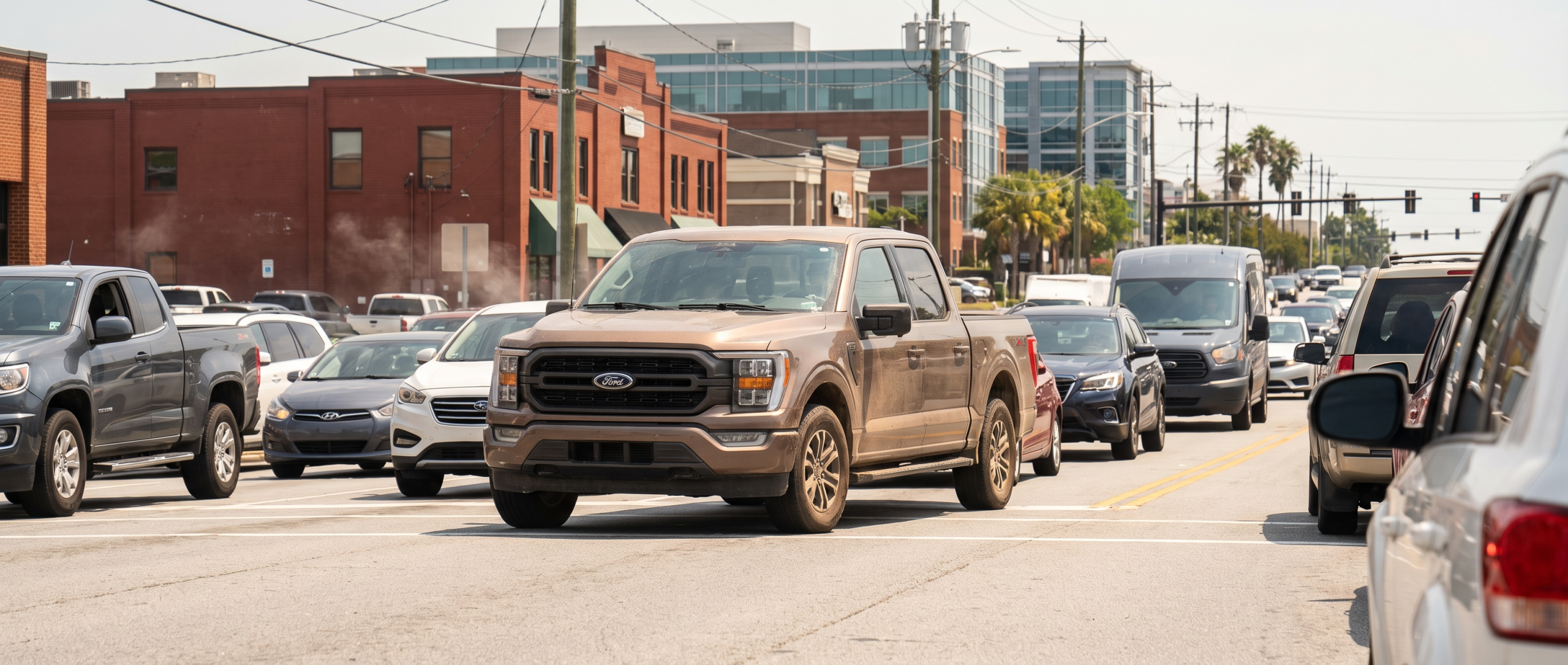
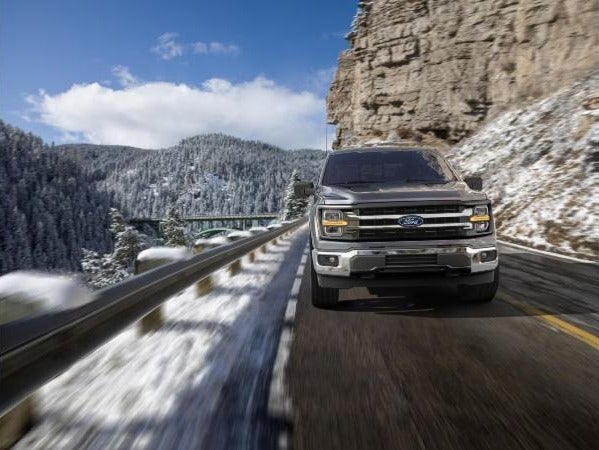
2026 Ford F-150 stopped in summer stop-and-go traffic on a busy commercial road in Greer, SC

Woodruff Road handles more than 40,000 vehicles a day according to the South Carolina Department of Transportation -- and this summer, with a major bypass project still years from completion, every one of those trips is a brake event. Repeated short stops from 35 mph, hot pavement baking the wheel wells, and a truck bed loaded for a Lake Hartwell weekend all add up to one thing: brakes working harder than they were designed to under those combined conditions. Run through this checklist before your next Woodruff run and you will know exactly where you stand.

The 2026 Ford F-150 uses front rotors measuring 350 mm in diameter and 34 mm thick, per Ford's published specifications -- substantial hardware, but hardware that still needs attention when Upstate SC summers push brake temperatures into territory where fluid fade and pad glazing become real risks.

What Goes on the Brake Safety Checklist?

Work through all seven items before your next drive in heavy summer traffic. Each one takes under five minutes to check yourself, and any item that fails the visual test is a clear signal to book a service appointment.

  • Brake pad thickness. New Ford pads start around 10-12 mm of friction material. Ford's service specifications set the minimum at 3.0 mm -- at that point, replacement is not optional. If you can see that the pad visible through the wheel spokes looks paper-thin, you are close.
  • Rotor surface condition. Look for a visible lip or ridge at the rotor's outer edge. A deep ridge means the rotor has worn unevenly and may need resurfacing or replacement. The 2026 F-150's front rotors carry a minimum usable thickness spec -- rotors worn past that point cannot safely dissipate summer heat.
  • Brake fluid color and level. The reservoir sits under the hood. Fluid should be clear to light amber. Dark, dirty fluid absorbs moisture over time; Ford's guidance is to follow the owner's manual interval and replace fluid that has gone dark. Brake fluid is hygroscopic -- it pulls moisture from the air -- and that moisture lowers the fluid's boiling point. In summer stop-and-go conditions, degraded fluid can boil inside the caliper and produce a spongy pedal.
  • Pedal feel. Press the brake pedal firmly from a slow roll in a parking lot. It should feel firm and consistent. A soft or spongy pedal, one that travels further than usual before resistance builds, or one that pulsates under your foot all point to conditions requiring immediate inspection. Ford's own guidance lists a soft or squishy pedal as a reason to have your brakes inspected at your dealer right away.
  • Warning lights. The solid red brake warning symbol or the ABS indicator on your dashboard are not suggestions. Modern Ford trucks, including the Ford Expedition and F-150, use brake pad wear sensors on some trim levels that trigger a dashboard alert before pads reach the metal-on-metal stage.
  • Towing trailer module recall status (critical for tow-capable trucks). NHTSA recall 26C10, issued in early 2026, covers 2021-2026 F-150, 2022-2026 F-250, F-350, F-450, F-550, Maverick, 2024-2026 Ranger, 2022-2027 Expedition, and other Ford models. Per NHTSA, the integrated trailer module may lose communication with the vehicle when a trailer is connected, possibly causing a loss of trailer brake function or trailer lighting. If your Ford is in that range and you tow -- a boat to Lake Hartwell, a camper on the Cherokee Foothills National Scenic Highway -- check your VIN against the NHTSA recall database before your next trip.
  • Pulling or vibration during braking. If your truck drifts left or right during a brake application, or if the steering wheel shudders when you slow from highway speed, a caliper may be sticking or a rotor may be warped from heat cycling. Either condition gets worse in sustained summer traffic.

Why These Items Matter on Woodruff Road Specifically

Stop-and-go traffic is the hardest environment for brakes because the cooling cycle between stops is short. Each brake application generates friction heat at the rotor face. In free-flowing highway driving, airflow carries that heat away between stops. On Woodruff Road in July -- creeping through a string of signalized intersections, stopping behind traffic backed up into a shopping center exit -- the wheel barely cools before the next pedal press.

The Ford Maverick and full-size trucks like the Ford Super Duty carry different brake system calibrations because their weight and towing loads demand it. A Super Duty towing a loaded trailer through stop-and-go conditions in 95-degree heat is stressing the system far beyond what a light commuter car places on its brakes.

Brake fluid behavior in summer heat is the piece most drivers miss. Brake fluid is hygroscopic, meaning it absorbs moisture from the air over time. That moisture lowers the fluid's boiling point. In heavy traffic conditions, the caliper temperature can climb enough that degraded fluid boils, forming a vapor pocket -- that vapor is compressible in a way that brake fluid is not, and the result is a suddenly spongy pedal at exactly the moment you need firm, predictable stopping.

Heads up for towers. If your Ford is covered under NHTSA recall 26C10 and you tow anything -- a boat trailer, a utility trailer, a camper -- the integrated trailer module software fix is available free of charge at your Ford dealer, either as an over-the-air update or an in-shop repair. Do not skip it before a summer tow trip.

Why Summer Stop-and-Go Accelerates Pad Wear

Brake StressorWhy It Matters in Summer Traffic
Repeated short stops from low speedMinimal cooling time between brake applications; heat builds cumulatively
Ambient heat (Upstate SC summer highs)Raises baseline brake component temperature before any braking begins
Loaded vehicle (beach gear, tools, passengers)Greater vehicle mass requires more friction force to stop; pads wear faster
Trailer towing on a hot dayTrailer weight multiplies stopping demand; trailer brakes must also be functional
Degraded brake fluidLower boiling point increases risk of vapor lock and spongy pedal feel
Worn or glazed padsReduced friction coefficient means longer stopping distances even before fade

Your Print-and-Go Recap Before the Next Woodruff Run

Print this list or screenshot it. Walk through it in your driveway before a summer road day.

  • Brake pads visually check thicker than a pencil eraser through the wheel spokes
  • No visible deep ridge or rust lip at the outer rotor edge
  • Brake fluid is clear to light amber in the reservoir (not dark or murky)
  • Pedal feels firm and consistent -- no sponginess, no extra travel
  • No red brake warning light or ABS light on the dashboard
  • VIN checked against NHTSA recall 26C10 if your Ford was built 2021 or later and tows
  • No pulling, drift, or steering-wheel shudder when braking from highway speed

If any item on this list raises a question, the right call is a professional brake inspection before your next heavy-traffic or towing day. D&D Ford Motors has been serving Greer and the Carolinas since 1937 -- our service team checks pad thickness with precision measuring tools, inspects rotors, verifies fluid condition, and confirms your recall status in one visit.

Frequently Asked Questions

Does summer heat actually make my Ford's brakes less effective?

Yes, and the mechanism is specific. Brake fluid absorbs moisture from the air over time, which lowers its boiling point. Ford's guidance identifies a soft or squishy pedal as a sign to get brakes inspected immediately -- that spongy feel in heavy traffic is often the early warning of fluid that has been heat-stressed past its effective operating range. Upstate SC summer temperatures push ambient underhood temps high enough that this matters in sustained stop-and-go driving, not just on a track or a mountain descent.

How do I know if my Ford truck is covered by NHTSA recall 26C10?

Recall 26C10 covers a wide range of Ford trucks and SUVs built between 2021 and 2027, including the F-150, F-250, F-350, F-450, F-550, Maverick, Ranger, and Expedition. The defect involves the integrated trailer module losing communication when a trailer is connected, potentially causing a loss of trailer brake function. Check your VIN for free at nhtsa.gov or ask the service team at D&D Ford Motors to run your VIN through the NHTSA database at your next visit. The remedy -- a software update -- is available at no charge.

Schedule Your Brake Inspection

If your Ford or your family's vehicle is due for a change altogether, take a look at what is currently available on the lot.

D&D Ford Motors

13655 E Wade Hampton Blvd, Greer, SC 29651

(864) 877-0711

Recommended Posts

Ford Truck Cab and Bed Size

Ford Truck Cab and Bed Size Guide

For most Upstate households, the F-150 SuperCrew is the easiest Ford truck to live with every day, with a bed short enough for tight parking and long enough for weekend gear. Pick a Regular Cab with an 8-foot bed when cargo length matters most, and step up to a Super Duty when your work calls for heavier equipment. Two choices shape every truck: the cab, which sets passenger room, and the bed, which sets cargo space. Start with your daily routine, because that's what decides it. If people ride along most days, the cab comes first. If gear rides along most days, the bed comes first. Cab Styles at a Glance Ford builds its F-Series trucks in three cab styles. The Regular Cab is a single row built around cargo, the SuperCab adds an extended rear area, and the SuperCrew gives rear passengers the most room. On the Super Duty, you'll see the same three styles, with Crew Cab as the counterpart to the SuperCrew. F-150 Combinations Each 2026 F-150 cab pairs with specific bed lengths, and the wheelbase changes with the combination: Cab Bed Inside Bed Length Wheelbase Regular Cab 6.5-foot 78.9 in 122.8 in Regular Cab 8-foot 97.6 in 141.5 in SuperCab 6.5-foot 78.9 in 145.4 in SuperCrew 5.5-foot 67.1 in 145.4 in SuperCrew 6.5-foot 78.9 in 157.2 in The 5.5-foot SuperCrew is the compact pick for tight parking and daily errands. A 6.5-foot SuperCrew adds bed length for a weekend of gear and keeps the full rear seat. If you haul sheet goods and long loads, the 8-foot Regular Cab is the one for you. Meet the 2026 F-150 to see how these combinations look in person. Ranger, Maverick and Super Duty The 2026 Ranger comes as a SuperCrew with a bed floor about 59.6 inches long and a 128.7-inch wheelbase, a manageable size for city streets and trailheads. See it on our 2026 Ranger page. The Maverick keeps things compact with a 4-foot-5-inch bed that suits errands and bikes. It carries up to 1,500 pounds. Compare it on the 2026 Maverick page. On the Super Duty side, the beds are 6.75 feet or 8 feet. Work-minded buyers can start with the 2026 Super Duty, where the Regular Cab comes with the 8-foot bed. Choosing a Size for Life in Greer Think about where the truck spends its week. Parking near Trade Street and the Greer Station area in downtown Greer rewards a shorter wheelbase, and a school pickup line or a Saturday at Greer City Park does too. A 6.5-foot SuperCrew has room for bikes and camping gear on a weekend at Lake Robinson, and the Maverick fits the commute to Greenville. Contractors and landscapers who work between Greer and Spartanburg often lean toward the 8-foot bed or a Super Duty, since long loads and heavy gear ride along most days. Wherever you land, the choice comes down to the routes and routines you already have. Payload, Towing and Parking Capability depends on more than size. Maximum towing and payload are separate numbers, and each depends on the engine and on the equipment on the truck. The door jamb label on the exact truck shows its payload. Our F-150 towing guide goes deeper on the numbers. A longer wheelbase also means a longer truck to park and turn, so match the size to your driveway and to the places you drive most. Cab and Bed Questions What is the difference between a SuperCab and a SuperCrew? A SuperCab has an extended rear area for occasional passengers and gear, and a SuperCrew gives rear passengers the most room. On the 2026 F-150, the SuperCab pairs with the 6.5-foot bed, while the SuperCrew offers that bed or a shorter one. What bed lengths does the F-150 come in? The 2026 F-150 comes with three bed lengths, and the cab you choose decides which are open to you. Lengths run from 5.5 feet to 8 feet. The Regular Cab takes either of the longer two, and the SuperCrew takes either of the shorter two. Which Ford truck has the shortest bed? The Maverick has the shortest bed at 4 feet 5 inches, and it handles daily driving and errands well. Among the larger trucks, the 5.5-foot bed on the F-150 SuperCrew is the shortest. Both suit drivers who park in tight spots, like downtown Greer. Which cab does the 2026 Ranger come with? The 2026 Ranger comes as a SuperCrew with a Styleside bed and a 128.7-inch wheelbase. That gives every Ranger buyer a four-door cab and one wheelbase to learn. Trims differ in equipment and capability, and we'll gladly walk you through what you'll get. Does a longer bed mean more towing capacity? Bed length is one factor among many. Towing capacity depends on the engine and axle plus any equipped packages, and each maximum figure belongs to its own configuration. Tell us what you tow, and we'll pull the numbers for the exact truck. Which Ford trucks offer an 8-foot bed? The F-150 Regular Cab offers an 8-foot bed, and the Super Duty offers one too. That long bed is the choice for sheet goods and long loads. If you carry that kind of cargo often, ask us to line up both for a side-by-side look. See the Sizes in Person Numbers help, and sitting in the truck helps more. Stop by whenever it suits you, or schedule a test drive to feel how each cab and bed fits your life. You'll find us in Greer, between Greenville and Spartanburg.

How Ford BlueCruise Works for Upstate SC Drivers

How Ford BlueCruise Works for Upstate SC Drivers

Picture a long, steady stretch of interstate like I-85 on the drive home to Greer while traffic flows and your hands rest in your lap. It's the moment many shoppers wonder how much help a Ford can give them behind the wheel. Ford BlueCruise is an optional driver-assist system that allows hands-free driving on prequalified divided highways called Blue Zones. You keep your eyes on the road and stay ready to take control at any moment. It needs BlueCruise hardware chosen at purchase and an active plan after the included trial. What BlueCruise Does on the Highway BlueCruise builds on adaptive cruise control and lane centering. On a Blue Zone highway it steers and holds your lane while managing your following distance, and the instrument panel turns blue with a hands-free icon so you know it's active. A driver-facing camera watches your eyes the whole time, which keeps you in the driver's seat in every sense, and that's by design. Think of BlueCruise as a very good highway helper while you remain the driver. Which Fords Offer BlueCruise BlueCruise is available on the Mustang Mach-E, F-150, F-150 Lightning, Expedition and Explorer. Availability varies with the model year and configuration, and the hardware is chosen when the vehicle is built. That's why each vehicle is worth checking on its own. Start with the models most Upstate shoppers ask about: the 2026 F-150 and the 2026 Explorer, along with the 2026 Expedition. Mach-E and Lightning shoppers can ask us about the electric lineup. BlueCruise on Upstate Roads Blue Zones are prequalified divided highways, and your Ford's connected maps show when the road qualifies. Greer drivers spend a lot of time on I-85, which passes just south of town on its way between Charlotte and Atlanta, so it's worth asking how the system fits your own commute. Whether you head toward Greenville, Spartanburg or the airport, the in-car display confirms each stretch as you go. Local weather plays a part too. Upstate winters stay mild, with January highs near 53, and summer afternoons run close to 90. Heavy rain, fog or glare can limit the system, and we'll cover those conditions below. Blue Zones and Road Conditions Hands-free driving works on controlled-access divided highways that Ford has prequalified, and the system needs its sensors to see clear lane markings. Some conditions limit it. Snow, heavy rain and fog can keep BlueCruise from working, and so can glare from direct sun or wet pavement. Faded or missing lane markings and merging lanes can keep it from engaging, and construction zones or sharp curves can make it disengage. Plans, Trials and Staying Active A BlueCruise-equipped Ford can come with a trial that begins at the warranty start date. After it ends, you'll need an active plan to keep using the feature, and plans stay with the person who bought them. You can see your plan status and start date in the Connected Services tile of your Ford Account, and the Ford app handles activation. Your Job Behind the Wheel On a Blue Zone, hands-free means your hands can leave the wheel while everything else stays with you. Keep your eyes on the road, keep your face visible to the camera and be ready to steer at a moment's notice. If the system warns you, take off sunglasses and anything else covering your eyes. Planning a lift or other suspension upgrade? Aftermarket suspension kits are incompatible with BlueCruise, so you'll want to talk with the DDCustoms team before you build. BlueCruise Questions Which Fords offer BlueCruise? Several Ford models offer BlueCruise, including the F-150 and the Explorer, and the hardware is chosen at purchase. Availability varies with the model year and configuration. Tell us which model interests you, and we'll help you compare specific vehicles. Do I still have to pay attention with BlueCruise? Yes. BlueCruise is a driver-assist feature, so you keep your eyes on the road and stay ready to take control of the wheel. A driver-facing camera monitors your attention, and the system expects a clear view of your eyes at all times. Does BlueCruise need a subscription? BlueCruise needs an active plan once any included trial ends. That trial begins at your warranty start date, and plans stay with the buyer. Your Ford Account shows your plan status, and our team can walk you through the current plan options when you shop. How can I tell if a Ford has BlueCruise? Ask our sales team about the vehicle you're considering, since the hardware is chosen when the Ford is built and we'll check it for you. Owners can also check the Connected Services tile in their Ford Account, which shows BlueCruise status and the start date of the plan or trial. Can weather affect BlueCruise? Yes. Snow, fog and heavy rain can limit BlueCruise, and so can glare from direct sunlight or wet roads. Faded lane lines and patchy shade can affect the sensors too. When conditions change, the system asks you to drive, so stay ready. Do suspension upgrades affect BlueCruise? Aftermarket suspension kits are incompatible with BlueCruise, so a lift can take the feature out of the picture. If you plan to customize a BlueCruise Ford, talk with our team in Greer first and decide which matters more to you. See BlueCruise in Person Whenever you'd like to see which Fords on our lot carry BlueCruise, browse new Ford inventory and mention it to us, and we'll check each vehicle for you in Greer. You can also schedule a test drive to get comfortable with the display at your own pace.

Ford Warranty and Protection Guide for Greer, SC Drivers

Ford Warranty and Protection Guide for Greer, SC Drivers

Three programs often get mixed up. Ford's New Vehicle Limited Warranty comes from Ford and covers factory defects. The True Blue Warranty comes from D&D Motors on eligible new Fords. Ford Protect is a Ford service plan you can add through a dealer. Each program has its own terms, and the provider holds the controlling documents. Three Programs, Three Providers Start by knowing who stands behind what, because that one answer clears up most of the confusion. Ford backs the factory warranty and Ford Protect, while D&D Motors backs the True Blue Warranty. When a question comes up about a repair, the answer starts with which program applies, and we're happy to help you sort that out. Ford's New Vehicle Limited Warranty Every new Ford comes with factory coverage, and here's how the 2026 terms look: Coverage Term Bumper to bumper 3 years or 36,000 miles Powertrain 5 years or 60,000 miles Safety restraint system 5 years or 60,000 miles Corrosion (perforation) 5 years, any mileage Hybrid and electric unique components 8 years or 100,000 miles Roadside assistance 5 years or 60,000 miles Whichever limit arrives first ends the coverage. Maintenance, such as oil changes and tire rotations, sits outside the factory warranty, and so does replacement of parts that wear out normally. Our new Ford inventory is the place to start for a Ford that carries these terms. Coverage for Miles on Upstate Roads Upstate miles add up quickly. Between commutes on US 29 and I-85, errands around Greer and weekend trips to Lake Robinson, a Ford in this area can pile up miles, so it helps to watch both the years and the miles in each term. D&D Motors has been serving Greer since 1937, and our Service Department in town handles the scheduled maintenance that keeps your coverage in good standing. True Blue Warranty From D&D Motors The True Blue Warranty is our 10-year, 200,000-mile program on eligible new Ford purchases. It begins after Ford's new vehicle warranty and any other applicable warranties expire, and it covers oil-lubricated engine parts and the internal parts of the transmission, including its seals, gaskets and torque converter. The warranty belongs to the owner named on the certificate, and it stays with that owner. Scheduled True Blue service follows the maintenance schedule at D&D Motors, which is how the coverage stays active. Vehicles that have been modified or used for competition or commercial events aren't eligible. Our True Blue Warranty page is the detailed source for the program. Ford Protect Service Plans Ford Protect offers extended service plans backed by Ford Motor Company, sold through Ford dealers. Plans include PremiumCARE for repairs and Premium Maintenance for scheduled service, with versions for electric vehicles. Plans provide up to 8 years and 150,000 miles of coverage, depending on the plan you choose. See the options on our Ford Protect page. Side-by-Side at a Glance Program Who provides it When it applies Where the terms live New Vehicle Limited Warranty Ford From the warranty start date, for the stated years or miles Ford warranty guide for your year and model True Blue Warranty D&D Motors After Ford's new vehicle warranty expires Your True Blue certificate Ford Protect Ford Based on the plan you buy Your Ford Protect contract Where to Find Your Controlling Terms The written terms decide every question, so keep them close. You can look up your Ford's warranty guide by VIN, or by year and model, on Ford's warranty guide page. Keep your True Blue certificate with your vehicle records, and hold on to your Ford Protect contract if you buy a plan. Our team can help you find any of them, and we'll gladly walk you through what you're reading. Warranty Questions What does Ford's factory warranty cover? Ford's 2026 factory warranty covers defects in materials and workmanship, with bumper to bumper at 3 years or 36,000 miles and powertrain at 5 years or 60,000 miles. Safety restraints, corrosion and roadside assistance have their own terms in the warranty guide for your Ford. When does True Blue Warranty coverage begin? Coverage begins after Ford's new vehicle warranty and any other applicable warranties expire. The program runs 10 years or 200,000 miles on eligible new Ford purchases, and the certificate shows the owner's expiration date. Scheduled True Blue service keeps the coverage in good standing. Can I transfer True Blue Warranty to a new owner? The True Blue Warranty stays with the original owner named on the certificate. If you sell your Ford, the coverage ends with your ownership, so keep that in mind when you plan for resale or a trade. Does the factory warranty cover oil changes and tires? Routine maintenance, such as oil changes and tire rotations, sits outside the factory warranty, and so does normal tire wear. Our Service Department handles your scheduled maintenance at our Greer location, and True Blue service visits keep that program active. Where can I find the exact terms for my coverage? Ford's warranty guide for your year and model holds the factory terms, and you can look it up by VIN. Your True Blue certificate and any Ford Protect contract carry their own terms. Bring them to our team in Greer and we'll help you read them. Questions About Your Coverage If you'd like help reading your terms or choosing the protection that fits your next Ford, contact our team. You can also learn more about us on our Why Buy page.