How Ford Safety Ratings Should Be Interpreted When Car Shopping
When you're shopping for a new vehicle, few things matter more than knowing your family will be protected on the road. Safety scores are everywhere, but understanding what they actually measure can be confusing. Ford safety ratings appear on window stickers, dealer websites, and third-party review sites, yet many shoppers aren't sure how to read them or what they really mean. Before you make your next purchase, here's what you need to know.
The Two Organizations Behind the Numbers
In the United States, vehicle safety ratings come from two independent organizations: the National Highway Traffic Safety Administration (NHTSA) and the Insurance Institute for Highway Safety (IIHS). NHTSA is a federal government agency that uses a straightforward 1-to-5-star system, where more stars mean better protection. You'll often see this rating on the Monroney sticker of any new vehicle on the lot. The IIHS, on the other hand, is a nonprofit funded by insurance companies that uses a four-tier scale: Good, Acceptable, Marginal, and Poor. High performers from the IIHS earn either a Top Safety Pick or the more prestigious Top Safety Pick+ designation.
So which rating matters more? That's a question a lot of shoppers ask, and the honest answer is both. NHTSA emphasizes seatbelt and airbag performance during crashes, while IIHS focuses more heavily on structural integrity and includes some tests NHTSA doesn't run, like the small overlap front crash test, which simulates striking a utility pole or tree. Using both scores together gives you a much more complete picture of how a vehicle will perform when it counts.
What Ford Safety Ratings Actually Test
NHTSA conducts four primary tests: a frontal crash at 35 mph into a fixed barrier, a side crash simulating an intersection collision, a side pole test, and a rollover resistance evaluation. The IIHS runs its own separate frontal overlap tests at 40 mph with a smaller barrier, a side impact test, and assessments of headlights, pedestrian detection systems, and LATCH child seat ease of use. These are not the same tests, which is why a vehicle can perform differently across the two systems.
For Ford, this context matters. The 2025 Ford Escape earned an impressive 5-star overall NHTSA rating, including 5 stars in both frontal and side crash categories. The 2025 Ford Bronco Sport also achieved a 5-star NHTSA overall rating. When reviewing Ford safety ratings, it's important to look at each category individually, not just the overall score, since a perfect composite can sometimes mask a lower mark in one specific area.
Don't Stop at the Stars
Vehicle safety ratings are a critical starting point, but experienced shoppers know to look beyond the headline number. Does the trim level you're considering include standard automatic emergency braking? Is blind-spot monitoring included, or does it require an upgrade package? On many vehicles, the IIHS Top Safety Pick+ rating applies only when the vehicle is equipped with specific headlights or driver assistance technology, which may only come on higher trims.
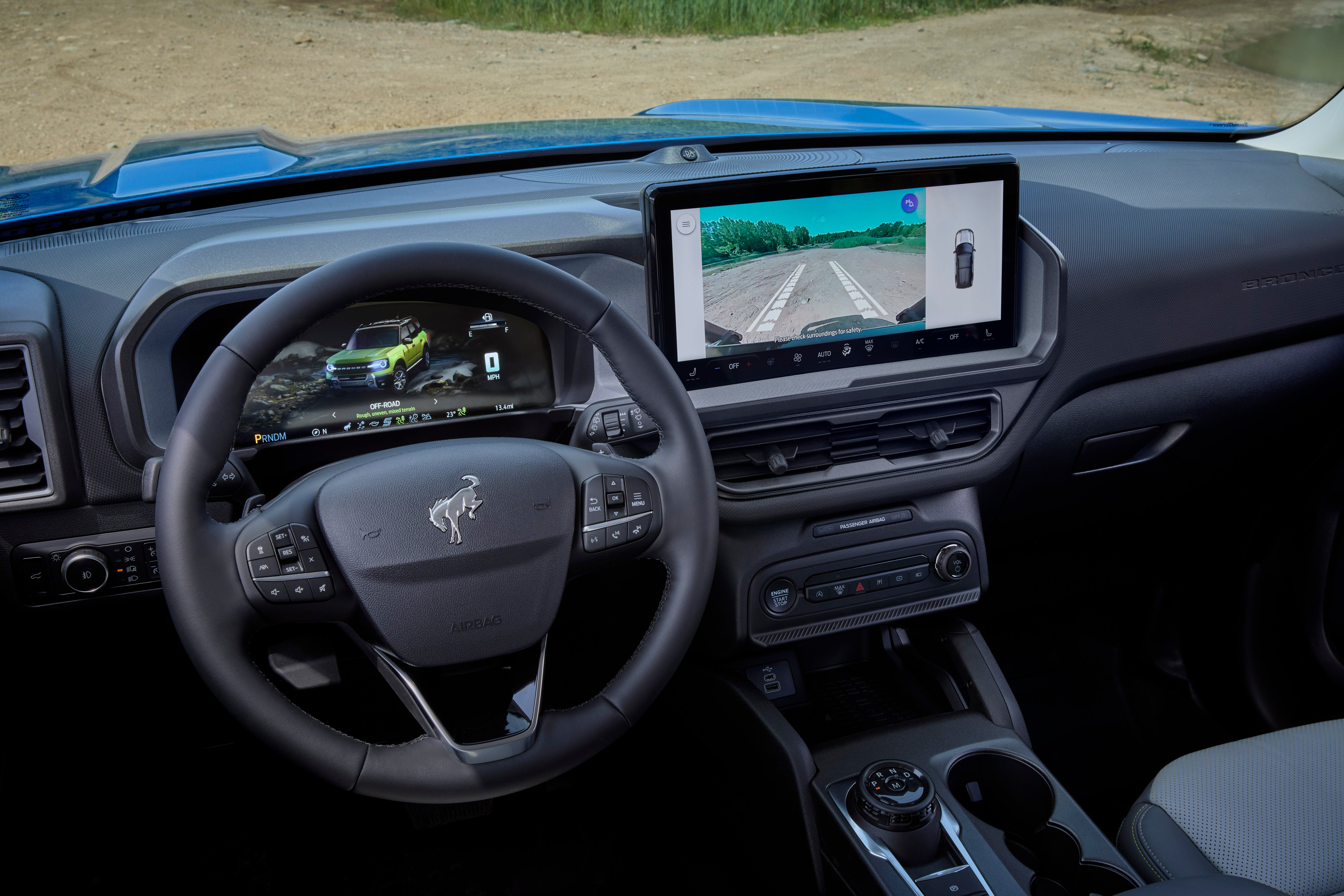
Ford addresses this proactively through its standard Co-Pilot360 suite, which is included across its lineup. This package delivers pre-collision assist with automatic emergency braking, pedestrian detection, lane-keeping assist, and blind-spot information system as standard features on most models, not optional add-ons. That matters when you're comparing safety ratings side by side against competing brands where similar features may cost extra.
How to Use Ratings When You Shop
When evaluating vehicle safety ratings at D&D Ford in Greer, SC, start by looking up both the NHTSA and IIHS results for the specific model year you're considering. Then check which trim level earned those scores. From there, look at the standard safety tech included, not just crash test performance. A vehicle that actively helps prevent accidents is just as important as one that performs well after impact. Ford safety ratings consistently reflect the brand's emphasis on building protection into standard equipment, but it's always worth verifying the specifics before you sign.
Frequently Asked Questions About Ford Safety Ratings and How to Interpret Them
What is the difference between NHTSA and IIHS safety ratings?
NHTSA is a federal government agency that rates vehicles on a 1-to-5-star scale, while IIHS is an independent nonprofit that uses Good, Acceptable, Marginal, and Poor ratings. They conduct different crash tests, so checking both gives you the most complete picture.
Do Ford safety ratings apply to all trim levels equally?
Not always. IIHS Top Safety Pick and Top Safety Pick+ awards sometimes apply only to trims equipped with specific headlights or driver assistance packages. Always verify which trim earned the rating before purchasing.
What does Ford Co-Pilot360 include?
Ford Co-Pilot360 is a standard safety suite on most Ford models that includes automatic emergency braking with pedestrian detection, lane-keeping assist, blind-spot monitoring, and a rear-view camera, among other features.
Where can I find vehicle safety ratings for the Ford I'm considering?
You can look up ratings directly at nhtsa.gov and iihs.org by searching the make, model, and year. The team at D&D Ford can also walk you through the specific scores for any model on the lot.